Trapicana

"Trapicana" with the Malpaso ensemble

Lennart Brede

Malpaso is the name of Cuba’s dance company, which translates to “false step” or — in the moral sense — a “misstep.” Free of government support, it travels the world as an ambassador for a culture that could do all too well without Latin flair and real poverty.

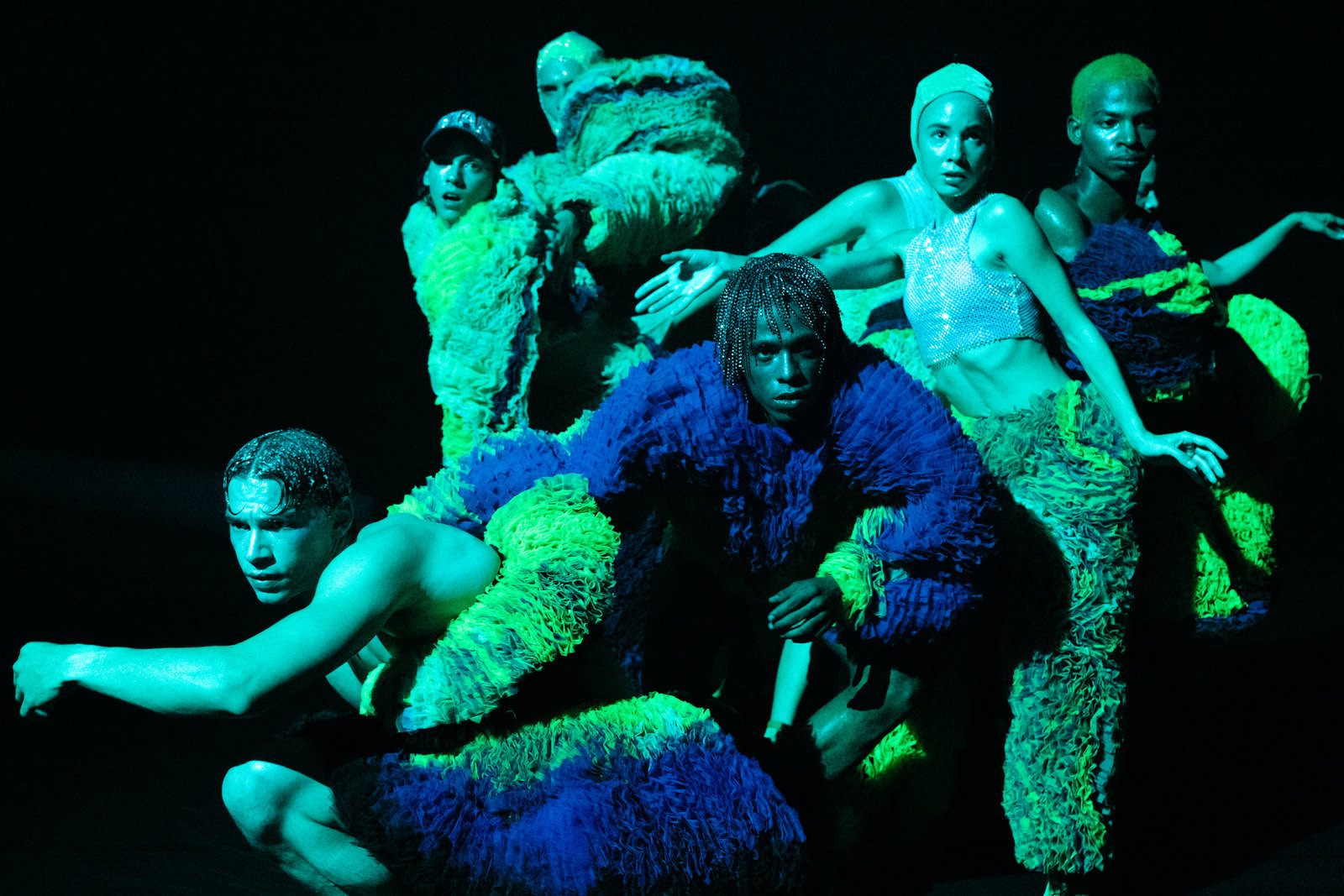
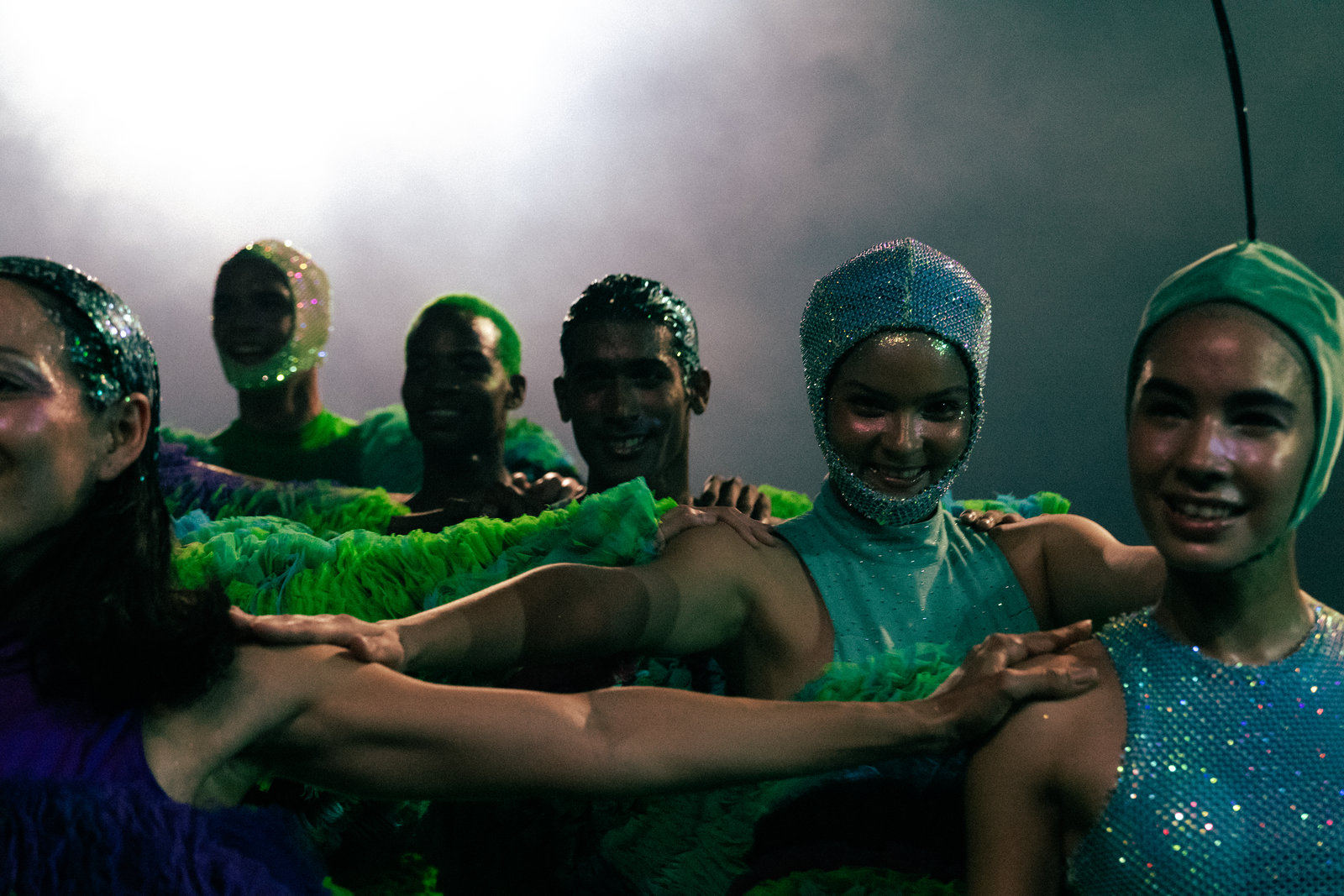
Poison green. Like a poison-green orb, a dozen or so performers tiptoe across the stage, clustered tightly together in a rhythmic salsa step. Their widely swinging skirts and tight sequined bodices are also varying shades of green, as are their swim cap-like headpieces. Green, too, are the high-heeled stilettoes worn by both women and men, in which they move with astonishing confidence. One dancer wears a palm frond perched jauntily on her head, bobbing to the beat.

“Trapicana”

Lennart Brede

They hold each other by the shoulders, spinning as a single cluster and trotting forward and back in formation. Above them they hold an oversized horseshoe-shaped arch. “Trapicana,” it reads.

This cheerful, vividly colored revue seems to have sprung from a lush, overgrown Garden of Eden. At the end, it rains from the ceiling. The stage sinks into a steaming mist, as if after a tropical thunderstorm. A dancer slides belly-first across the slick floor. It’s an exotic dreamscape imported from the fantasy worlds of the kind so often set in the Caribbean. Lighthearted and carefree.

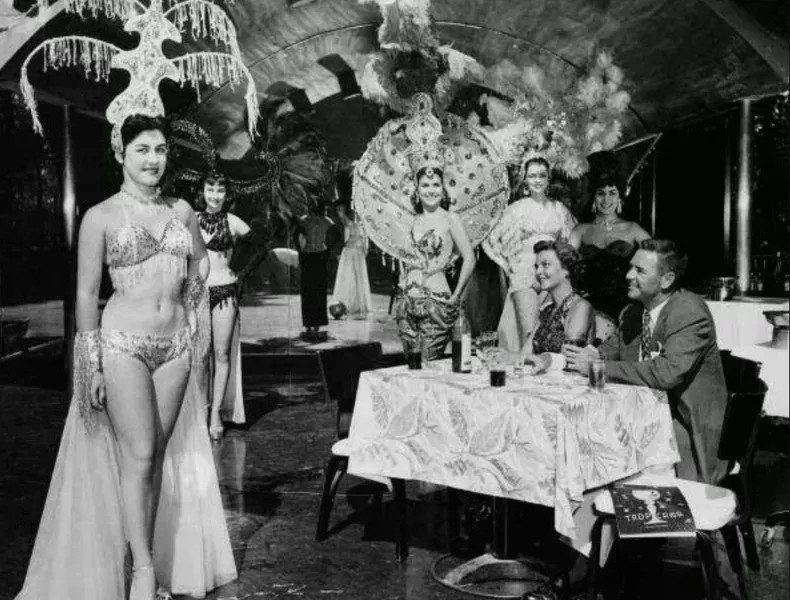
The original Tropicana, founded in 1939

LujoCuba

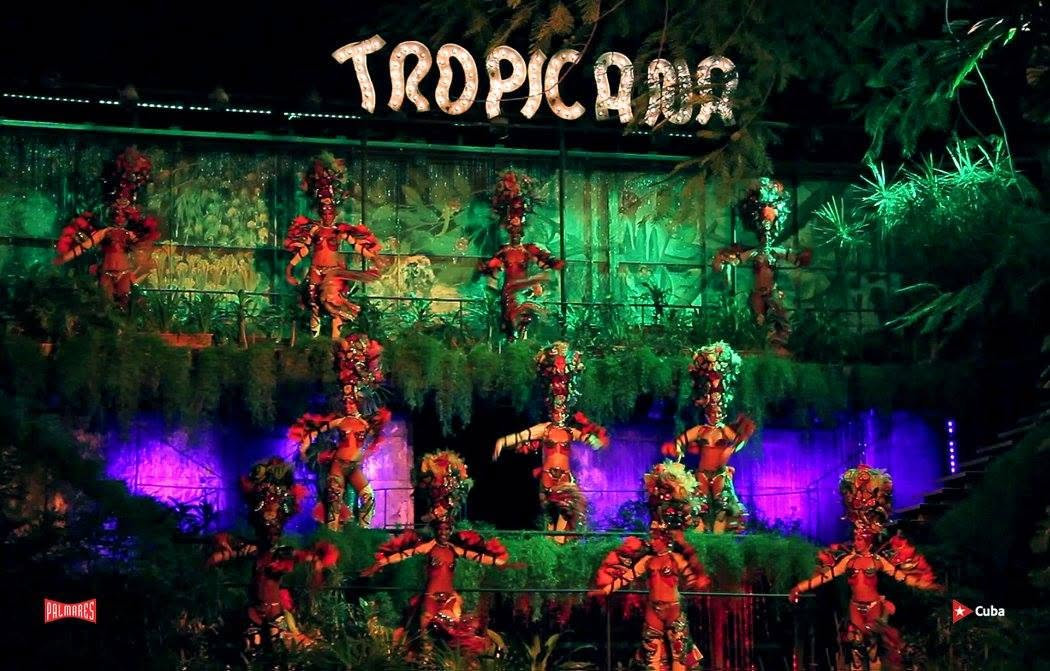
The Tropicana is a nightclub in Havana. It’s not just some tacky cabaret; it’s the “Paradise Under the Stars” – partly open-air – in the Marianao district in the southwest of the Cuban capital. Opened in 1939, it soon became an internationally renowned show palace, welcoming performers such as Nat King Cole and Josephine Baker. With regulars such as Ernest Hemingway and Marlon Brando in its audience, it once rivaled the Moulin Rouge in Paris and served as a model for Las Vegas. Today, more than sixty years after the socialist revolution through which Fidel Castro purged the country of all U.S. influence and of capitalism, the revue is one of the last remaining sources of foreign currency in this struggling country.

German choreographer Joana Tischkau conceived “Trapicana” together with nine members of the Malpaso Dance Company. American choreographer Jeremy Nedd and German-American dancer Sophie Yukiko were also involved. The choreography draws on the steps and movements the Tropicana in Havana uses to create its exoticized Latin atmosphere. Of course, this is meant ironically, but no one is mocking the long-crumbling glamour of the cabaret. The same goes for the music that contrasts the Caribbean sound – a mix of salsa, Afro-Cuban rhythms, and “trap,” a bass-heavy hip-hop genre especially popular in Latin America.

Joana Tischkau

Diana Pfammatter

Performed at Kampnagel in Hamburg as part of the International Summer Theater Festival and at the Tanz im August dance festival in Berlin, the piece gets its name, “Trapicana,” from a tongue-in-cheek fusion of “Tropicana” and “trap.” The idea is to think not only of music, but also of a trap – a tourist trap. Because that’s exactly what the iconic club is. Or, at least, it was when foreign visitors were still coming to the island in significant numbers. But that has been practically impossible since the fuel crisis triggered by U.S. sanctions and the collapse of oil shipments from Venezuela. The fact that a pleasure palace like the Tropicana is still operating at all is one of the mysteries of a country that has been teetering ever closer to the financial abyss for years. Tickets for the evening show can be purchased on the club’s quite professionally designed website, with prices starting at 75 euros per person: half the average annual income in Cuba.

Das Tropicana in seiner Frühzeit

Archive

When talking with Fernando Sáez, one is struck by the optimism he radiates, even as he describes the almost unimaginably difficult working conditions he and the fifteen dancers of the Malpaso Dance Company must contend with. Seemingly unmoved by this predicament, he makes statements like: “Cuba is bleeding”. The current situation, he tells me, “is not a drama, but a tragedy.” He says this as someone aware that, as a successful manager with good contacts in the U.S. and Europe, he is among those on the island who are somewhat better off.

Fernando Sáez is 60 years old. In 2012 he founded the Malpaso Dance Company together with the dancers and choreographers Daile Carrazana and Osnel Delgado.

Fernando Saéz

Todd Rosenberg

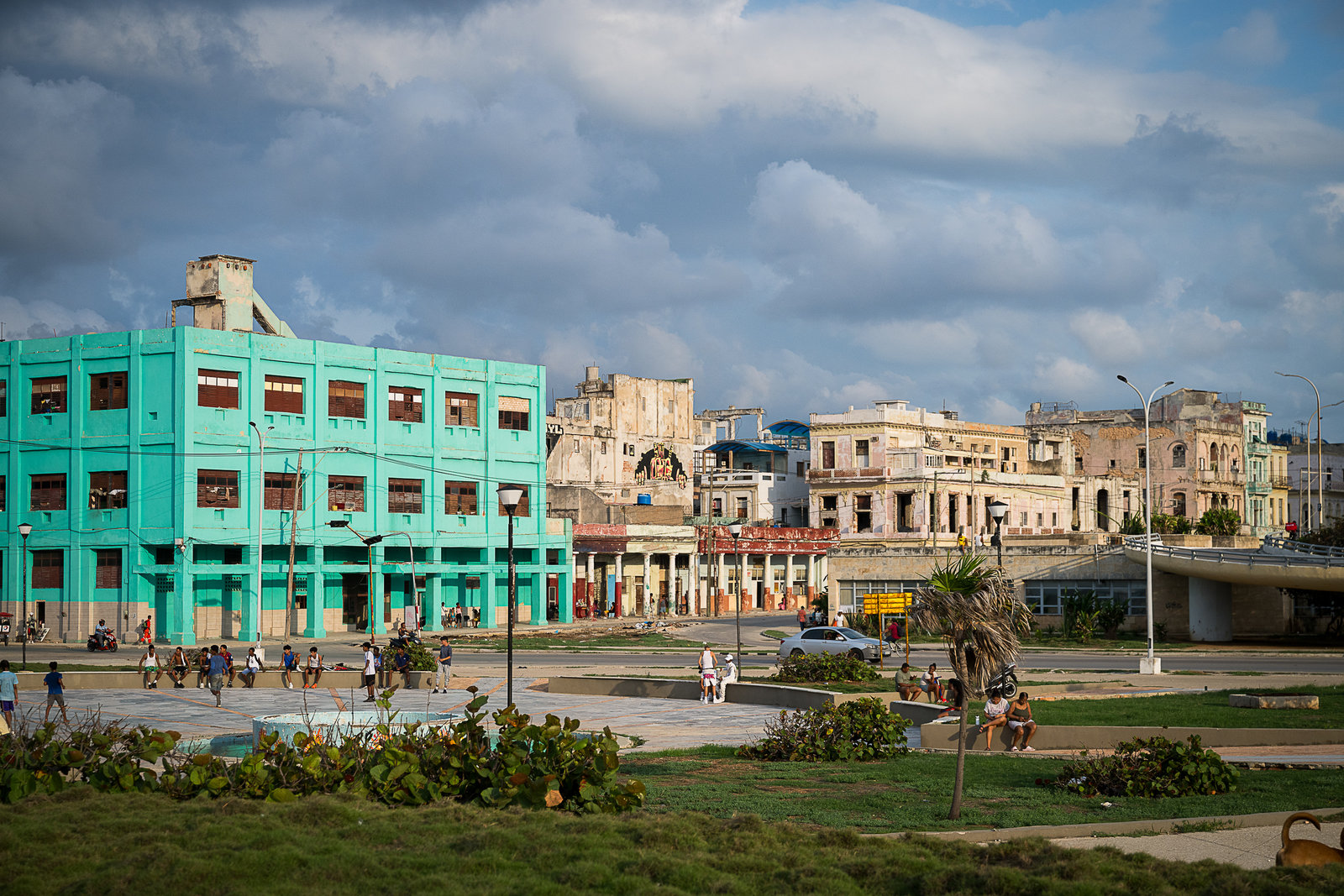
Sáez immediately acknowledges that he and his troupe are privileged because they can travel abroad and show their art there. Back home in Havana, they live like almost everyone else among the roughly ten million Cubans still on the island – sparingly. Every day, hundreds, every month, thousands, leave the country for the U.S., Spain, or various other destinations. Those who remain must improvise at every turn. If they’re lucky enough to still have a job, they have to figure out how to even get to work. They have to scrounge for food and the money to pay for it. Because some things are in fact still available – but only ever for cash, in dollars.

Bass Transport

Christopher Duggan

Vintage Taxis: Havana’s Trademark Without Gas

Jorge Luis Banos

The supply crisis and the lack of gasoline make it extremely difficult, if not impossible, to get from one place to another. You also can’t plan a theater performance when the electricity is unpredictable and cuts out for hours or even days at a time. The Teatro Martí in central Havana, where Malpaso performed regularly in recent years, is closed. They have technical equipment that runs and batteries and can be charged, but that’s only helpful when it’s possible to charge them.

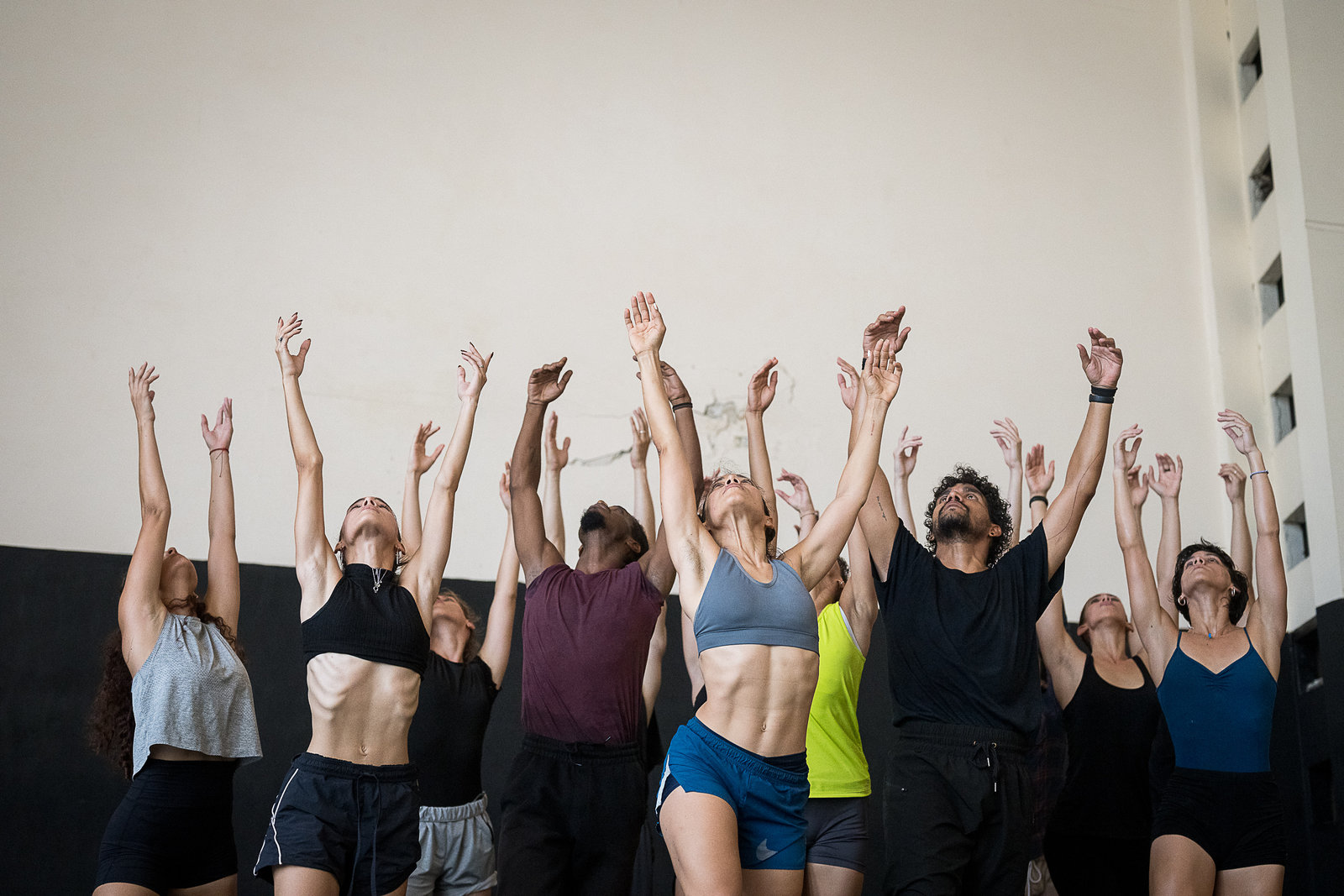
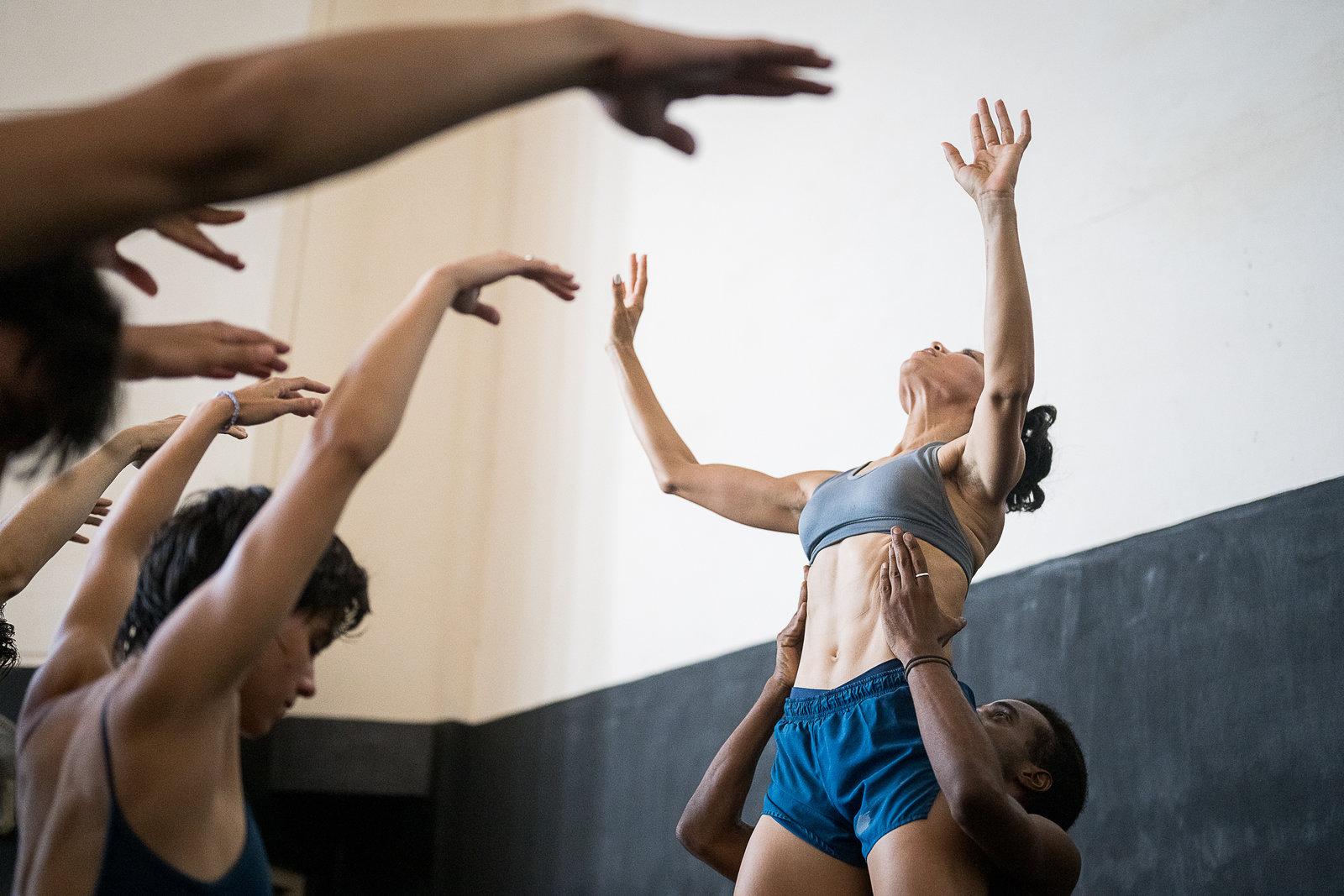
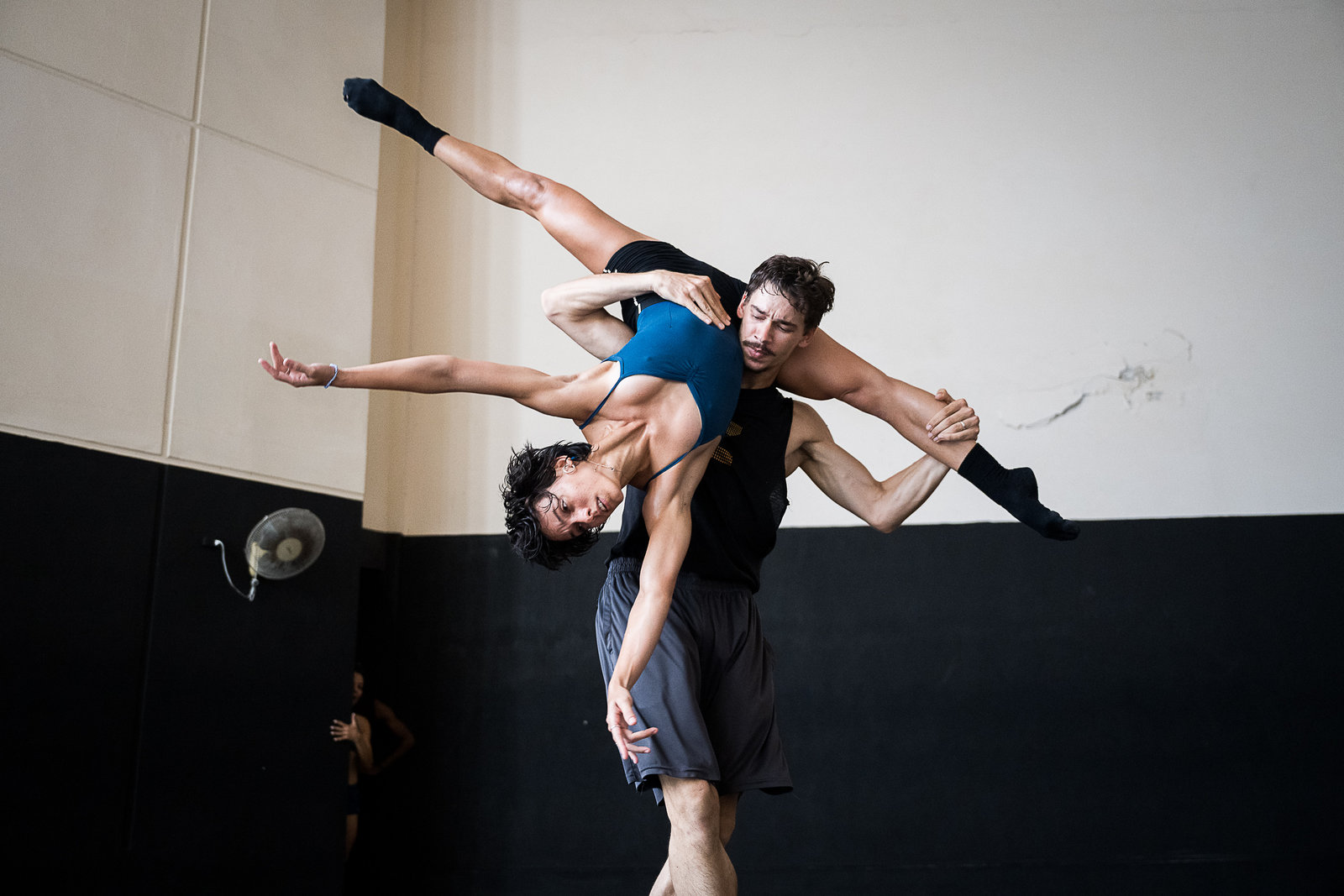
Malpaso rehearses

Christopher Duggan

When the air conditioning is out of order in this tropical country, rehearsals become an ordeal: “Summer is especially difficult,” reflects Sáez. “When it’s blazing hot, you get exhausted very quickly. In dance, especially, we have to take that into account. That’s why we can’t work as much as we’d actually like to. We just do the best we can.”

The View Outside the Door

Christopher Duggan

They think of their loyal core audience, built up over almost a decade and a half since the company’s founding. That, too, is shrinking: “It’s hard to find precise statistics, but since the Covid pandemic, since 2022, around two million Cubans have left the country. That’s almost twenty percent of the population. Mostly young people. And they were also part of our audience.”

Audiences stay away because they have left their lives in Havana behind and moved abroad. Others don’t come because they live too far from the venue and the buses and taxis aren’t running. Many Cubans spend every waking hour simply trying to manage daily life. They barely have the capacity anymore to even think about engaging with culture, theater, or contemporary dance.

Annesusanne Fackler worked for several years as head of the Goethe-Institut affiliated with the German Embassy in Havana. Since the Cuban government does not permit an official Goethe-Institut, it operates under the umbrella of the embassy. It was Fackler who set the collaboration between Joana Tischkau and the Malpaso Dance Company in motion.

The dance piece “Trapicana” was created after the Goethe-Institut invited the choreographer to Cuba two years ago as part of its exchange programs. There, she met Fernando Sáez and the company. Tischkau led workshops as part of her visit. And during her stay, she also ended up at the Tropicana. “Because it’s one of the tourist attractions you have to see. I went with my musician and said to him: ‘Oh, this is like a trip – maybe a drug-induced trip.’” In her work, Tischkau repeatedly engages with themes of authenticity and appropriation. She was fascinated by the dusty atmosphere and unbroken exoticism of the Tropicana revue – the shimmering costumes, the sweeping headdresses, the formations gliding down the show staircase.

Annesusanne Fackler

privat

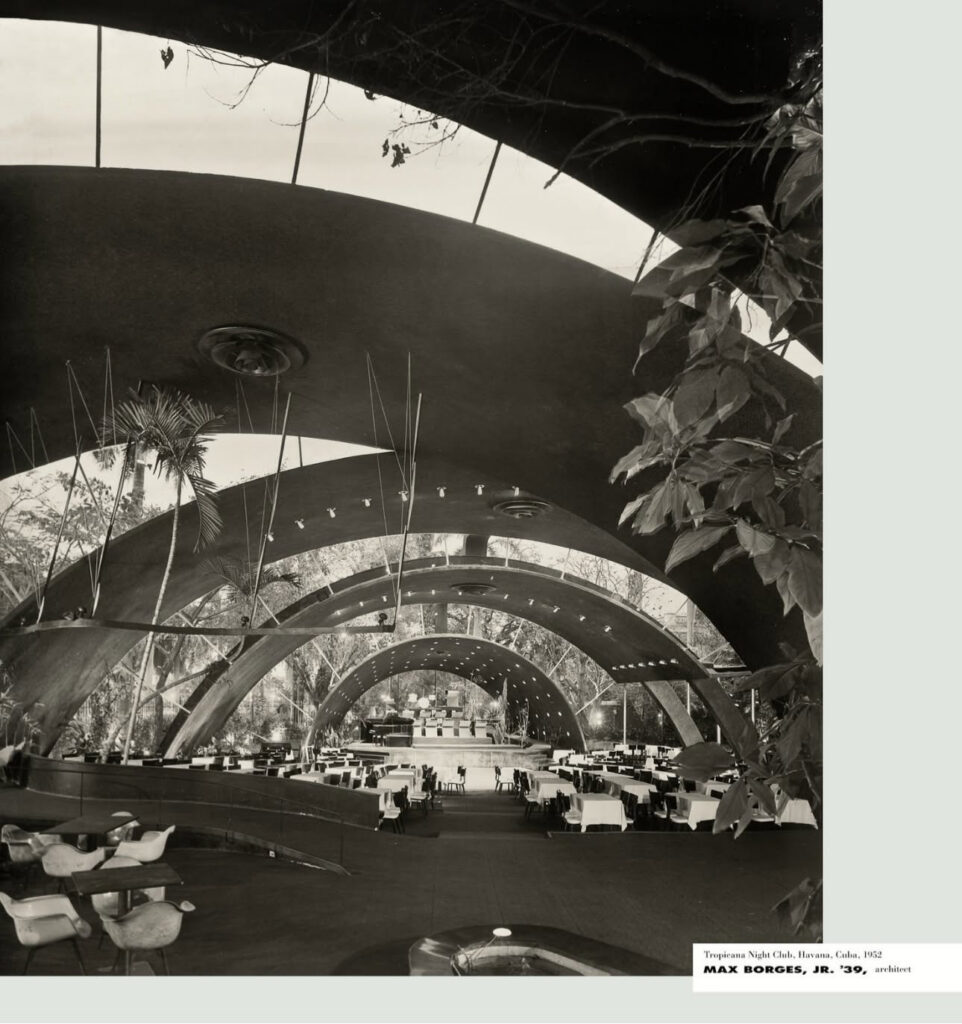
And, of course, the famous Arcos de Cristal, the crystal arches that frame the scenery as a canopy against wind and rain. “Keeping alive a show so frozen in time – you can look at it with nostalgia, but at the same time this show stands in stark contrast to the current, real living situation in Cuba. It’s an illusion being kept alive.”

The Crystal Arches of the Tropicana, 1952

Wikipedia

The Malpaso Dance Company Ensemble

Christopher Duggan

For most members of Malpaso, the Tropicana – which, incidentally, also had a number of offshoots in other Cuban cities – was a legend, something their grandparents might have told them about. “When we started the project, it was my first time there,” says Carlos Daniel Valladares, one of the young Cuban dancers. “You can trace the development of society through the Tropicana. World-class artists performed there for decades, but it’s also a mirror of the decline that has gripped the country.” For older Cubans, the Tropicana is a memory of better times with a startling success story: The pleasure revue for wealthy Americans should, in theory, have been an especially decadent thorn in the side of Fidel Castro’s anti-capitalist revolutionary leaders. Nonetheless, the opposite was true: The revolution loved and nurtured its flamboyant show temple, much as East Germany’s Honeckers once did with the Friedrichstadtpalast in East Berlin.

The Cast of “Trapicana”

Lennart Brede

For dancer Laura Rodriguez, engaging with the Tropicana myth is, above all, a musical and artistic experiment: “It’s something completely different from what we normally do in our company. As for me, I’ve always loved this kind of show dance – salsa, rumba, the traditional Cuban dances. The whole process that led to this piece was extremely enriching; I’m very happy and grateful for it.”

Annesusanne Fackler accompanied the Malpaso Dance Company during their “Trapicana” performances in Hamburg and Berlin. She describes the enormous challenges that daily life presents for people in Cuba.

Havanna, 2026

Christopher Duggan

These everyday challenges are intertwined with the political problems faced by anyone trying to accomplish something, especially in the arts. “There is no direct censorship,” says Fackler. But the Cuban government is diligent about knowing what’s going on, including at the Goethe-Institut. “Our programs are open to everyone. We maintain good, peaceful relations with government representatives, but we’re not friends. They simply keep an eye on us.”

The Home of the Malpaso Dance Company

Christopher Duggan

Diana Rosa Hernández describes how multilayered the obstacles can be. According to the company’s stage manager, no one has ever shown up at a Malpaso rehearsal to check on what they’re doing. But that could certainly happen to others, especially with theater productions. Dance is simply far more abstract, its message less tangible than a spoken theater piece, which can openly or covertly criticize conditions in the country. And so it’s not unusual for state art inspectors to drop by theater groups. Often, they do so gently: Ensembles are allowed to rehearse endlessly but are never granted a performance permit. Because a theater group needs a permit to show anything to an audience. The authoritarian structures in this Caribbean country are palpable down to the smallest detail. Despite the omnipresent decay and stagnation, with empty streets and pitch-dark neighborhoods, the watchful eyes of the state apparatus are everywhere, especially where culture is concerned.

You might ask why the members of Malpaso don’t leave the island like so many of their compatriots. After all, these young dancers’, all in their mid-20s, could easily build new lives elsewhere. Fernando Sáez, the company’s director, struggles a bit to find the right words: “We chose to stay,” he finally says. “That’s the answer the dancers give you today. What the answer will be tomorrow morning, I have no idea.”

The Cuban authorities put relatively few obstacles in the way of this privately run ensemble when it comes to leaving and re-entering the country. It evidently isn’t considered subversive or dangerous to the system, which has remained firmly in power even after the death of revolutionary leader Fidel Castro in 2016: first under his brother Raúl Castro as president of the Council of State, and since 2018 under Miguel Díaz-Canel, who, following a constitutional reform, calls himself president of the Republic of Cuba.

In June 2026, the government passed far-reaching economic reforms for the first time due to external pressure. Since then, private individuals have been able to act more freely, in theory. Foreign companies are now also permitted to hire employees in Cuba. Even joint-stock companies are supposedly permitted. A revolution in the land of permanent revolution, in the land of “Hasta la victoria siempre” – ever onward to socialism’s final victory… It remains to be seen how these reforms will play out, with respect to the supply situation and the intellectual and artistic climate.

Someone like Sáez, who has steered the company through every high and low since 2012, clearly feels the strain of this inner conflict. He has poured an enormous amount of energy into building up and professionalizing the troupe. That’s not something you simply leave behind.

Daile Carrazana and Osnel Delgado

Malpaso

His two co-founders and collaborators to this day, Daile Carrazana and Osnel Delgado, were well-known dancers with Danza Contemporánea de Cuba, the state ensemble that has existed since 1959, the year of the Cuban Revolution. They wanted to create something new, something of their own outside of the given structures – outside of the “safe harbor of that established company,” as Sáez puts it. “They were both very young. And very prominent.” Sáez had known Carrazana and Delgado for a while before founding Malpaso with them. The three of them threw themselves into the adventure of independence.

Sáez describes the immense difficulties they faced at the beginning just to be allowed to work as an independent dance company in Cuba. “At first, we went through official channels. That is, we had to present our project to the ‘National Council for the Performing Arts’ in Havana. That’s a department of the Ministry of Dance and Theater. It’s mandatory.” Simply founding an ensemble on your own is unthinkable in such a tightly controlled system. Sáez recalls that it took a very, very long time before the board responded. Eventually they received word that the state had no funds to finance it. So, it was rejected. And since there’s no legal form for independent groups in Cuba, they eventually found a loophole. “Self-financed” was the magic phrase – an option that, according to Sáez, is still permitted under the ministry’s regulations today.

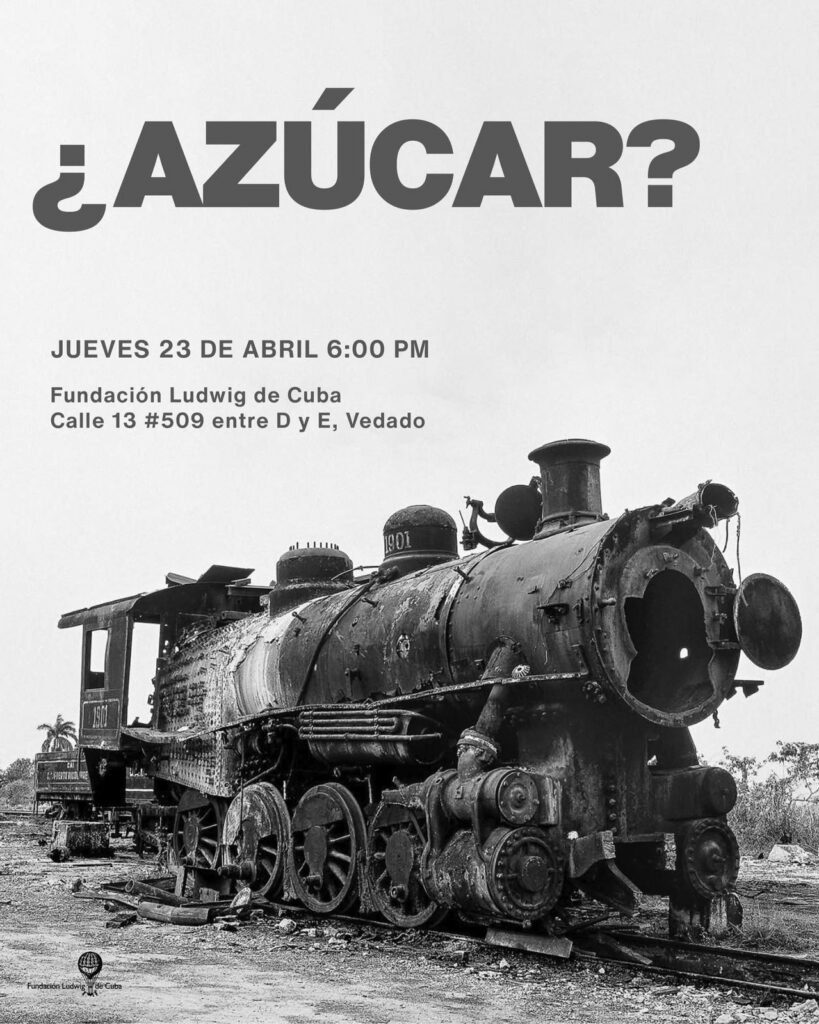
Sugar Cane and Steel Whip—Exhibition at the Fundación Ludwig de Cuba

Poster

The Ludwig de Cuba Foundation

Mira Zeichner

They relied on partnerships with foreign partners to secure the resources they needed. Sáez brought experience working with international funders from his previous role at the Fundación Ludwig de Cuba. One of Havana’s most magnificent cultural venues, the Foundation was originally established by the patron couple Peter and Irene Ludwig from Aachen and is today more or less under the influence of the Cuban state. The Foundation has been supporting and cultivating the arts on the Caribbean island for three decades. Sáez started working there in 1998, learning an enormous amount about how to organize international exchange programs, particularly how people in Europe and the U.S. think and operate in the field of independent arts and culture funding. In other words, he learned how to raise private money for the arts.

Throughout the 19th century and into the mid-20th century, private donors in Cuba were involved in supporting art and culture as well as urban development. That ended in 1959, “for obvious reasons,” as Fernando Sáez puts it in an ironic, diplomatic tone. Since the revolution, that great turning point, there has only been a single sponsor: the state. “If that falls away, then it’s over for the arts.”

Cuba’s cultural scene is on its knees. From the very beginning, Malpaso has therefore tried to build a wider financial and artistic base through contacts abroad. Thanks to the more relaxed political climate under the Obama administration, it was possible to maintain contacts in the U.S. and travel there as a company. This was an enormously successful period for Malpaso. “We performed in 35 U.S. states and in more than 60 cities.”

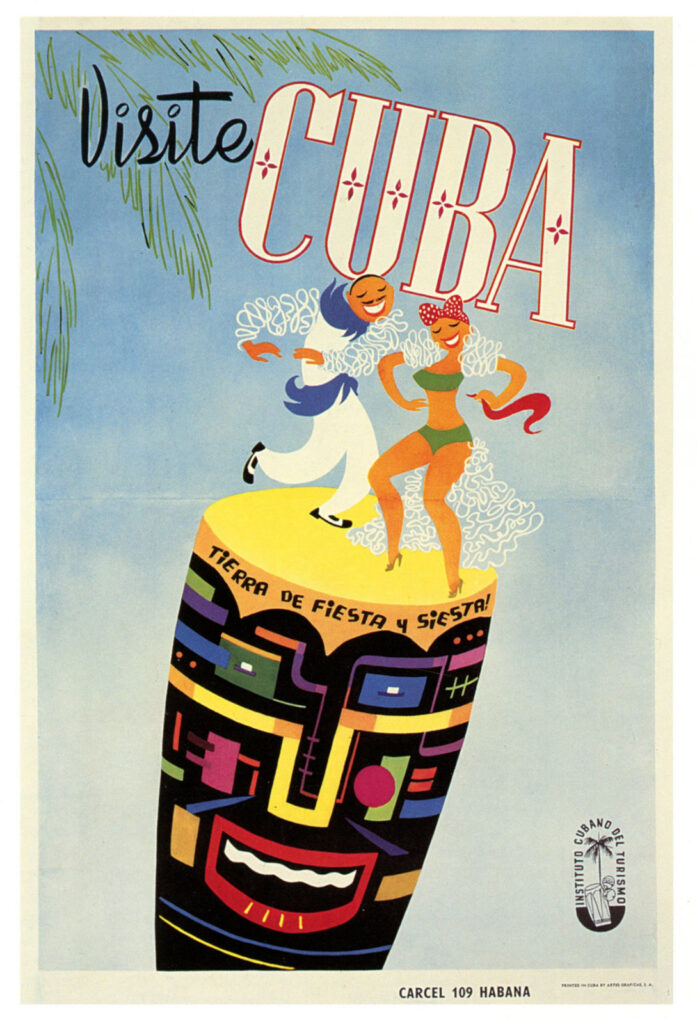
Vintage Posters

The Malpaso Dance Company in Martha Graham’s “Dark Meadow Suite”

Brigid Pierce

During those years, the ensemble developed extremely close relationships with certain institutions. In fact, the Malpaso Dance Company completed ten seasons at the Joyce Theater in New York City alone. This well-known dance venue on 8th Avenue in Chelsea, Manhattan, has a large circle of very wealthy private donors. Malpaso has presented its productions at the Kennedy Center in Washington, in Los Angeles and Miami, at the Guggenheim Museum in New York, and at numerous other venues, garnering a reputation as the best-known contemporary dance ensemble from Cuba. In early 2026, they performed dance legend Martha Graham’s “Dark Meadow Suite” at the Joyce Theater to great acclaim.

These guest performances earn them money – a resource that did not – and does not – exist in Cuba. But they need it to secure the survival of the company and its members. The saying borrowed from Lessing’s “Emilia Galotti” – that art follows bread – applies particularly acutely to artists in Cuba who want to work free of state directives.

Yet it’s unsettling to learn that even an ensemble as internationally networked as Malpaso is now dependent on political shifts. After Donald Trump was elected president, conditions abruptly worsened, even for an independent, privately financed troupe that embodies the very opposite of state socialist control. The U.S. consulate in Havana closed. People could no longer apply for U.S. visas on the island. This development seemed to spell the end of Malpaso’s business model. No visa, no guest performances, no money. They had to come up with something: “We were in Hamburg once in 2018, opening the summer festival at Kampnagel. From there, we got on a train and went to the U.S. consulate in Berlin.” They did something similar when they performed in Canada and also flew to Mexico and the Dominican Republic for the same reason. Cubans are used to hardships like these. Strategies for dealing with them are part of daily life.

Above: The U.S. Embassy in Havana

Wikipedia

Reception

Annesusanne Fackler

Sáez doesn’t want to talk exclusively about these organizational and financial gymnastics, but above all about art and the quality of choreographic work in Cuba. He describes the many shortcomings in the Cuban dance world that existed before Malpaso was founded: “My job was to build collaborations with other theater and dance companies. But most of all, it was about tracking down the black holes in the artistic universe of Havana and Cuba. I found that there was a huge, even dramatic, gap between the high level of Cuban dance and the miserable standards of most Cuban choreographers.” Sáez traces this back to cultural development. “We are a dancing island, and an island of dance,” he says, pointing to Cuba’s long tradition of religious dance as well. Dancing before an audience, on the other hand – such as in ballet, cabaret shows, modern dance, and contemporary dance – was relatively new. Hence the gap in experience in terms of interpretation. “Because of the isolation we’ve experienced for decades and the lack of exchange with the rest of the world.”

Malpaso Dance Company during rehearsal

Christopher Duggan

In an effort to bridge this gap between exceptional technical ability and inadequate artistic execution, he tried from the outset to attract major choreographers from around the world to work with Cuba’s young dance scene. For instance, he brought in Israeli choreographer Ohad Naharin, who developed the piece “Tabula Rasa” with Malpaso. Sweden’s Mats Ek also came to work with the group.

Malpaso Dance Company during rehearsal

Christopher Duggan

Now, as everything in Cuba seems to be collapsing, the country’s traditionally excellent dance training is also at risk. The Malpaso ensemble currently comprises fifteen young men and women. They can’t take on any more. In fact, it’s questionable whether young talent is even still being nurtured to an adequate degree. While the ballet schools are still operating, standards have been slipping for some time. And naturally, gifted young dance artists are increasingly seeking their fortune abroad.

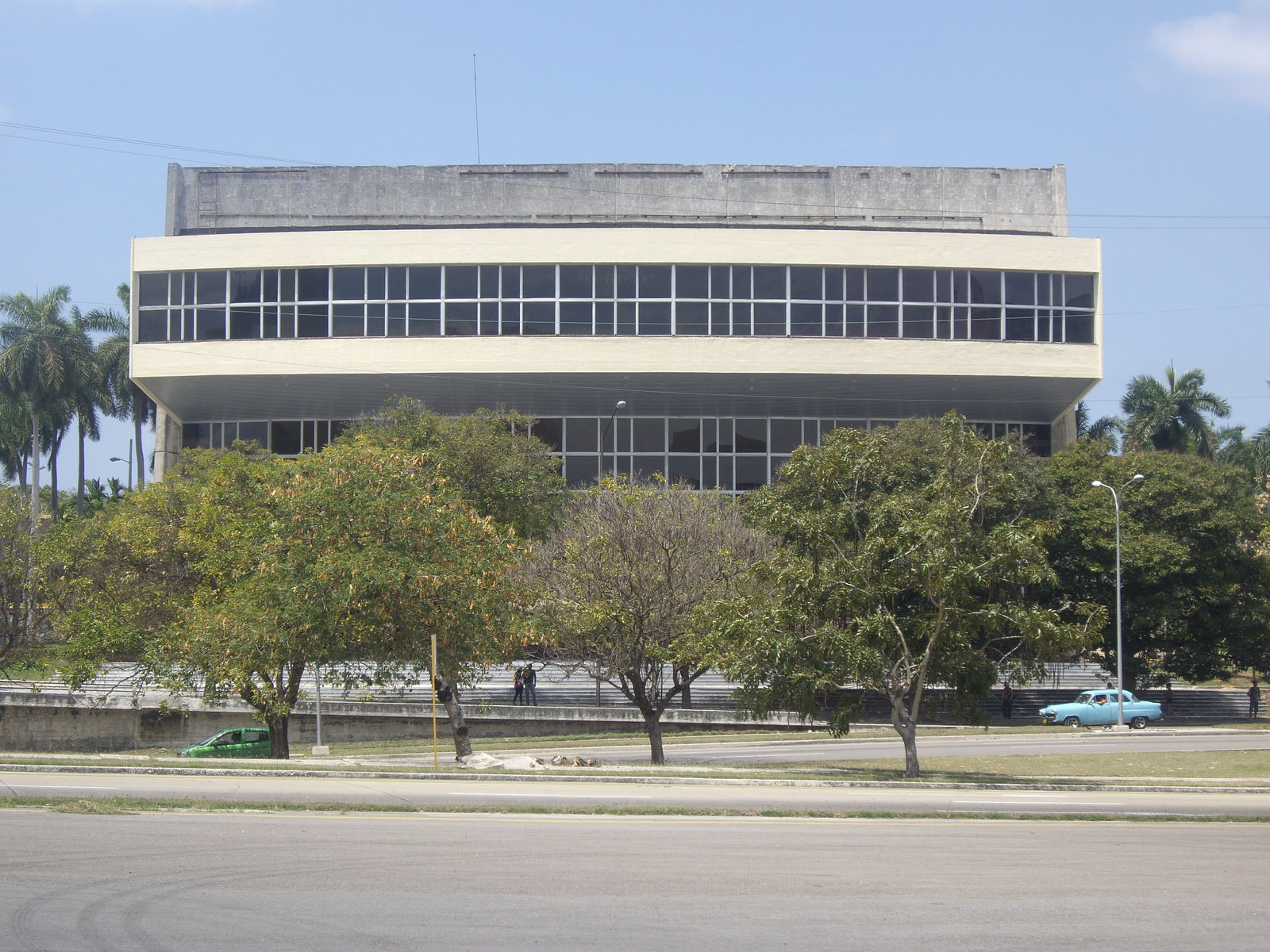
The National Theater of Cuba

Wikipedia

This drain threatens every sector, including the economy, education, and culture. A flagship like the Tropicana nightclub may survive, if only barely. The same goes for the Teatro Nacional de Cuba at the Plaza de la Revolución, the only place left in the capital where anything can still be shown on a stage. But only when there’s electricity and staff are available to unlock the doors.

The capital’s once-renowned book fair, usually held in February, was postponed to August 2026, around the time of Fidel Castro’s 100th birthday celebration, marked by nostalgic revolutionary slogans. Russia was invited as the guest country, the great brother from the glorious socialist era. But Russia has little to spare for the Caribbean island. Simply transporting books to the venue means reckoning with considerable logistical unknowns.

The Havana Film Festival finds itself in a somewhat similar position. Since 1979, the “Festival Internacional del Nuevo Cine Latinoamericano” has been quite simply the central forum for Latin American cinema, a kind of counter-model to Hollywood productions and major film festivals in the U.S. and Europe. It’s scheduled to take place in early December 2026, and the festival’s website us currently accepting film submissions for the competition. But who will actually take part remains unclear. For many years, the Goethe-Institut had its own section for German films as part of the event. But Fackler waves that off. In the past, they regularly invited German directors to participate in panel discussions. Now, she says, that no longer makes sense. The few films still being shown keep getting pushed back by hours due to unforeseen power outages, and sometimes the even stop in the middle of the screening.

Malpaso Dance Company during rehearsal

Christopher Duggan

The situation is dire, yet Malpaso keeps dancing. Fernando Sáez describes a tightly packed schedule for the coming weeks and months. He himself has been invited to New York to present a documentary about the company. The ensemble’s agenda includes three weeks in Canada, followed by a collaboration with a Norwegian choreographer. How is all this travel supposed to happen given the almost nonexistent air traffic to and from the Caribbean island…? Fernando Sáez seems untroubled by such doubts. He has spent the past twelve years overcoming so many obstacles that a canceled flight is hardly likely to dampen his spirits.

Malpaso Dance Company during rehearsal

Christopher Duggan

Following the acclaimed performances of “Trapicana” in Hamburg and Berlin, the cooperation agreement with the Goethe-Institut calls for the piece to also be shown in Havana. Where and when remains to be seen. According to both Annesusanne Fackler and Diana Rosa Hernández, the piece will also need to be dramaturgically adapted in a few places without changing its message. The brief clip of a Donald Trump speech played near the end, for instance, in which he rambles on about how wonderful everything on the island would be if only the regime were finally gone can hardly be repeated in front of party officials. Likewise, the word “Patria” – meaning homeland – into which the dancers change the lettering “Trapicana,” would likewise have little chance of being allowed to stand uncensored.

Malpaso Dance Company during rehearsal

Christopher Duggan

Even the minimal political allusions Joana Tischkau wove into the choreography could cause friction in Cuba. It’s not unlikely that representatives of the Cuban embassy have already seen the piece in Hamburg or Berlin. The Berlin premiere, which opened the Tanz im August festival, happened to fall on August 13, 2026 – the 100th birthday of Fidel Castro. Anyone inclined to think the worst could read a political message into that alone.

Malpaso Dance Company during rehearsal

Christopher Duggan

Yet Malpaso does not see itself as political, at least not in the sense of criticizing the regime. “When it comes to the material situation, there’s nothing we can do,” says Fernando Sáez. “At most, we can change ourselves and reflect our situation in our work. Because what is art ultimately about? It’s always about human existence.”

Never before “Trapicana” had a Cuban ensemble – not even Malpaso itself – taken on a subject that engages directly with the traditions of its home country. Their own choreographies have always been devoted entirely to movement and aesthetics. For Sáez, excellence itself is already subversive; perfection is a goal. “It’s about beauty,” he says, turning the question of politics toward the aesthetic: “Beauty is a political force. The Greek philosophers already recognized that. Nothing, viewed politically, is stronger than beauty.”

“Trapicana”

Lennart Brede

If that’s what he means by “Trapicana,” he’s right. The piece lives entirely on the harmony of its movements, the merging of individuals into shapes, the swaying of little skirts, the languid circling of hips. There’s also the suggestive power of its colors – that poison green and shimmering Caribbean succulent green reflected in the sequins of the bodices. It is beautiful; it is aesthetic. It’s not political, but it is the most contemporary thing Cuba is currently able to produce.

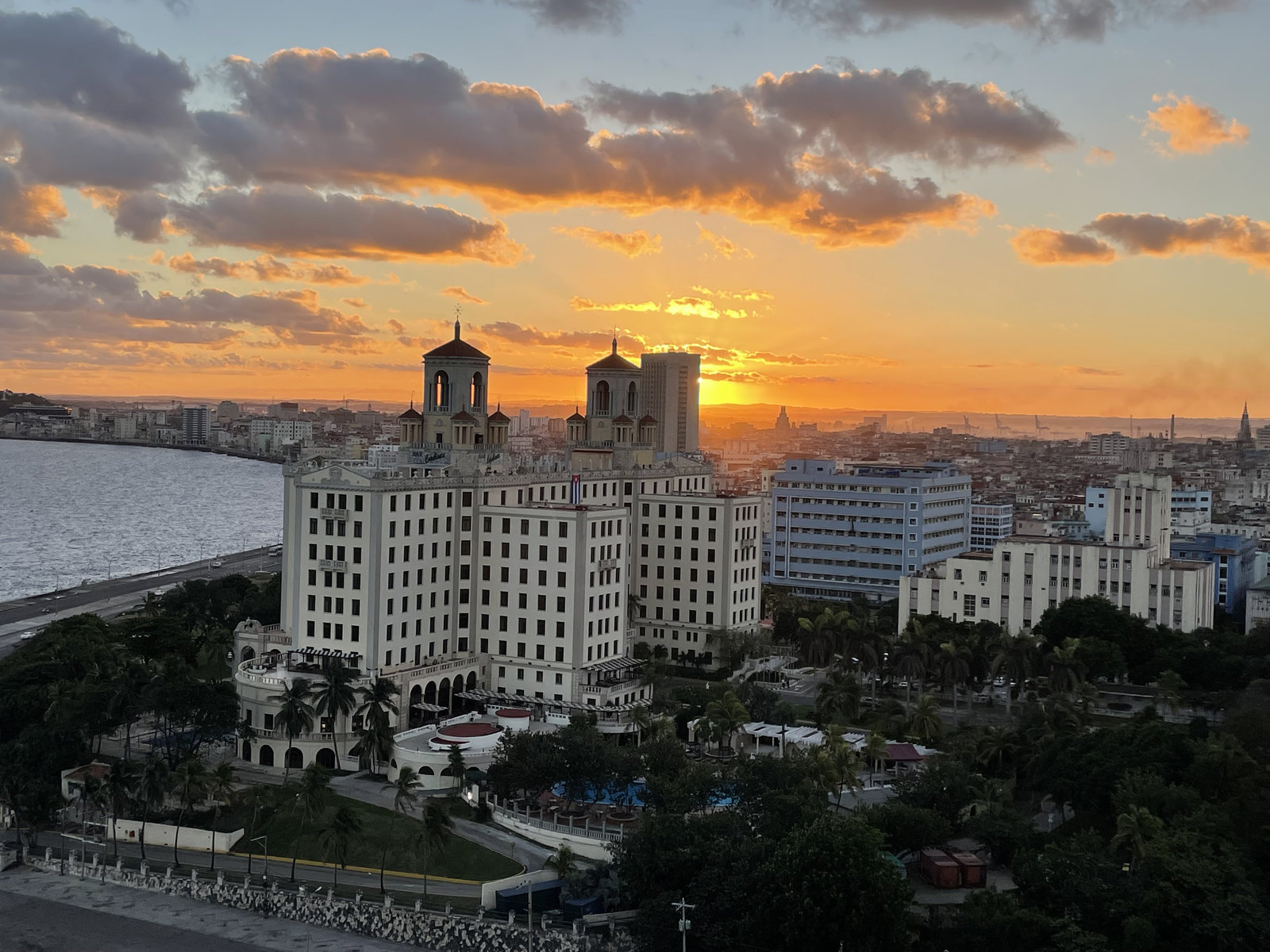
Havana

Annesusanne Fackler