The Sound of Silence

The Waltz of the Snowflakes in Times of War

Ira Polyarnaya

Silence has fallen over Russia. No matter what you say—whether you support or oppose the current government—it can be used against you. Under these circumstances, miracles occur, such as the works of choreographer Pavel Glukhov.

Arsen Muranov

The famous poem, Silentium, was written nearly two centuries ago by Fyodor Tyutchev, a prominent Russian poet. A diplomat by profession, Tyutchev was deeply involved in the political life of his time. His advice, translated by Vladimir Nabokov, is as follows:

Speak not, lie hidden, and conceal
the way you dream, the things you feel.
[…]

Live in your inner self alone
within your soul a world has grown,
the magic of veiled thoughts that might
be blinded by the outer light,
drowned in the noise of day, unheard…
take in their song and speak no word.

The phrase “conceal the way you dream, the things you feel” also appears in a libretto by British musician Tim Rice. In his musical Chess, a Soviet chess master laments that nothing makes sense in his homeland, but that he hides most of his thoughts, all his feelings. In Russia, thoughts could indeed be spoken, but never with feeling, please —especially now that the war with Ukraine is raging. Chess was canceled in 2023, like many other productions that deal with the past and address the present. The theater landscape has changed radically. “Speak not, lie hidden,” advises Tyutchev. That is what we are doing now.

In this piece, I will tell the story of a man who manages to use the medium of ballet and circumvent all the pitfalls the State sets for the theater to deliver truly outstanding work in Putin’s Russia. I want to tell of artists in an era when staging operas about domestic abuse or performing them in museums dedicated to the history of political oppression is no longer possible. Immersive and interactive productions involving foreign artists are a thing of the past. Gone are the days when the dance scene, even in Russia, cared about global issues—from the climate crisis to the empowerment of women and the rights of indigenous peoples.

Pussy Riot

Igor Mukhin

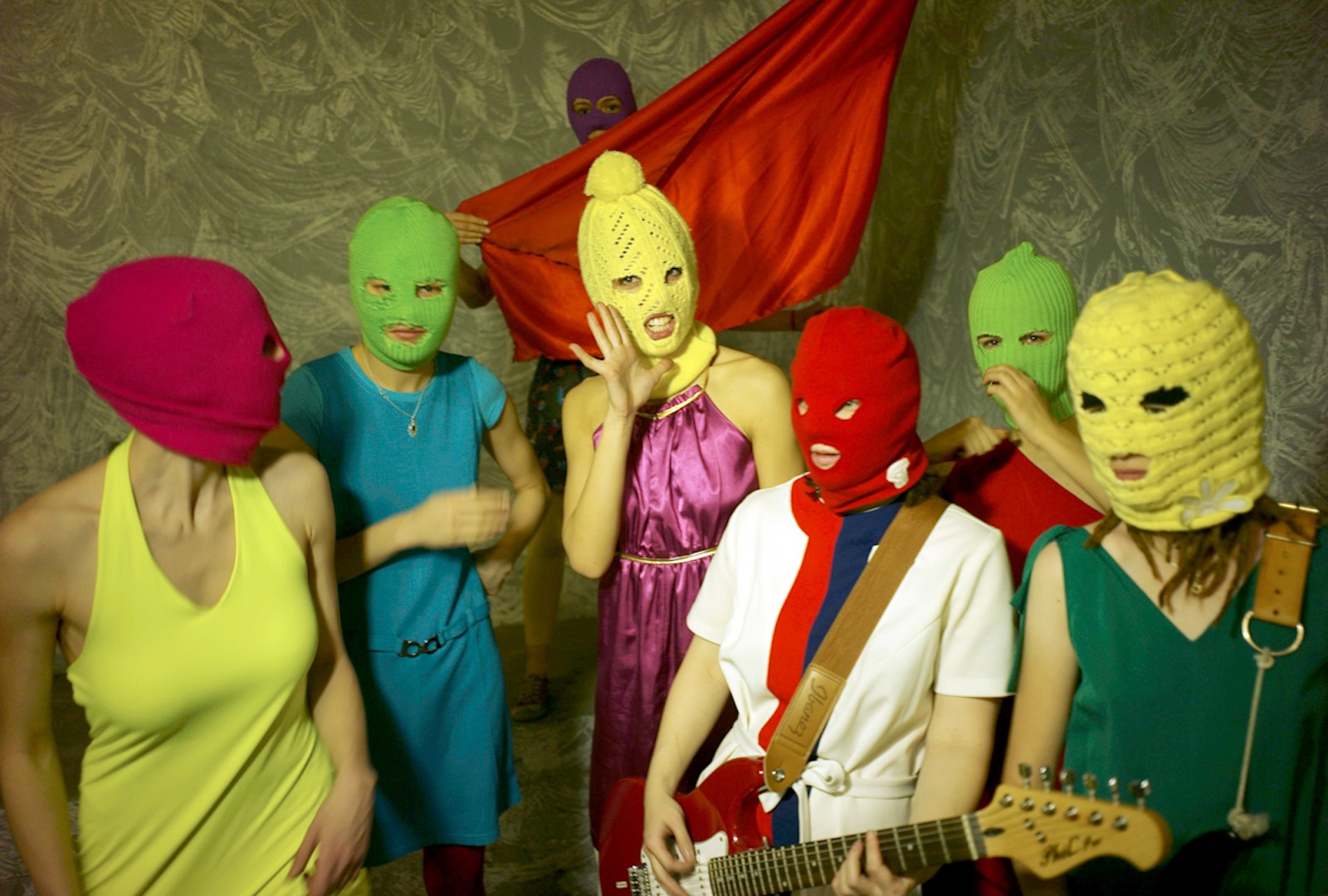
Until as recently as 2023, it seemed as though a magical cloak of invisibility was protecting the theater, which had long since openly confronted the regime. Those in power ignored what was playing out on stage right under their noses—or rather, they simply didn’t care as long as people didn’t revolt. Expressing an opinion on the street carried far more severe consequences than expressing an opinion on stage. You might remember Pussy Riot, who set a precedent in 2012 when they were convicted of “hooliganism motivated by religious hatred” (Article 213 of the Russian Criminal Code). From this was derived the criminal offense of “disrespecting the feelings of religious people”—an offense that was officially incorporated into the Criminal Code as Article 148 following the scandal.

Scene from Timofey Kulabin’s “Tannhäuser”

Andrei Tsiller (Novosibirsk Opera and Ballet Theatre)

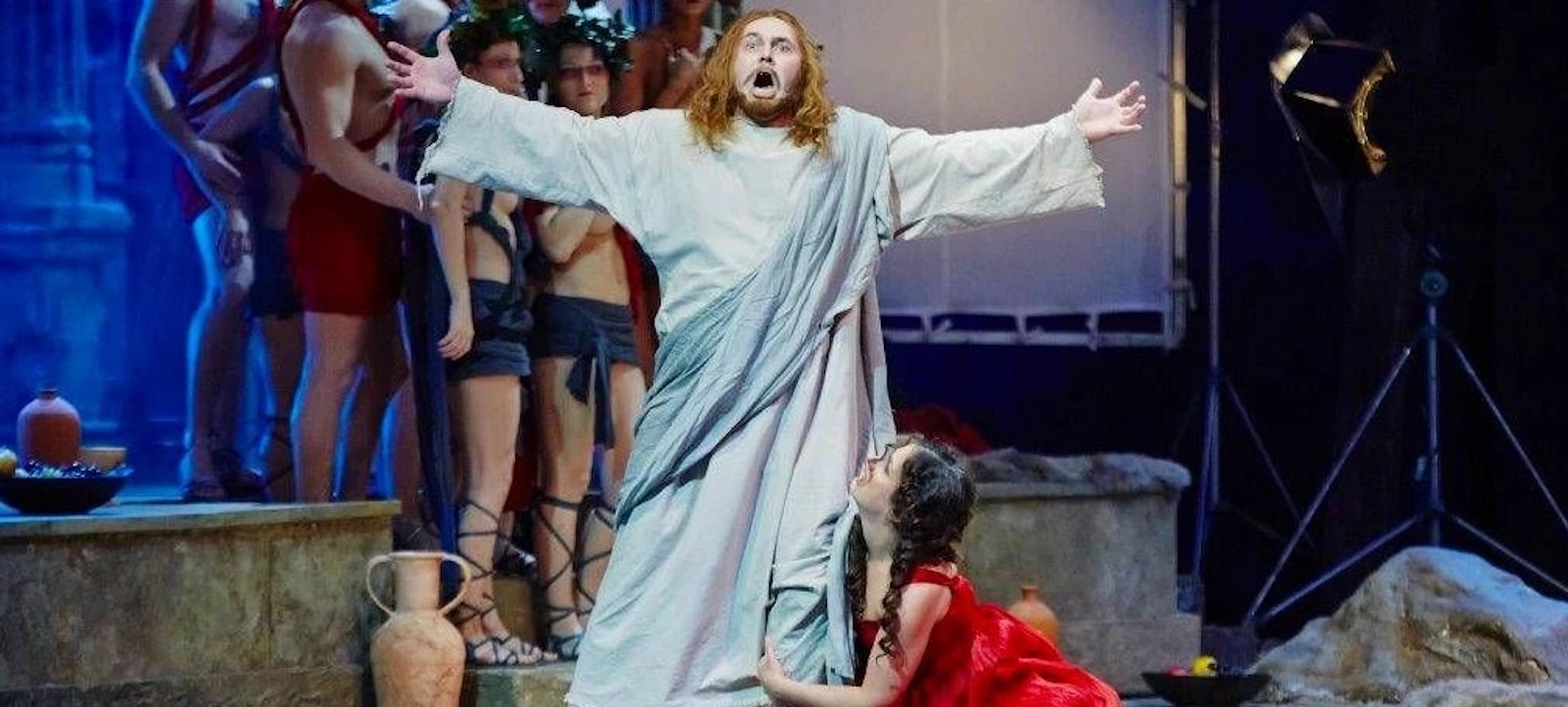
Just three years later, this provision was invoked again to ban a production of Wagner’s Tannhäuser by Timofey Kulyabin, a prominent young theater director in Novosibirsk. It also led to endless legal battles against theater director Boris Mezdrich, who ultimately lost his job. The case was ugly and loud and triggered another “theater case”—this time against Kirill Serebrennikov, Sofia Apfelbaum, and the “Seventh Studio” theater group.

“Nureyev” in the version for the Berlin State Ballet with David Soares

Carlos Quezada

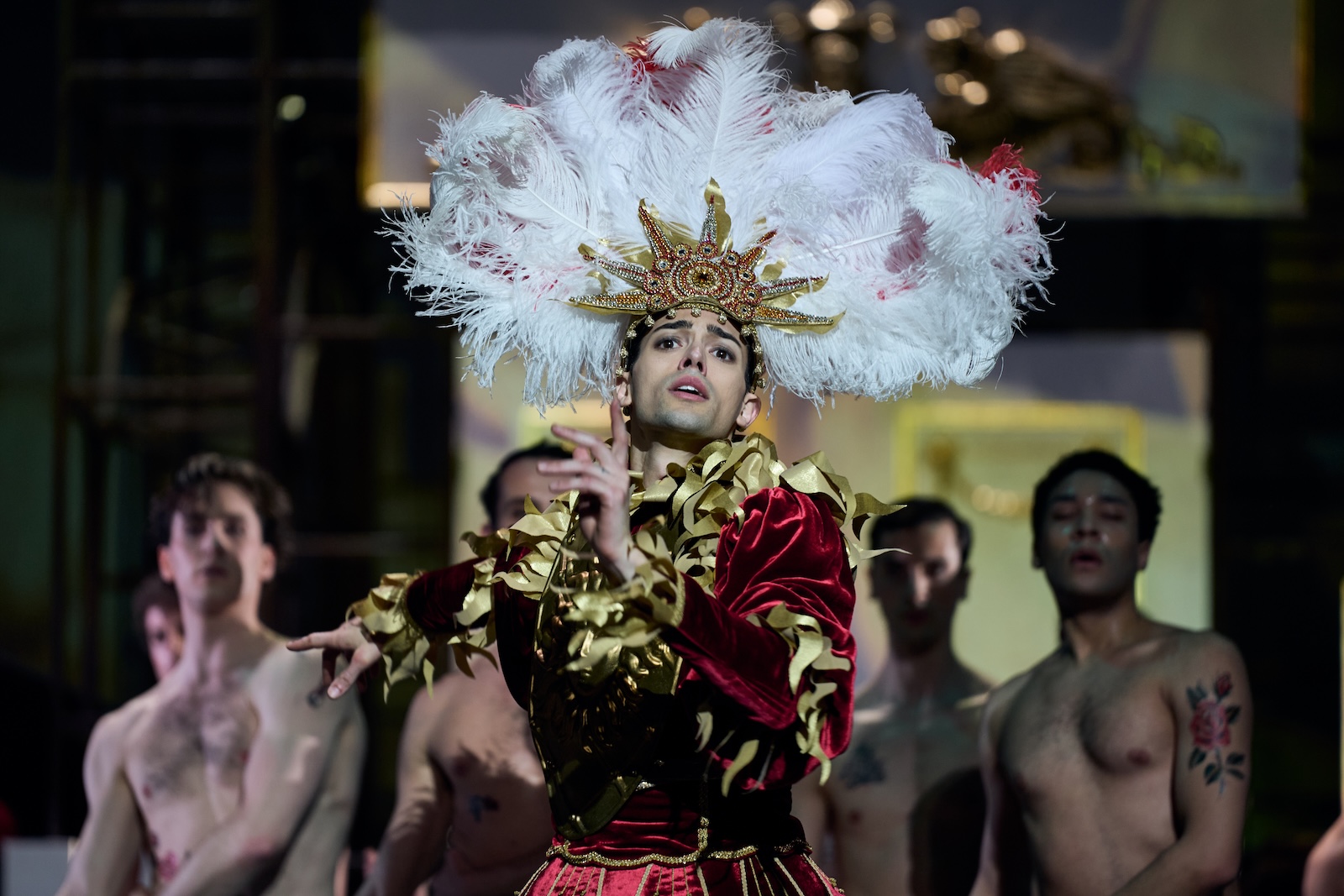
In 2017, theater director Kirill Serebrennikov and choreographer Yuri Possokhov were working at the otherwise conservative Bolshoi Theater on a ballet titled Nureyev, based on the story of the iconic gay dancer who fled the USSR in search of freedom. Serebrennikov was placed under house arrest, even though the charges in the “Seventh Studio” case were fabricated and should have been dismissed by the court—but this is not the time, not in a Russia at war that has just annexed Crimea and invaded Donetsk and Luhansk.

“Body of Protest”

Polina Soyref

In 2020, Russian photographer Polina Soyref won the Allard Prize for Photography for a series titled The Body of Protest. One of the images showed a naked woman standing in the center of Yekaterinburg in 2019, holding a blank sheet of paper. Soyref explained that it is no longer possible to protest with words, but going out and showing one’s body achieves the same effect. In 2022, this was enough to land her in prison.

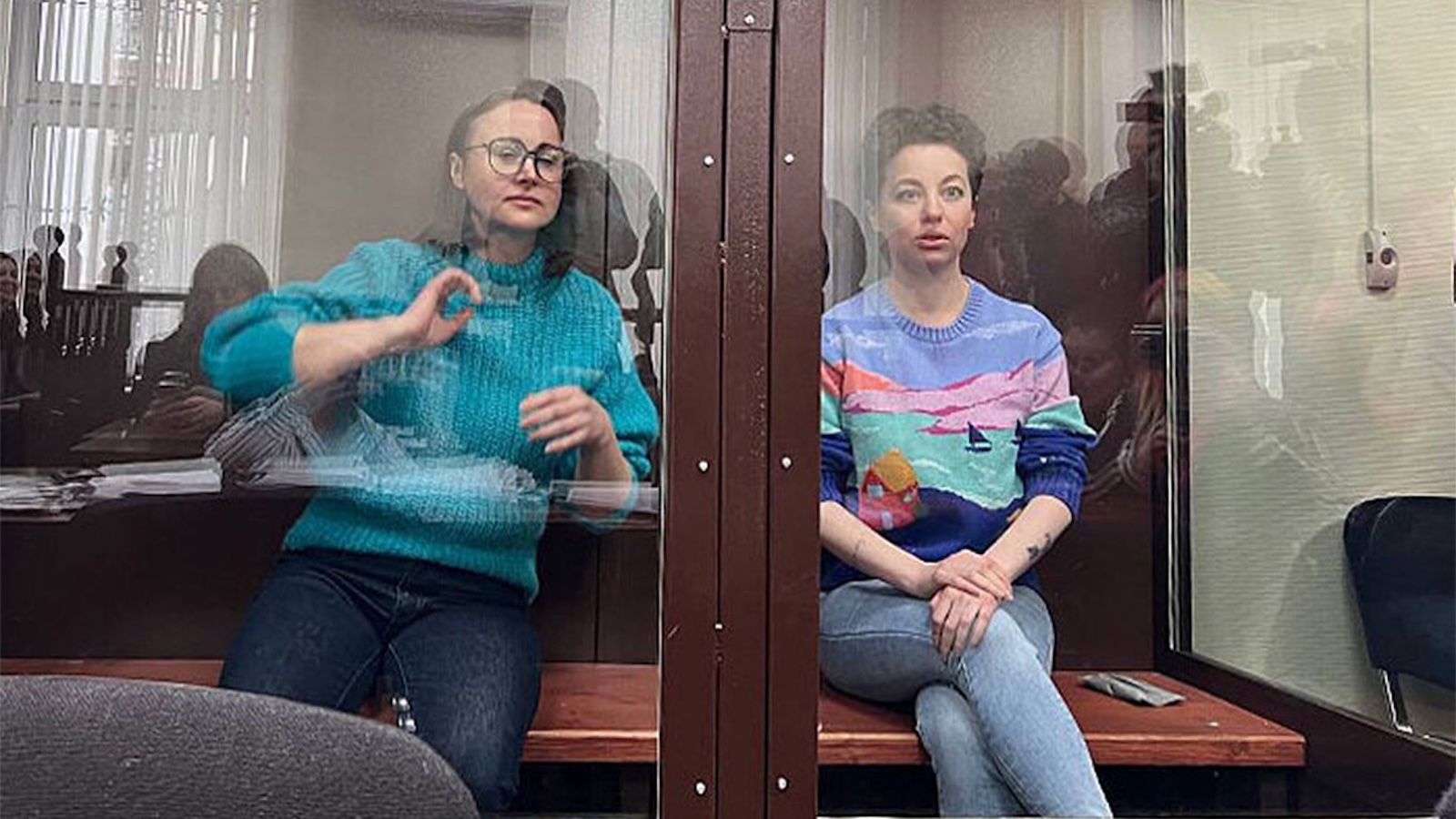
In court: playwright Svetlana Petriychuk and director Evgenia “Zhenya” Berkovich

Press Office of the Zamoskvoretsky Court in Moscow

Unlike choreographers such as Pavel Glukhov, many artists have since left the country, whether in response to threats and accusations, to save their freedom and often their lives, or to assert a right to free speech that no one in Russia can hope for anymore. If it hadn’t been clear before, this became evident when playwright Svetlana Petriychuk and director Evgenia “Zhenya” Berkovich were each sentenced to six years in prison for “propaganda for terrorism” due to a theater production whose main message was directed against terrorism in any form: No one could speak freely in the theater anymore—or speak at all, for that matter.

“Macbeth” by Elizaveta Bondar

Alexei Molchanovsky

In her production of Macbeth at the Theater of Nations in Moscow today, Elizaveta Bondar dismantles all articulated language, allowing Shakespeare’s characters to scream and roar in their desperation and rage. The “body of protest” has become the central means of resistance in the censored theater space.

Russia inherited from the USSR the urge to make everything as big as possible. The Russian microchip is the largest in the world. That’s a joke, but only half a joke.

What is size, after all? Moscow prefers to invest in a few large institutions rather than support smaller ones. The same thing happened with cultural institutions. In 2011, a district’s kindergartens and schools were consolidated, presumably to reduce administrative costs. This consolidation destroyed individual educational paths and resulted in a loss of independence, identity, and tradition for the schools. Many teachers moved to private schools.

The Moscow healthcare system also merged many smaller facilities to improve the efficiency of medical care and the technological means by which it is delivered. Since then, people have had to wait weeks for specialist appointments and diagnostic tests instead of being able to consult relatively familiar doctors within walking distance.

The Boris Pokrovsky Chamber Music Theater

Wikipedia

The same was true for culture: As early as 2018, the Boris Pokrovsky Chamber Music Theater was incorporated into the renowned Bolshoi Theater, despite the opposition of the management of both opera houses. The ensembles never fully integrated, and the Pokrovsky Theater (renamed the “Chamber Theater of the Bolshoi Theater”) remained a “state within a state.” Interestingly, the merger actually brought an unexpected breath of fresh air to the institution. The Bolshoi’s management brought in forward-thinking directors, revamped the repertoire, and transformed the chamber stage into a promising part of theater life. Other theaters under municipal administration were less fortunate. For example, the Alexandrinsky Theatre in St. Petersburg was to be merged with the Fyodor Volkov Drama Theatre in Yaroslavl, which is located nearly 750 kilometers away. There were serious discussions about establishing a United Directorate of State Theaters, similar to the one that existed under the tsarist government before 1917.

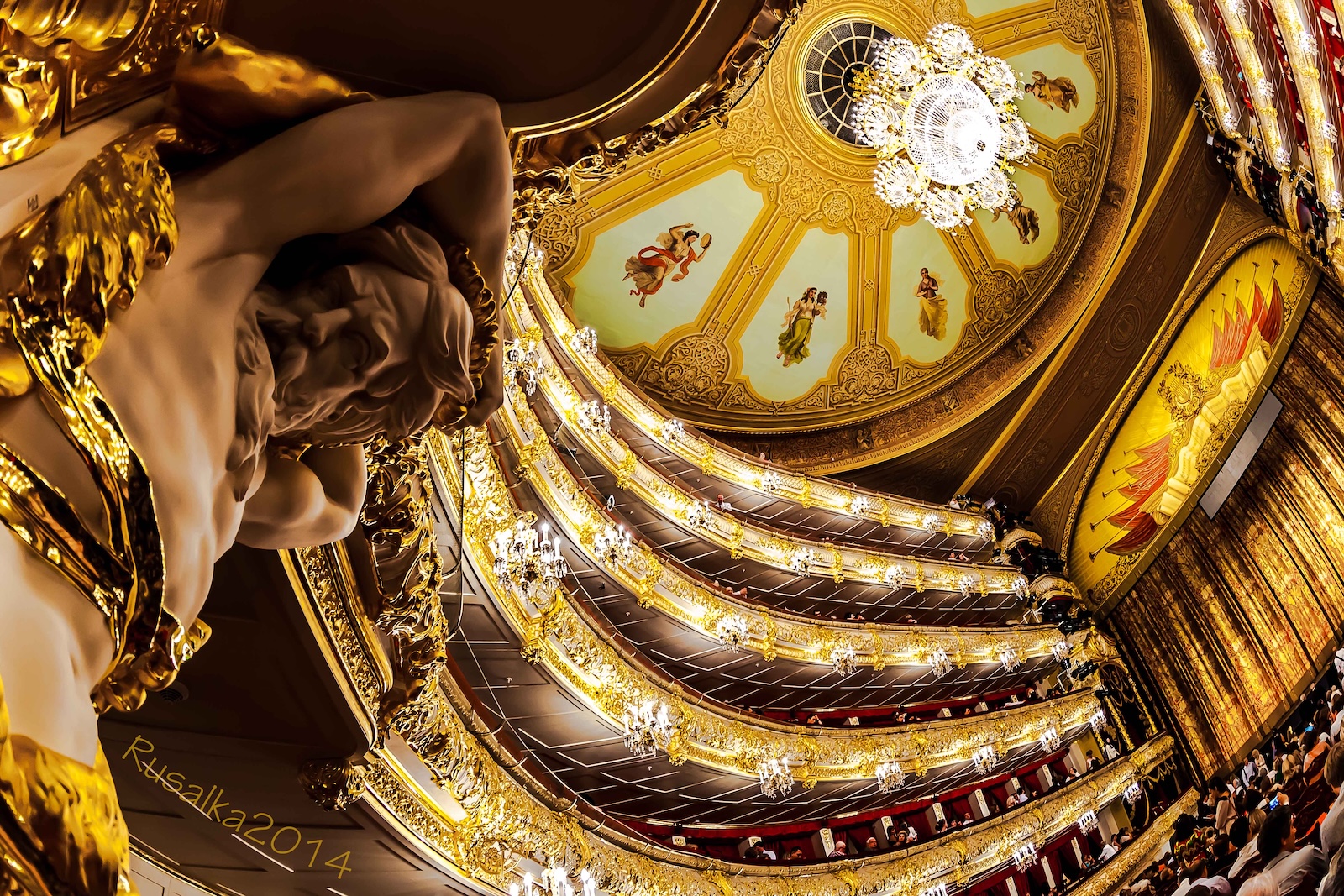
The Splendor of the Bolshoi

Matilda Diamant

Subsequently, the Bolshoi Theater in Moscow was placed under the direction of Valery Gergiev from the Mariinsky Theater in St. Petersburg, some 750 kilometers away. As Valery Gergiev became director of the Bolshoi without resigning from his post at the Mariinsky, the Bolshoi Theater in Moscow is now a branch of the Mariinsky empire in St. Petersburg.

Moscow, too, saw a wave of mergers and takeovers, including the dismissal of liberal-minded theater directors for speaking out against the war. Moreover, the financial struggles of these institutions in the wake of the pandemic provided an excellent excuse to shut down at least six theaters.

First up was the Meyerhold Center, a hub for the development of experimental theater, educational programs, and research. After director Elena Kovalskaya and artistic director Dmitry Volkostrelov resigned in protest against the war, the center was merged with the Theater of the School of Dramatic Art. Two years later, in June 2024, the premises of the former Meyerhold Center were transferred to the Moscow Jewish Theater, Shalom. The Moscow Puppet Theater first merged with the Moscow Children’s Chamber Puppet Theater and then also with the Regional Puppet Theater in 2024. The “Ten” (“Shadow”) Theater was merged with the Moscow Shadow Theater. The physical proximity of the stages played a role in the annexation of the small ApArte Theater to the Taganka Theater, as well as the merger of the Sphere and Hermitage theaters. Additionally, the MOST student theater was incorporated into the Mossovet Drama Theater.

The former Meyerhold Center

Wikipedia

Konstantin Bogomolov

Дмитрий Белицкий

All these stages now have a single director. Following a similar move, renowned director Konstantin Bogomolov—once a free spirit, but now a staunch supporter of the regime—heads both the Theater on Malaya Bronnaya and the former Roman Viktyuk Theater. Meanwhile, the Tabakov Theater and the Sovremennik Theater are led by actor Vladimir Mashkov, chairman of the theater workers’ union and, unsurprisingly, one of Vladimir Putin’s closest confidants.

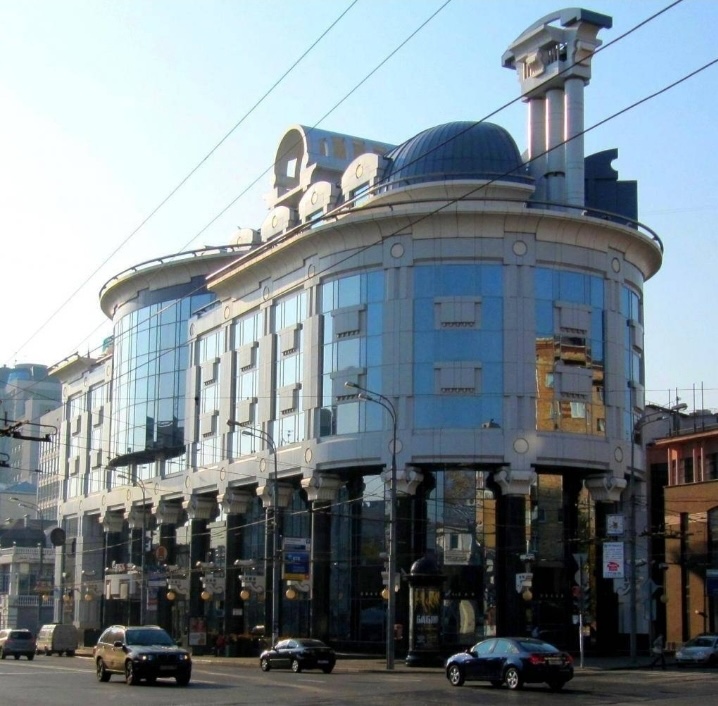
The Stanislavsky and Nemirovich-Danchenko Music Theater

Фёдор Вяземский

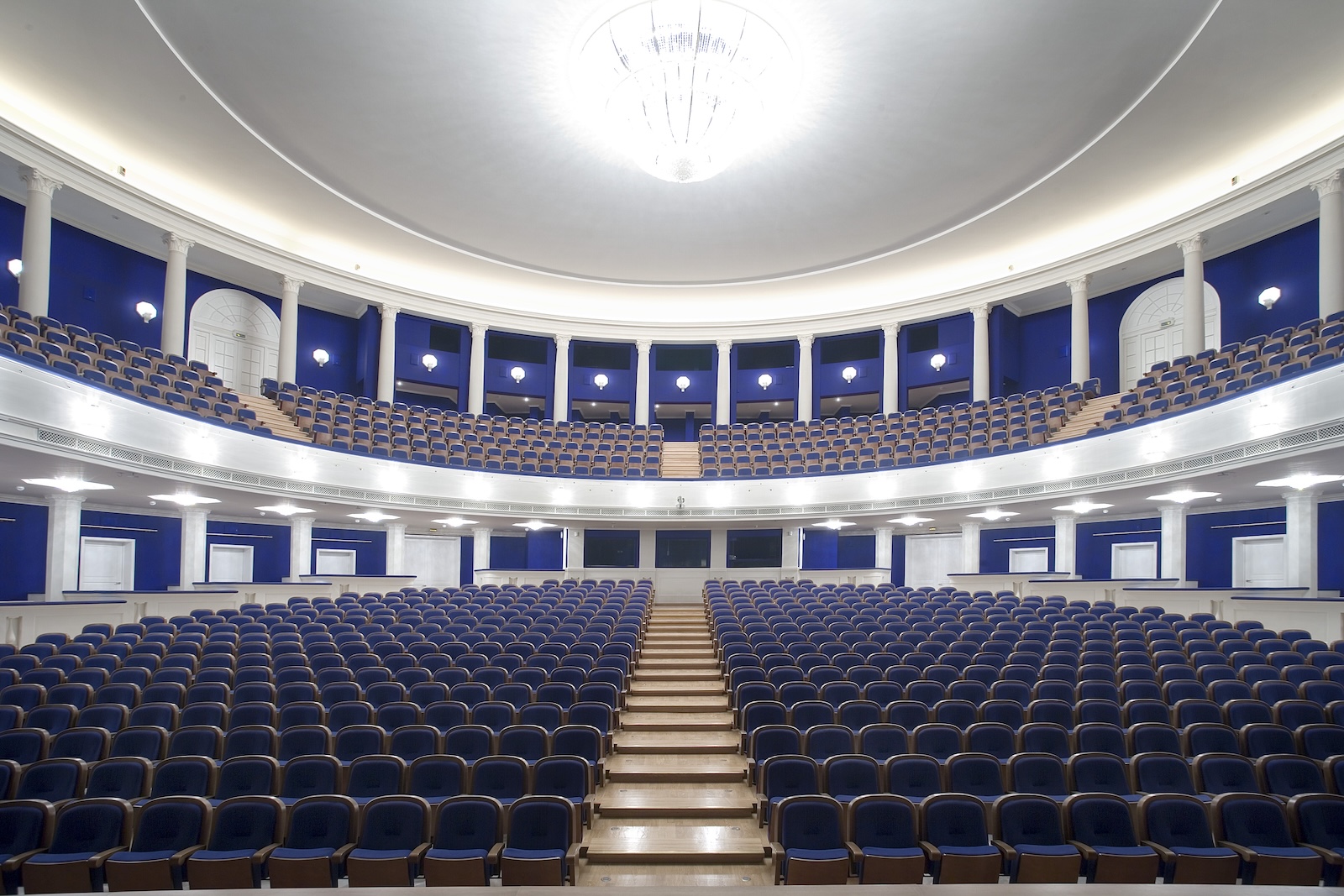
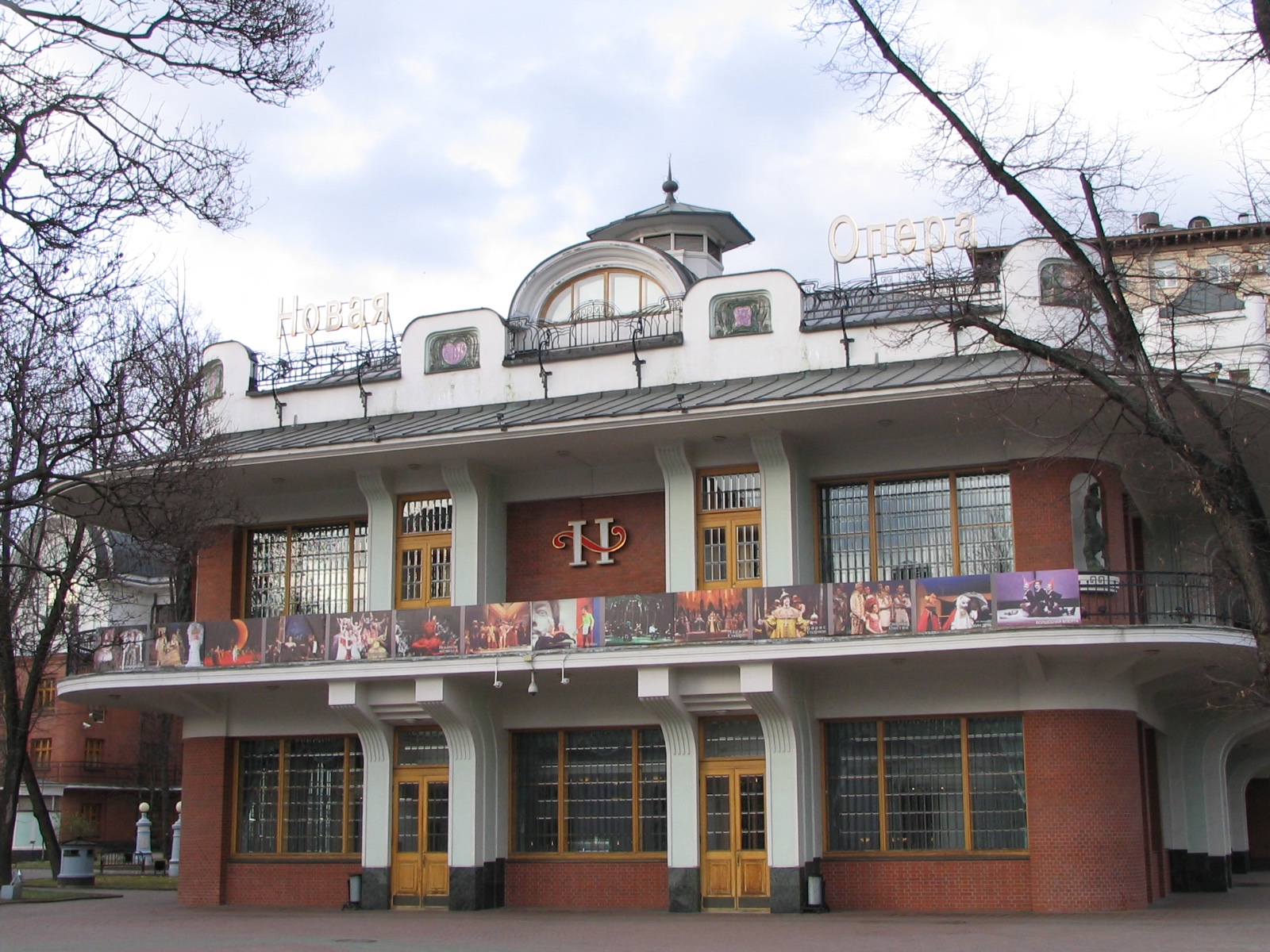
Putin loves large, grandiose buildings—and to ensure they are not defined solely by opera, he prefers that they house independent dance companies as well. Thus, the Stanislavsky and Nemirovich-Danchenko Music Theater absorbed the New Ballet Theatre, from which there has been no word since. The Novaya Opera, founded in 1991 by conductor Evgeny Kolobov, was also forced to take in Ballet Moscow, though without its artistic director Elena Tupyseva, who was removed in the summer of 2022 due to her anti-war stance and then emigrated to Canada. This theater—or rather, Ballet Moscow—is also home to Pavel Glukhov, a talent who has carved out a place for himself amid these skirmishes by offering clear responses to the regime’s impositions.

The New Moscow Opera

Andres

For the first time, Ballet Moscow had a permanent home. What’s more, the company had a new artistic director, former Bolshoi dancer Anastasia Yatsenko. In addition to her classical ballet experience, Yatsenko participated regularly in Alexei Ratmansky’s experimental projects. This marked the beginning of third chapter for Ballet Moscow, which was founded in 1989 by Nikolai Basin, a classical ballet dancer who once performed on provincial Soviet stages in Petrozavodsk, Krasnoyarsk, and Chișinău. He initially conceived Ballet Moscow as a means of combining tour-ready classical works under the “Russian Ballet” label with commercially successful entertainment pieces. To this end, Basin sought out contemporary choreographers who could also provide the ensemble with original, internationally competitive material.

“Le Sacre du printemps” by Régis Obadia

Cie. Régis Obadia

It all began in the late 1990s with a production by the Chinese choreographer Wan Su. This was followed by works by the Dutch choreographer Paul Selwyn Norton. Contemporary dance in Russia gained momentum, and the ensemble built a reputation and an audience. The highlight was Le Sacre du Printemps in 2003, a work by French choreographer Régis Obadia that marked the 90th anniversary of Stravinsky’s score.

“Les Noces” by Régis Obadia

Cie. Régis Obadia

What followed was a decade of stagnation, during which there were no new breakthroughs in contemporary dance and the classical repertoire lost more and more significance. In 2012, Basin, who was 75 years old at the time, was not offered a contract renewal. She was succeeded by Elena Tupyseva, a successful producer, festival director, and dance connoisseur with strong connections to the world of contemporary dance. Tupyseva downsized the ensemble and repertoire, once again inviting Régis Obadia to expand his Le Sacre du Printemps with another Stravinsky piece, Les Noces. Tupyseva works with choreographers such as Sasha Pepelyaev, who created the unforgettable Café Idiot, and Karine Ponties, whose All Roads Lead North has been in the repertoire since 2016. Tupyseva also made efforts to encourage young Russian choreographers to collaborate with contemporary composers and found intellectual freedom and a contemporary artistic ethos on stages such as the now-defunct Meyerhold Center and the ZIL Cultural Center. She also promoted the formation of a contemporary dance troupe at the Chamber Theater in distant Voronezh, then under the direction of Mikhail Bychkov. This is where Pavel Glukhov would begin his career.
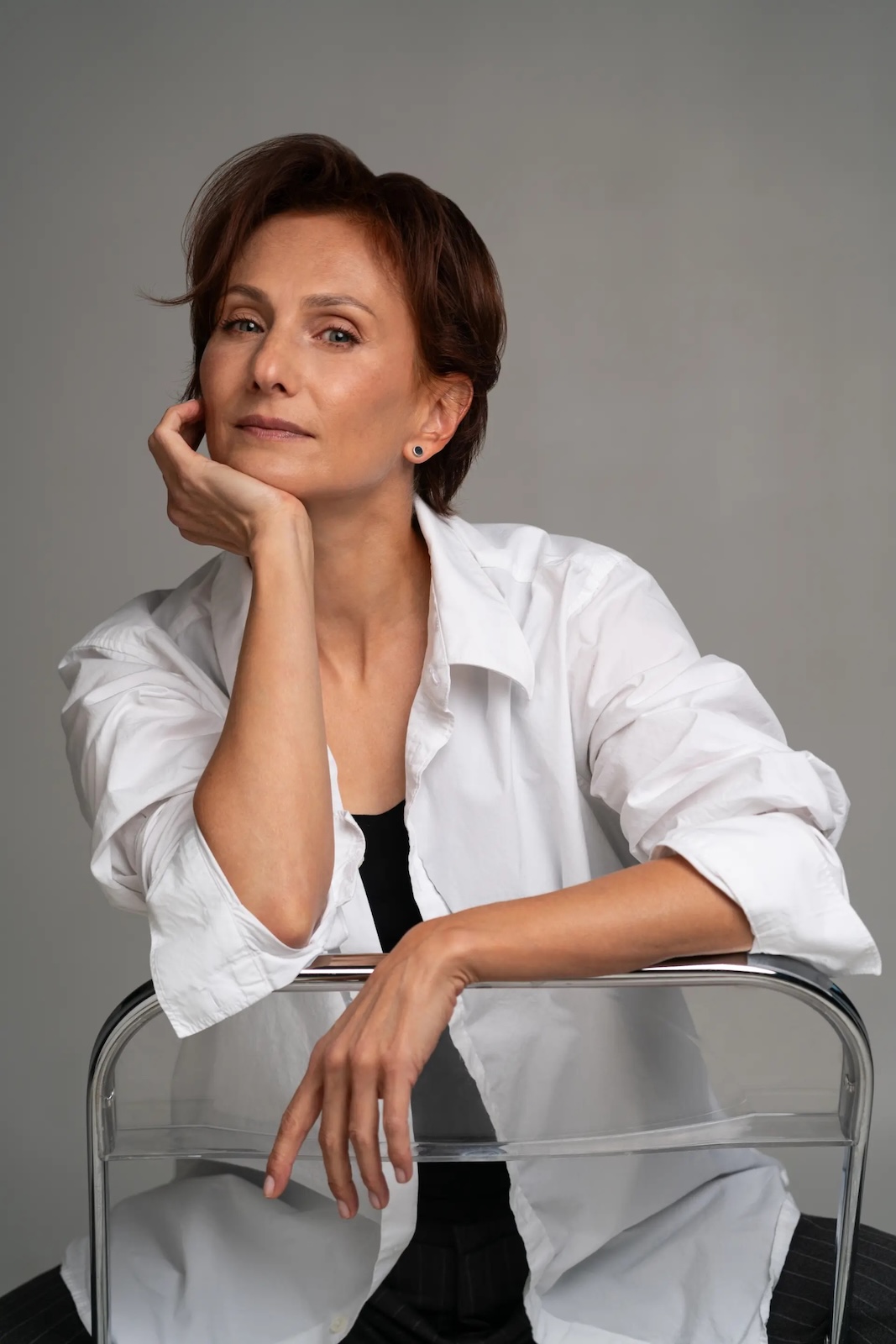
Anastasia Yatsenko

However, first, Elena Tupyseva was fired. Ballet Moscow, now part of the Novaya Opera, is now led by Anastasia Yatsenko. In this company, everything continues to sparkle with exuberant experimental freedom—a nearly unique situation in 2020s Russia.

“If only you knew from what filth poems grow, without shame,” wrote the poet Anna Akhmatova in 1940 about people’s living conditions and, therefore, also about Russian politics.

Pavel Glukhov adds: “Everything that happens to you here is, in reality, the source of your creativity.” Glukhov, a choreographer whose dance career began at Ballet Moscow (from 2009 to 2013), where he became a ballet master before focusing on his own productions, sets himself apart by his keen eye for social issues and his refined ability to convey messages through physical action .

In his productions, Pavel Glukhov first liberates dance from any political statement whatsoever, focusing entirely on the movement itself. While more radical choreographies always placed a message at the forefront, Glukhov seems to explore solely the dynamics and their formal principles. At the Voronezh Chamber Theater, 500 kilometers south of Moscow, with the newly-founded dance company alongside the local theater troupe, Pavel Glukhov seeks to encourage the dancers to think—very visibly—solely through their bodies.

Pavel Glukhov

Rust

Diana Vishneva and Daria Pavlenko in “Duo”

Yulia Mikheeva

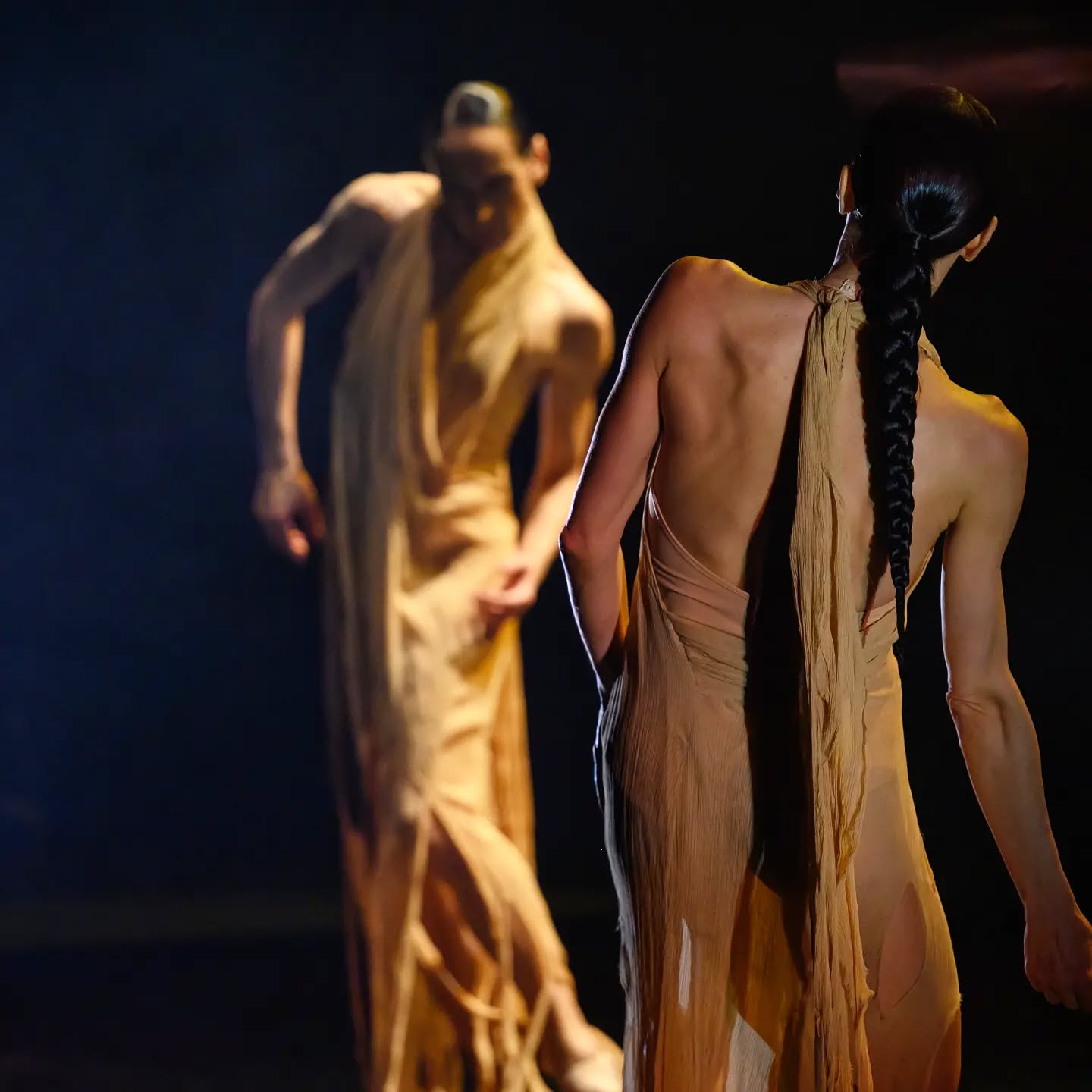
To this end, Glukhov uses the tools of classical ballet—but not to tell stories. He reduces everything to a bare framework. This choreographer cultivates a bodily language that articulates the ineffable and possesses an unmistakable authorial style, whether working with less accomplished ballet ensembles or with stars such as Diana Vishneva and Daria Pavlenko, as in his choreography Duo.

“Mirror” by Pavel Glukhov

Dmitry Dubinsky

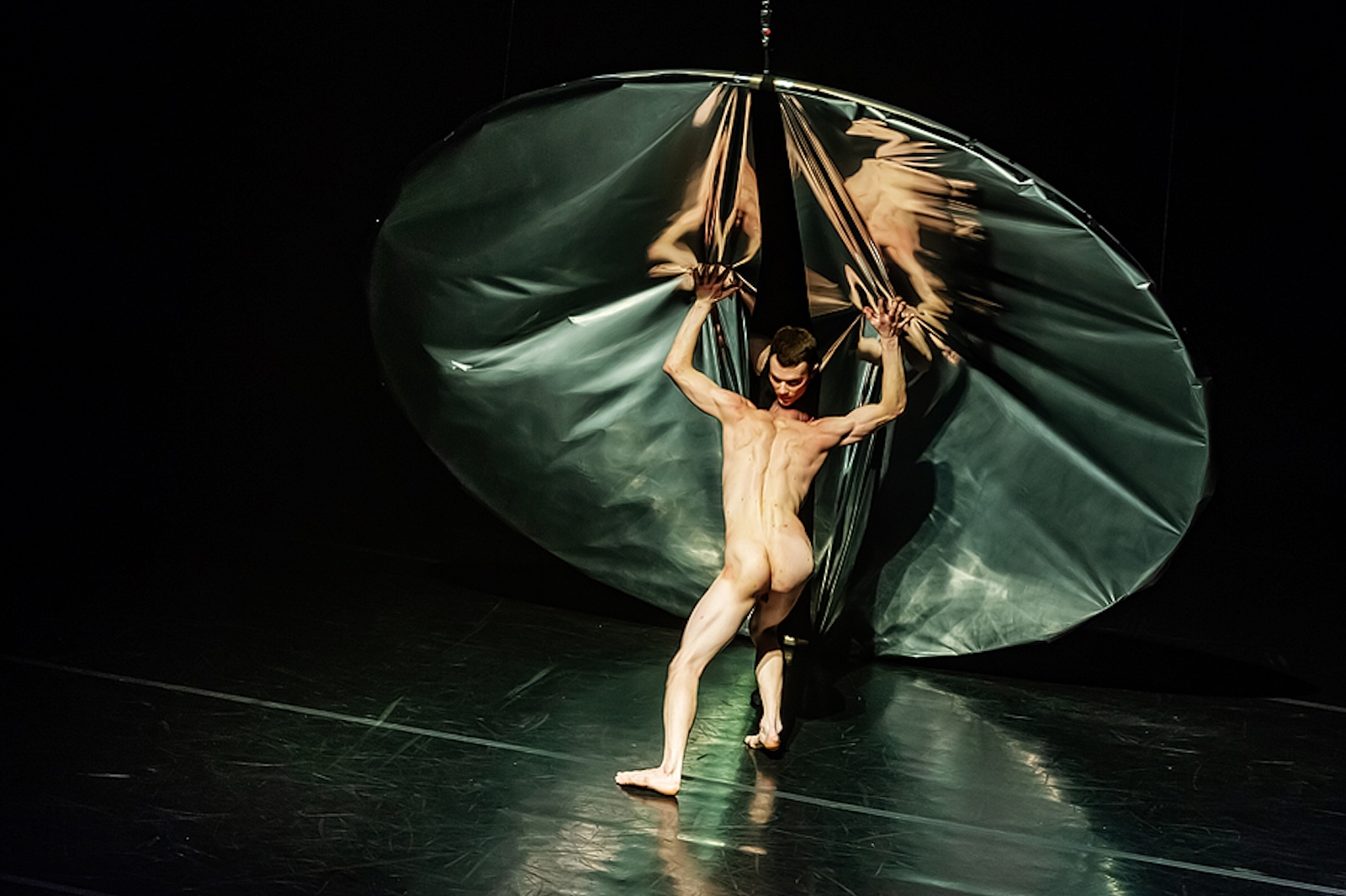
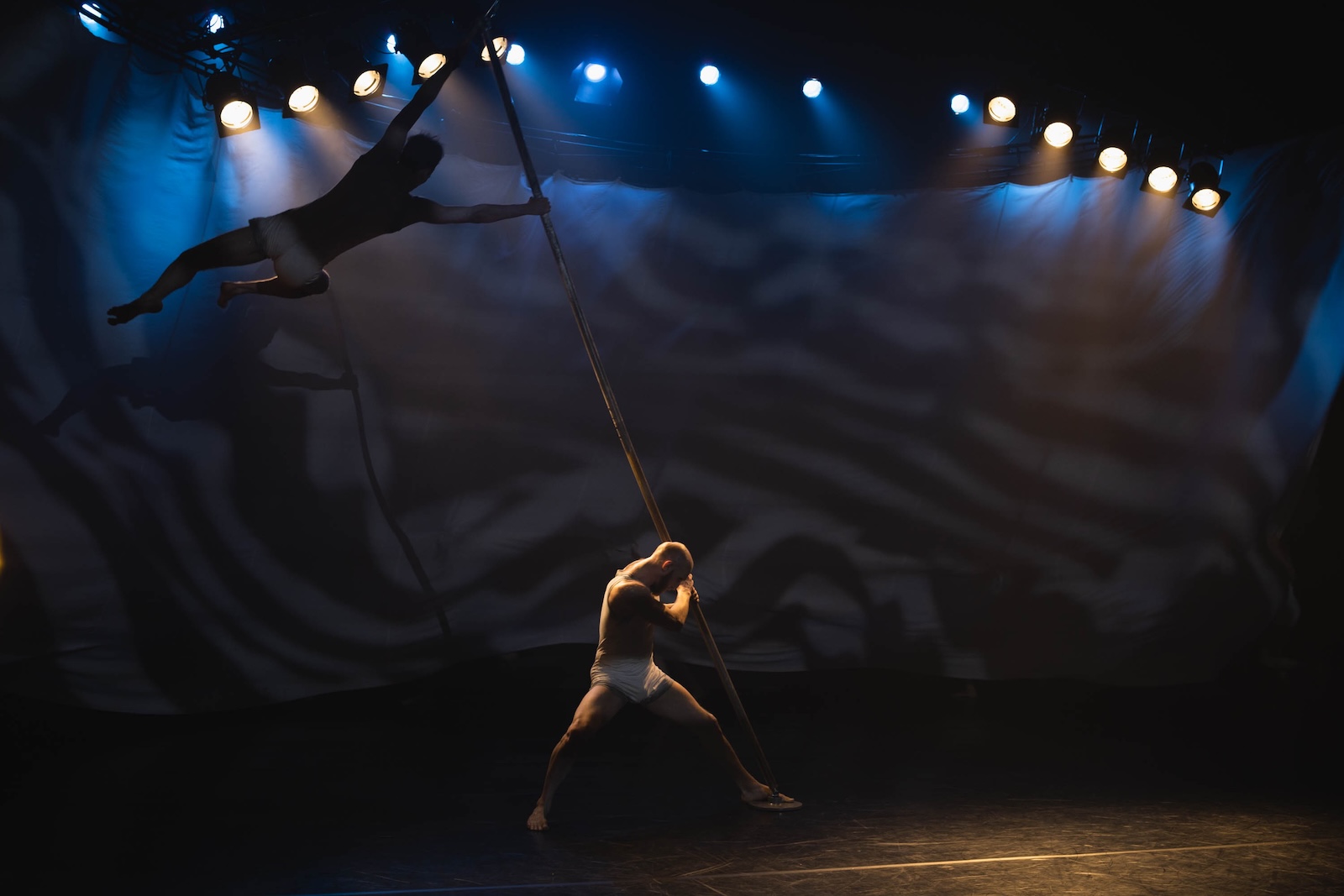
In his first work with the company in Voronezh, Mirror (2019), he used movement and form to make the bodies appear inhuman. They merged, collided, and mutated. His production The Raft of the Medusa was released a year later. In it, he recreates the famous composition from Théodore Géricault’s painting using the dancers’ bodies. A disorganized, moving mass finds structure and order—nothing else seems to be happening. But it is an order of death. The goal is not revolution or submission, but rather ruin and inevitable nonexistence.
“The Raft of the Medusa” by Pavel Glukhov

Darya Nesterovskaya

His production The Raft of the Medusa was released a year later. In it, he recreates the famous composition from Théodore Géricault’s painting using the dancers’ bodies. A disorganized, moving mass finds structure and order—nothing else seems to be happening. But it is an order of death. The goal is not revolution or submission, but rather ruin and inevitable nonexistence.
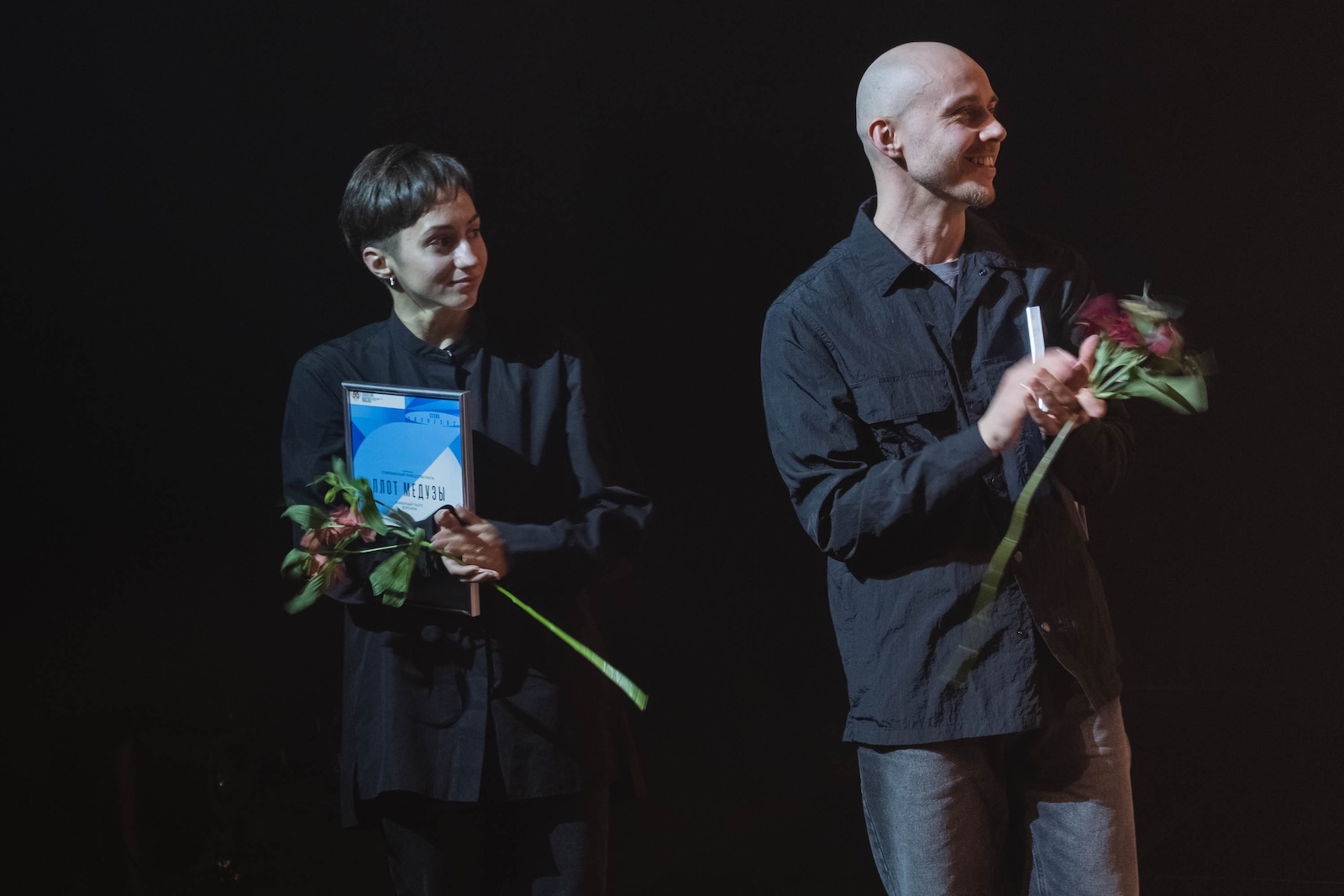
Pavel Glukhov Receives the “Golden Mask”

Darya Nesterovskaya

This production received Russia’s highest dance award, the Golden Mask, in 2022. It struck a chord. In Glukhov’s first work for Ballet Moscow—his interpretation of Stravinsky’s iconic score for Les Noces, supplemented by music from contemporary composer Nikolay Popov—his dancers become inhabitants of a macabre graveyard. They form a collective organism to critique society’s rigidity and its paradoxical urge to both exclude and absorb all those who stand outside its prescribed norms.

“Les Noces” by Pavel Glukhov

Mariia Khutortseva

The production reminded me of Brian Yuzna’s classic horror film Society, except that Pavel Glukhov sets this mysterious society in a traditional Russian provincial town where society consumes itself and rises again; nothing ever changes because the future feeds ruminatively on the past.

Alyona Ugryumova as the Bride in “Les Noces”

Batyr Annadurdyyev

In Les Noces, Glukhov tackles the narrative aspect of a production for the first time, highlighting a character: the bride, danced by Alyona Ugryumova. She is handed over to a man in marriage and raped on her first night as his wife. The next morning, she sets out in search of love and understanding—and meets her downfall.

Glukhov is more than a talented star with a style of his own, the only one who still stands out in Russia. He is also ambitious. He faces what is arguably the toughest test for a contemporary choreographer: creating a well-known, two-hour narrative ballet while saving face and avoiding crumbling under the pressure of tradition: Tchaikovsky’s The Nutcracker at Ballet Moscow.

You can’t escape the rats

The Nutcracker’s battle with the Mouse King, as adapted by Helgi Tómasson

Erik Tomasson

The Nutcracker is a tough nut to crack, for reasons that are distinctly Russian. All Russian children grow up believing that the Nutcracker is their story. They watch it in theaters throughout their childhoods, year after year. The Nutcracker as an indispensable highlight of that grand, unofficial, state-unrecognized, and anti-Soviet-suspicious national holiday—New Year’s. This ballet tells a story very familiar to them: a Christmas tree, a little girl, an enchanting prince, and a kind, bearded grandfather figure. The boldest interpretive decision conceivable on a Russian stage would be to bring the plot, at most, a hair’s breadth closer to E.T.A. Hoffmann’s original tale.

Yuri Grigorovitch

balletfederation.com

Because the title sells wonderfully well, Ballet Moscow also includes it in its repertoire. Yet there is a great model: Yuri Grigorovich’s legendary 1966 Nutcracker production at the Bolshoi Theatre. In 1998, it became a staple of the Bolshoi’s repertoire under the direction of Vladimir Vasiliev, with two performances before New Year’s and six afterward. Right in between, on New Year’s Eve, there was a ball for wealthy patrons. Then Anatoly Iksanov arrived at the Bolshoi, and in early 2003, he came up with the “New Year’s block,” which filled the entire week before New Year’s with The Nutcracker, followed by more performances every other day the week after. Iksanov also enlisted the consulting firm McKinsey for this endeavor. Their advice helped transform The Nutcracker into a definitive mass-market New Year’s product. Before New Year’s Eve, after New Year’s Eve, but certainly not on December 31, as that is the birthday of the Bolshoi Ballet’s leading star, Nikolai Tsiskaridze.

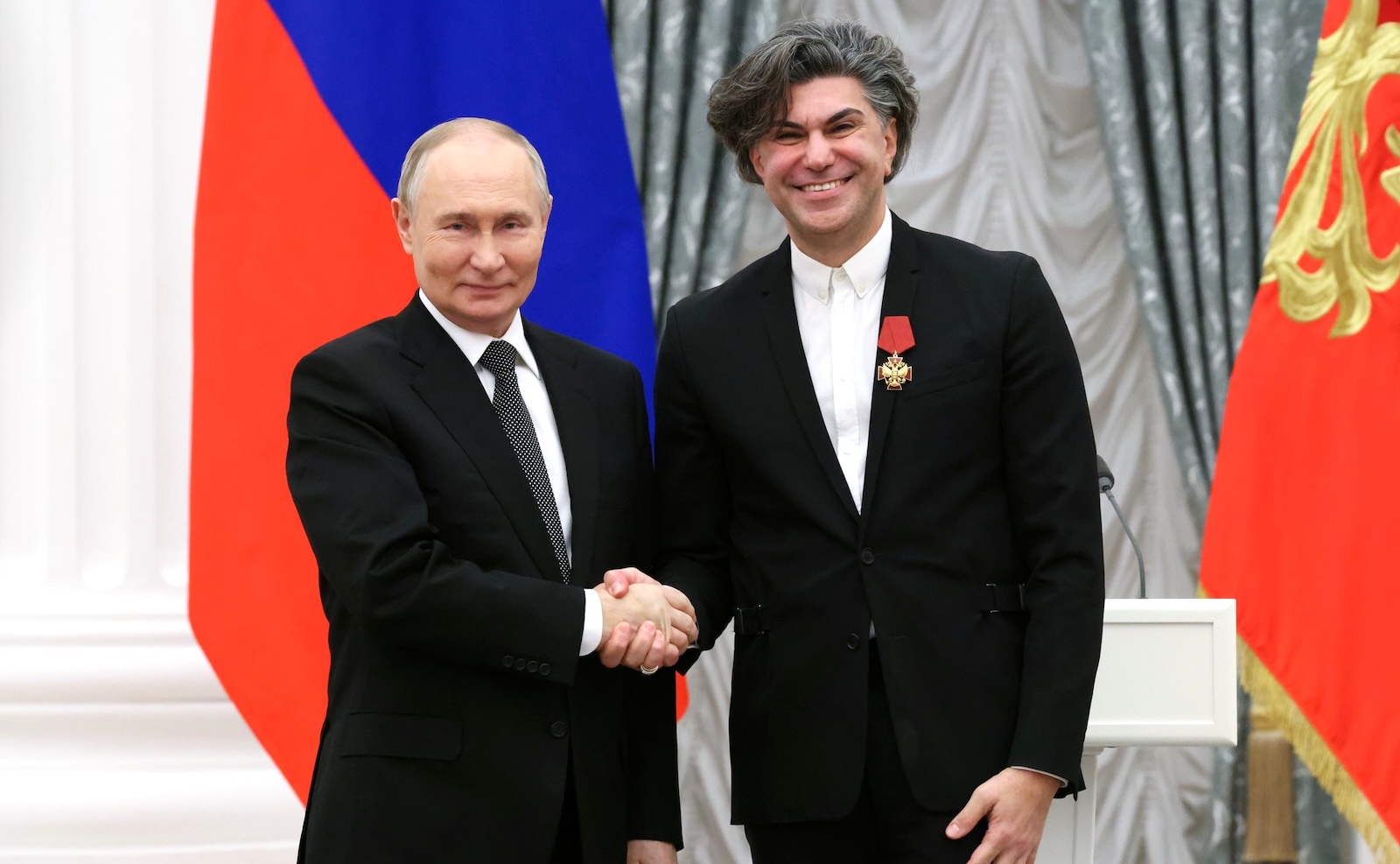
Vladimir Putin at the award ceremony for Nikolai Tsiskaridze

kremlin.ru

Tsiskaridze is very keen on maintaining the image of an uncompromisingly classical dancer—a guardian of the purity of the art form against all of the innovations that choreographer Alexei Ratmansky, for example, introduced to the Bolshoi before fleeing to the American Ballet Theatre in New York in 2008. The dispute with Ratmansky began as an internal artistic disagreement but escalated when Tsiskaridze spoke out in the press. His various revelations—eagerly picked up by the tabloids—also shed light on the causes of the chronic ticket shortage. This Nutcracker became one of the most explosive and welcome catalysts for an ever-growing scandal that also laid bare the Bolshoi’s questionable financial practices.

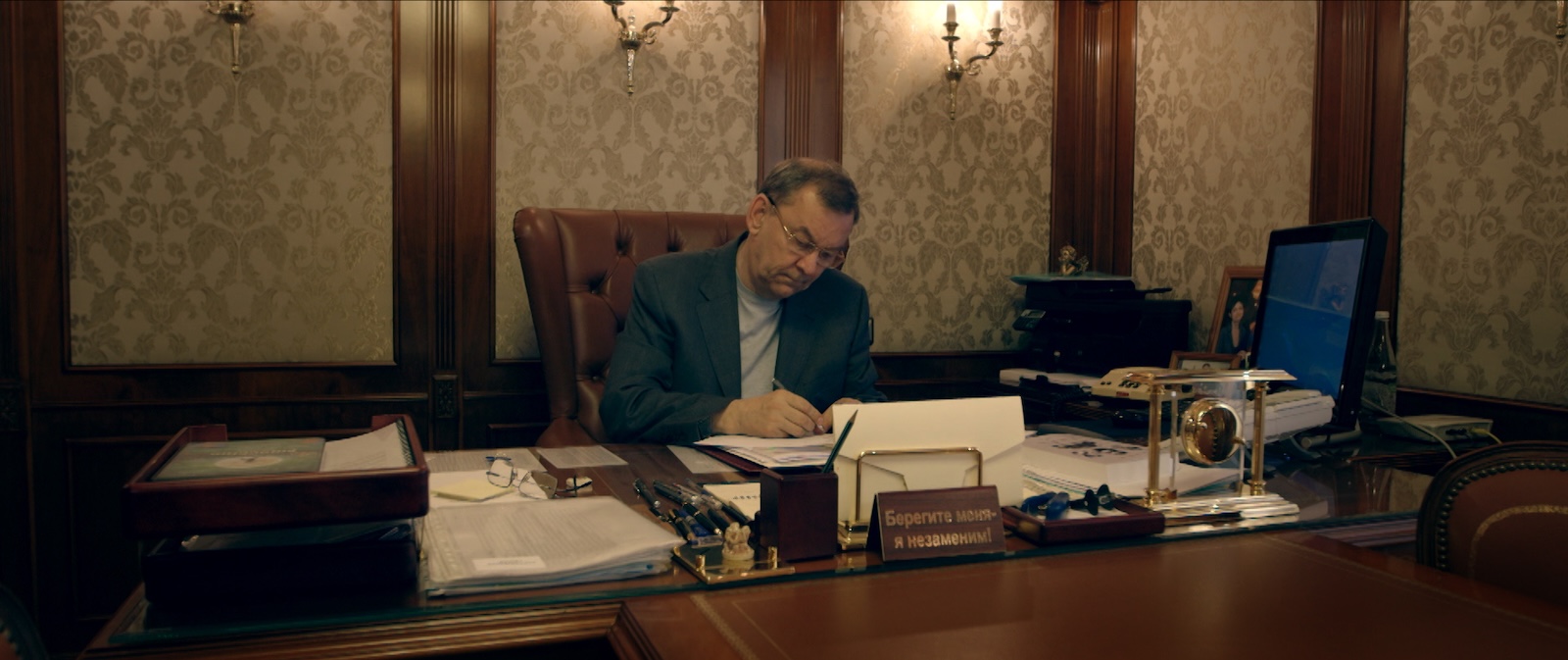
Wladimir Georgijewitsch Urin in dem Dokfilm „Bolshoi Babylon”

Nick Read, Mark Franchetti/BR

The Nutcracker survived. Immediately after the Bolshoi’s historic stage was renovated in 2011, all of Moscow wanted to see the restored chandelier and check out what Tsiskaridze had been criticizing. In response to the growing number of people eager to see The Nutcracker, the number of performances also increased. The performance was now under the direction of Vladimir Urin, who was soon accused of corruption and even of facilitating the black market trade in tickets. Most recently, with the Bolshoi’s integration into the Mariinsky Empire under Valery Gergiev, the number of performances has doubled once again. Live broadcasts of the production did nothing to help; on the contrary, the show’s cult status only grew stronger. Since then, the ticket sales procedure for The Nutcracker has changed every year. One year, tickets were only available online; the next year, only offline. In 2024, Gergiev even instituted an auction system in which tickets were released in small batches on a special website under the auspices of the main sponsor, his business partner, Sberbank.

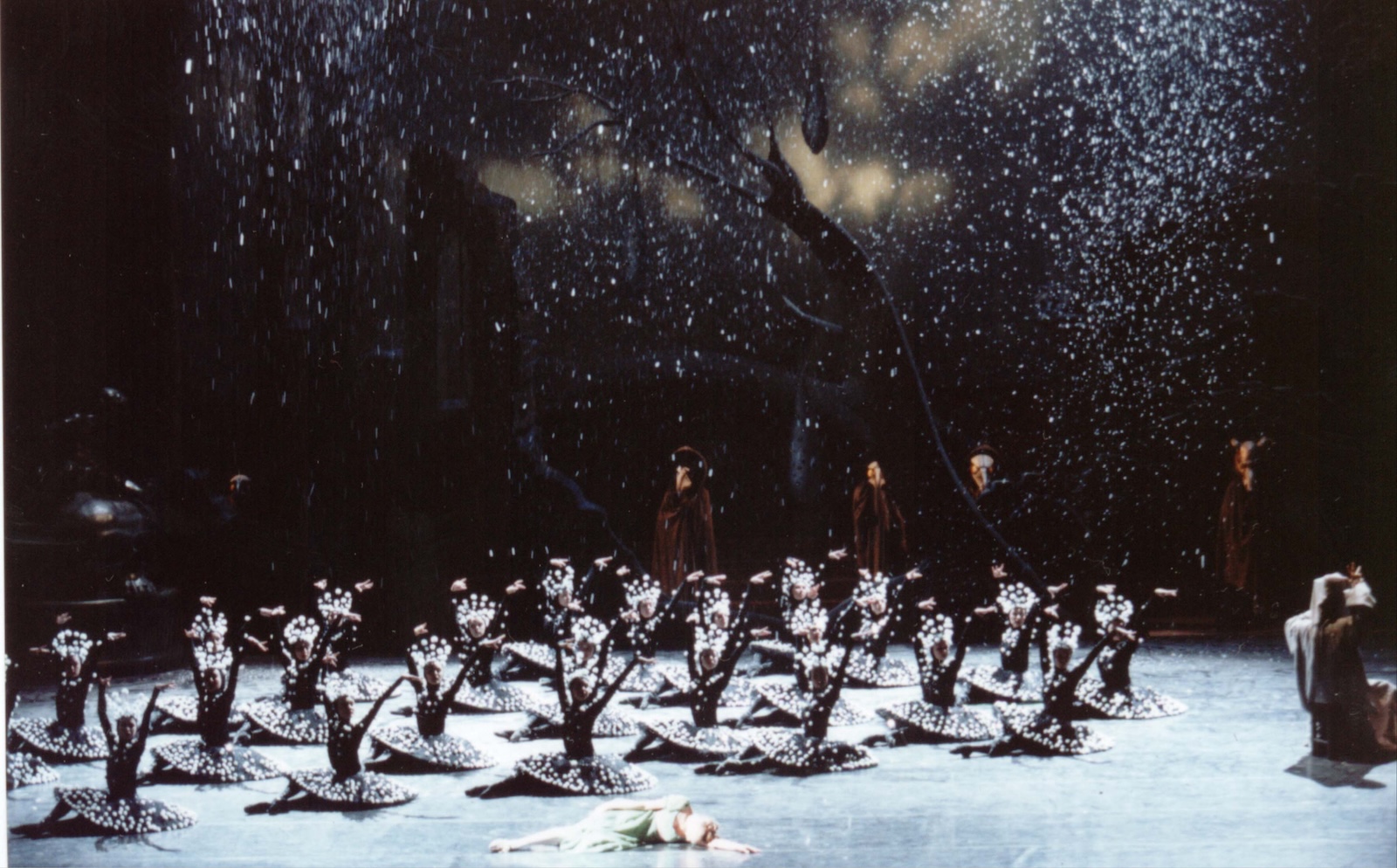
Waltz of the Snowflakes: “The Nutcracker” by Vasily Vainonen

Natasha Razina

Such demand naturally brings out the competition: In Moscow, The Nutcracker is also performed by the Kremlin Ballet, the Kasatkina and Vasilyov Ballet Company, the Stanislavsky and Nemirovich-Danchenko Music Theater, and the Natalia Sats Children’s Music Theater. Even productions created from scratch and performed on rented stages are in high demand because they usually take place at the RAMT, a theater in the immediate vicinity of the Bolshoi. This is convenient, since everyone believes that it is customary in Russia to see The Nutcracker at New Year’s. The name of the female lead (Clara, Masha, or Marie), the setting of the second act (the Kingdom of Sweets or a Christmas tree world populated by dolls), and the characters’ journey (through a fairy tale book or fighting mice or even bats) are all irrelevant. What matters is the feeling of belonging to a tradition.

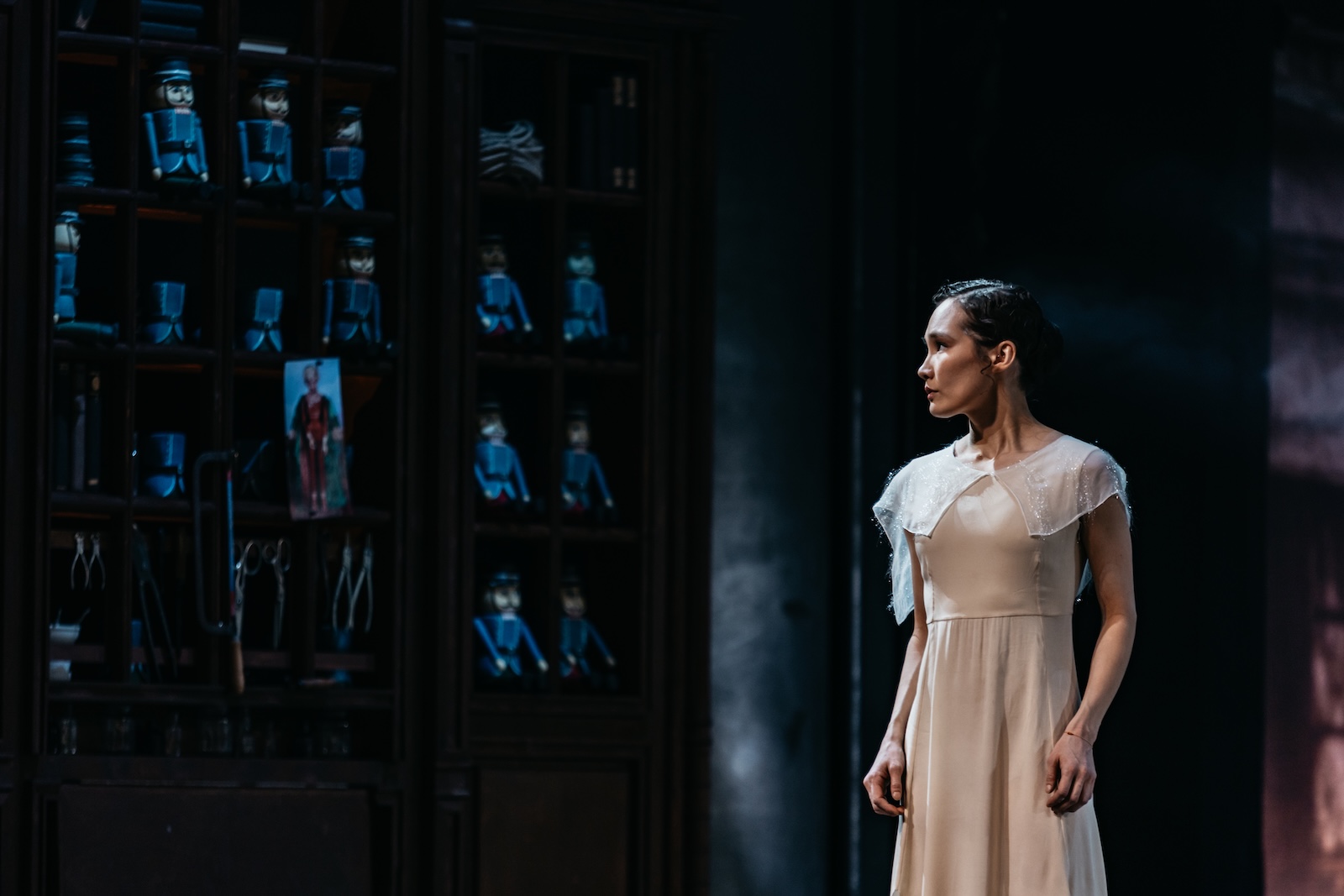
Clara in “The Nutcracker: Not a ‘Fairy Tale’” by Pavel Glukhov

Ira Polyarnaya

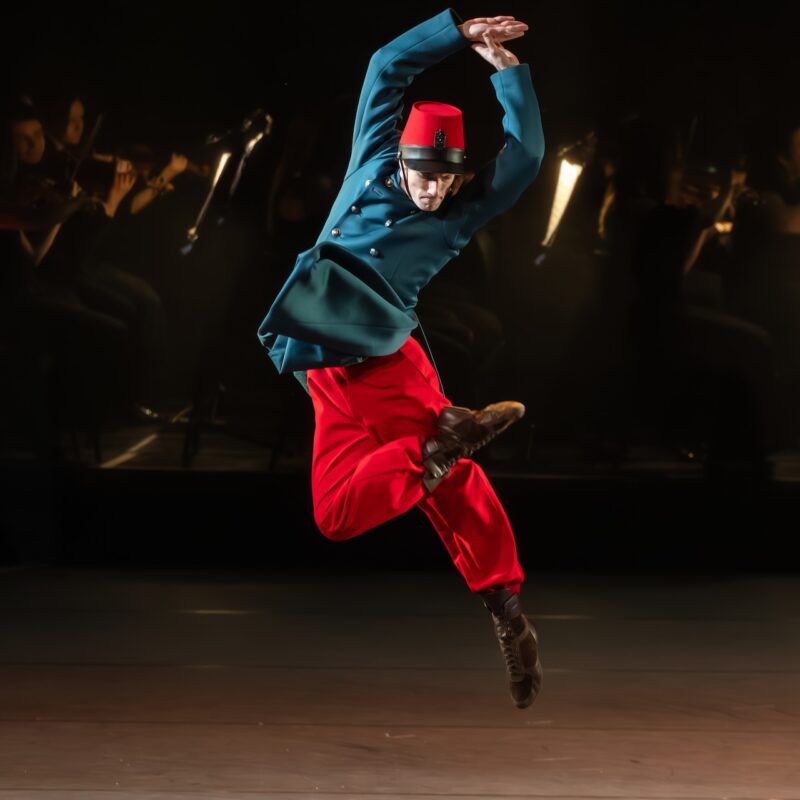
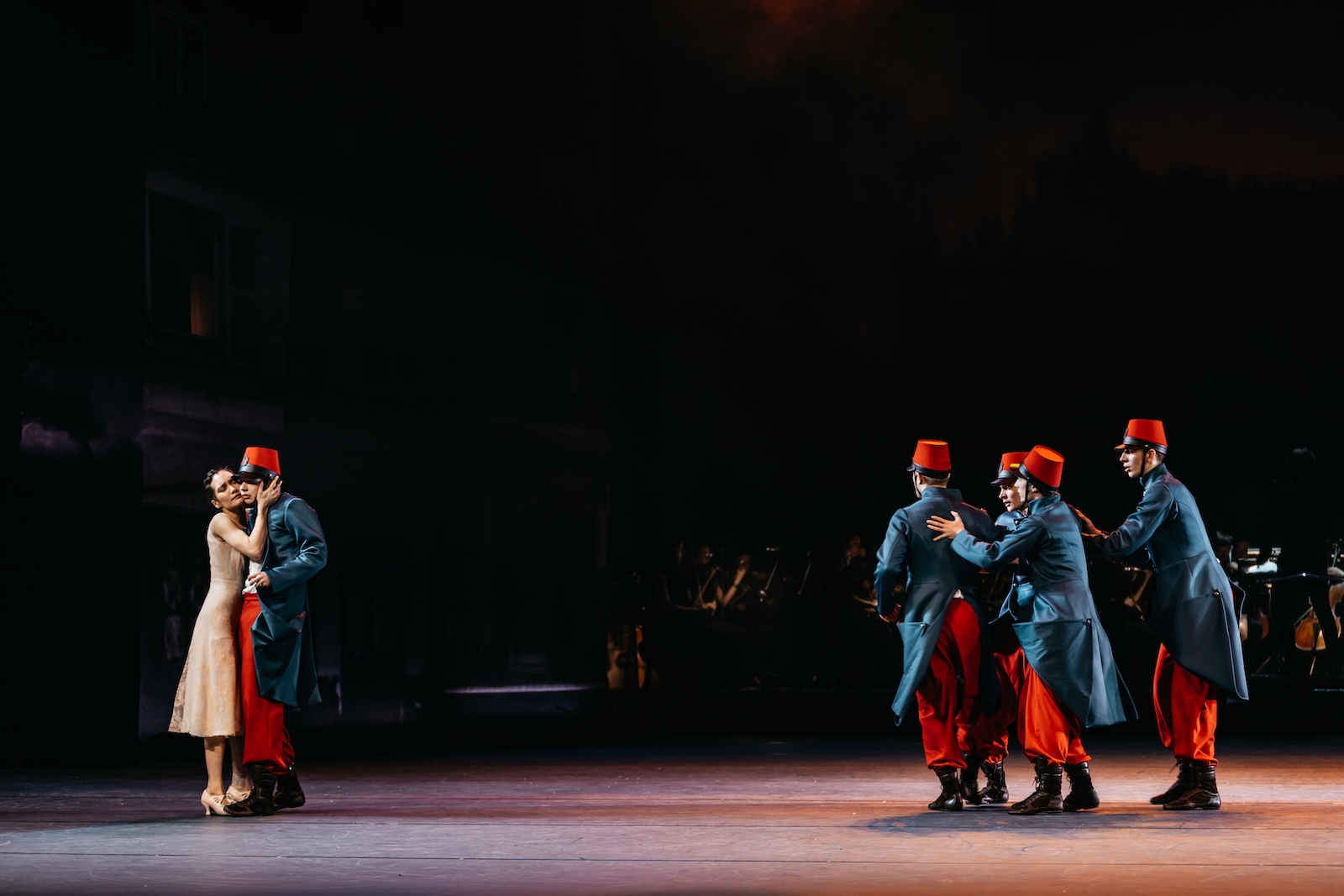
None other than the highly talented Pavel Glukhov is now taking on this competition. He is celebrating the premiere of his Nutcracker not during the Christmas season but at the end of February, on the anniversary of the war with Ukraine. His Nutcracker wears a military uniform. As is only right.

In this production, titled The Nutcracker. Not a Fairy Tale, Glukhov worked closely with his dramaturg Tatyana Belova to create the production based entirely on the music itself. The extended title is intended to preempt accusations of “distorting the classics” from the press, among others. The threat of legal repercussions also looms large. The focus is simply on what usually goes unheard in such a famous score: the tensions and hesitations, the fluctuations and breaks, the emotional undercurrents and unresolved questions.

The Nutcracker in a military uniform

Batyr Annadurdyyev

Glukhov pulls Tchaikovsky out of the nursery. For the sake of the music alone. What emerges instead is a dance that dares to approach what is almost impossible to articulate in today’s Russia: telling a personal story of war in a very immediate and concrete way. As soon as a war like the one in Ukraine is viewed through the metaphors and analogies of earlier conflicts, the conversation drifts into abstractions about “war in general.” People agree too quickly that war is evil. This consensus makes everyone nod, and we keep going in circles (which, for now, is only punishable to a limited extent—but who can be sure?).

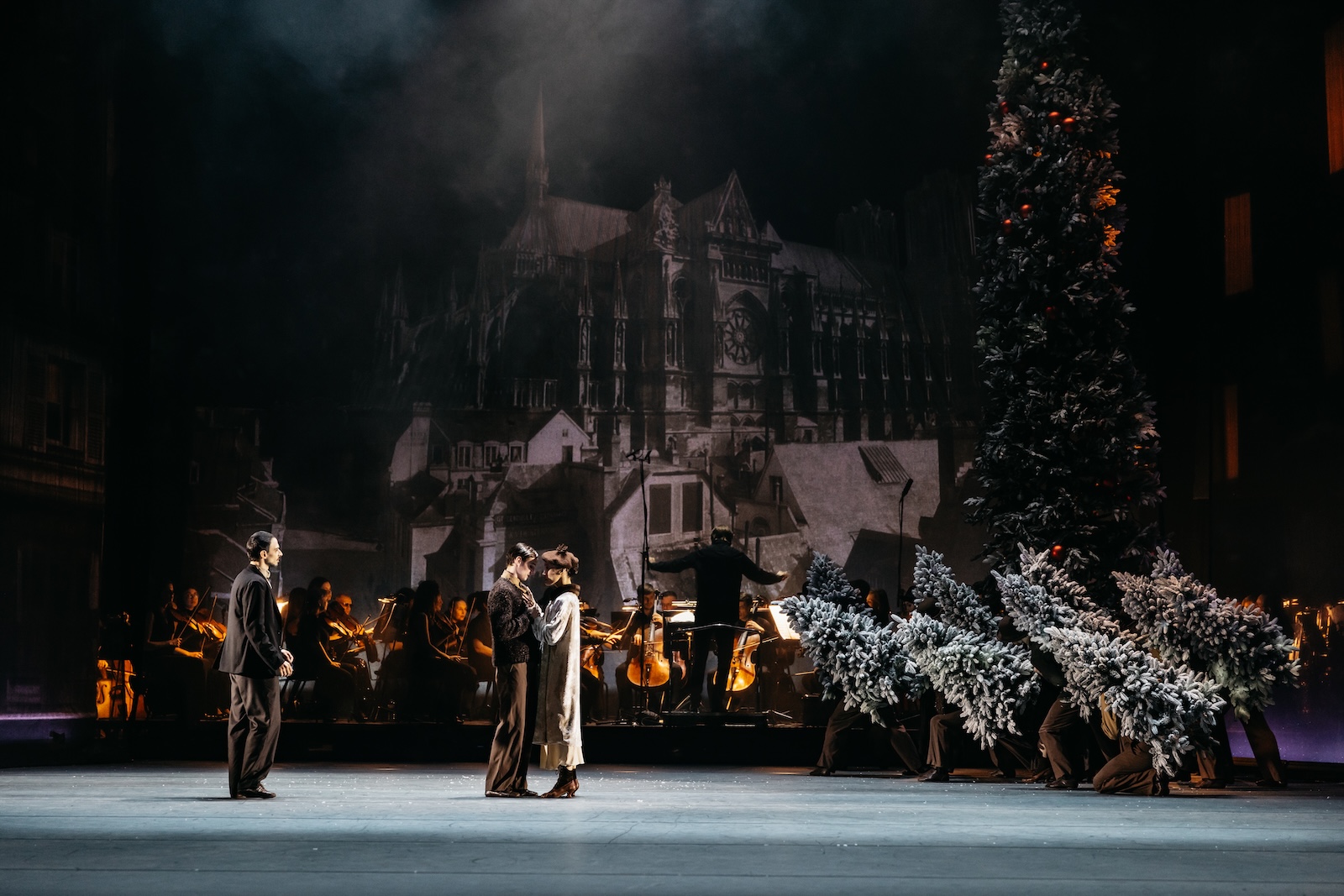
Reims in Larisa Lomakina’s production

Ira Polyarnaya

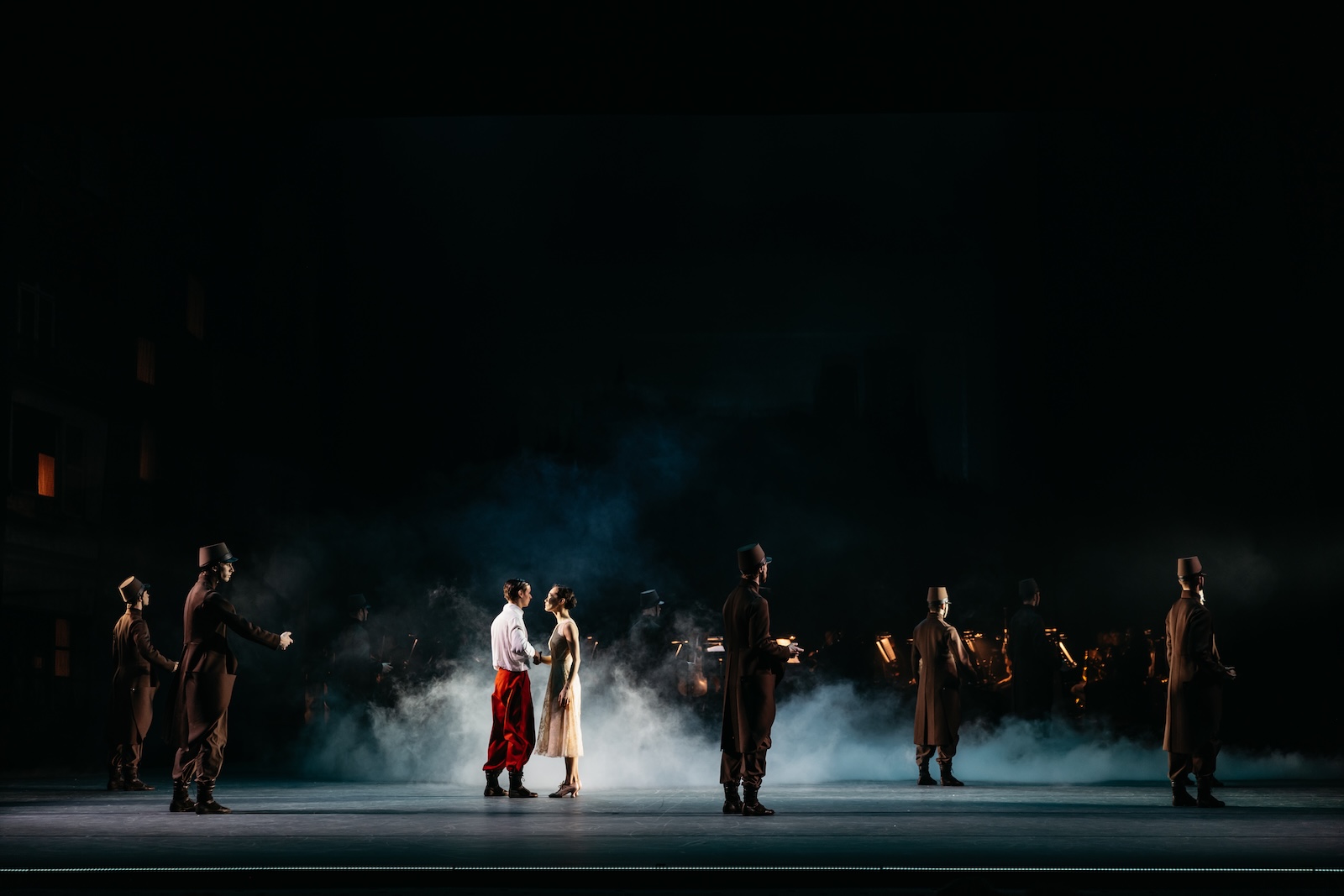
Glukhov and Belova anchor this story in a very specific time and place: World War I in Champfleury, a small town near Reims. The name evokes a blooming meadow, a grand idyll. In the distance lies the famous cathedral. In the foreground is a group of young, radiant people. It’s an ideal world, only slightly veiled by something more austere—for only the beautiful, cheerful, and lively belong here… but who even notices this undertone?

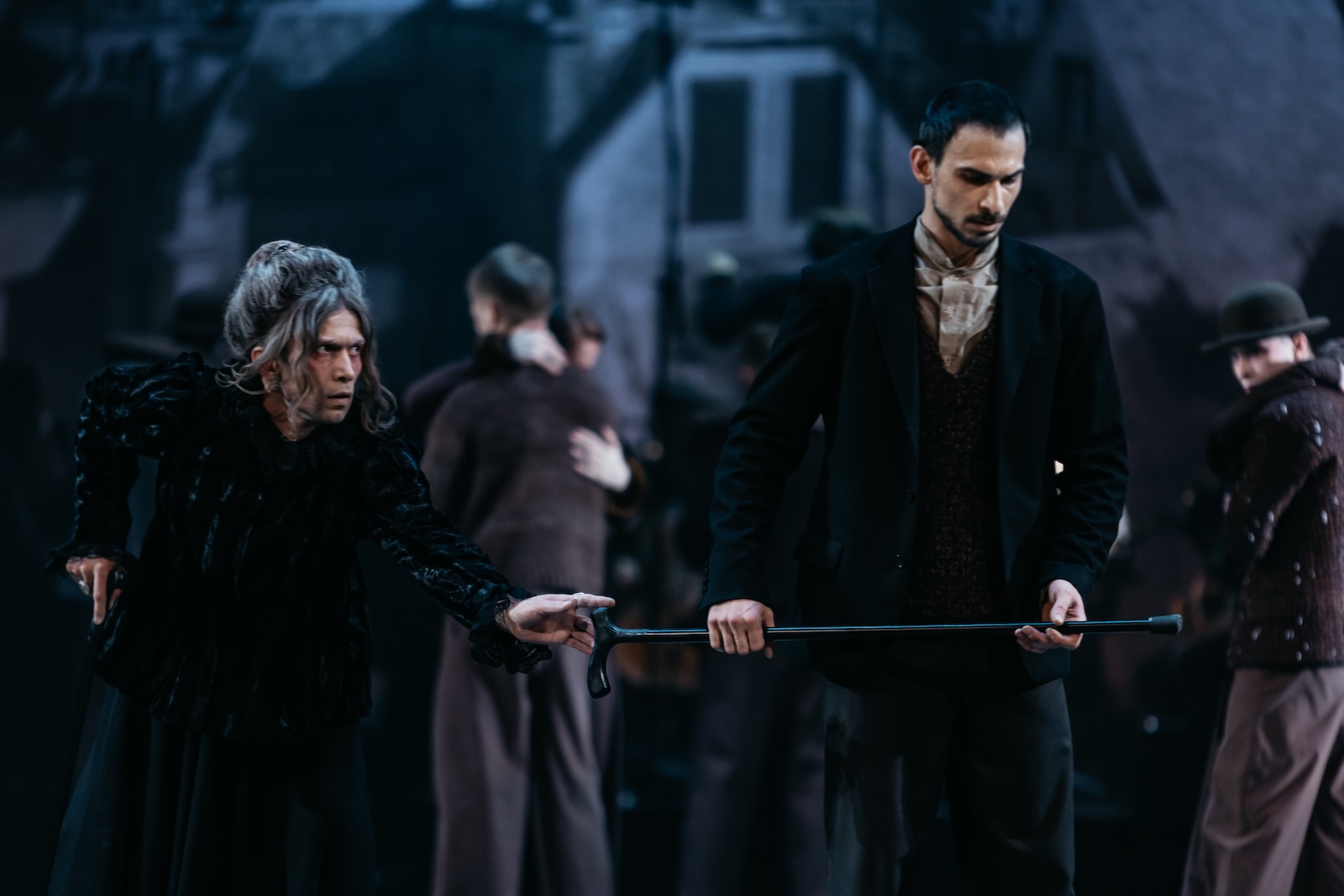
The Old Woman

Ira Polyarnaya

An old woman, a widow nicknamed Cassandra, played by Yury Chulkov, steps onto the immaculate surface—how menacing, how comical! Her presence is less an allusion to ballet tradition (such as the Widow Simone from La Fille mal gardée or the Carabosse the Fairy) and more a deliberate rupture; the old woman doesn’t fit in here. The others fall into line with military precision: the girls in nearly identical dresses with seductive slits up to the thigh, the young men in matching shirts and pants by costume designer Svetlana Tegin.

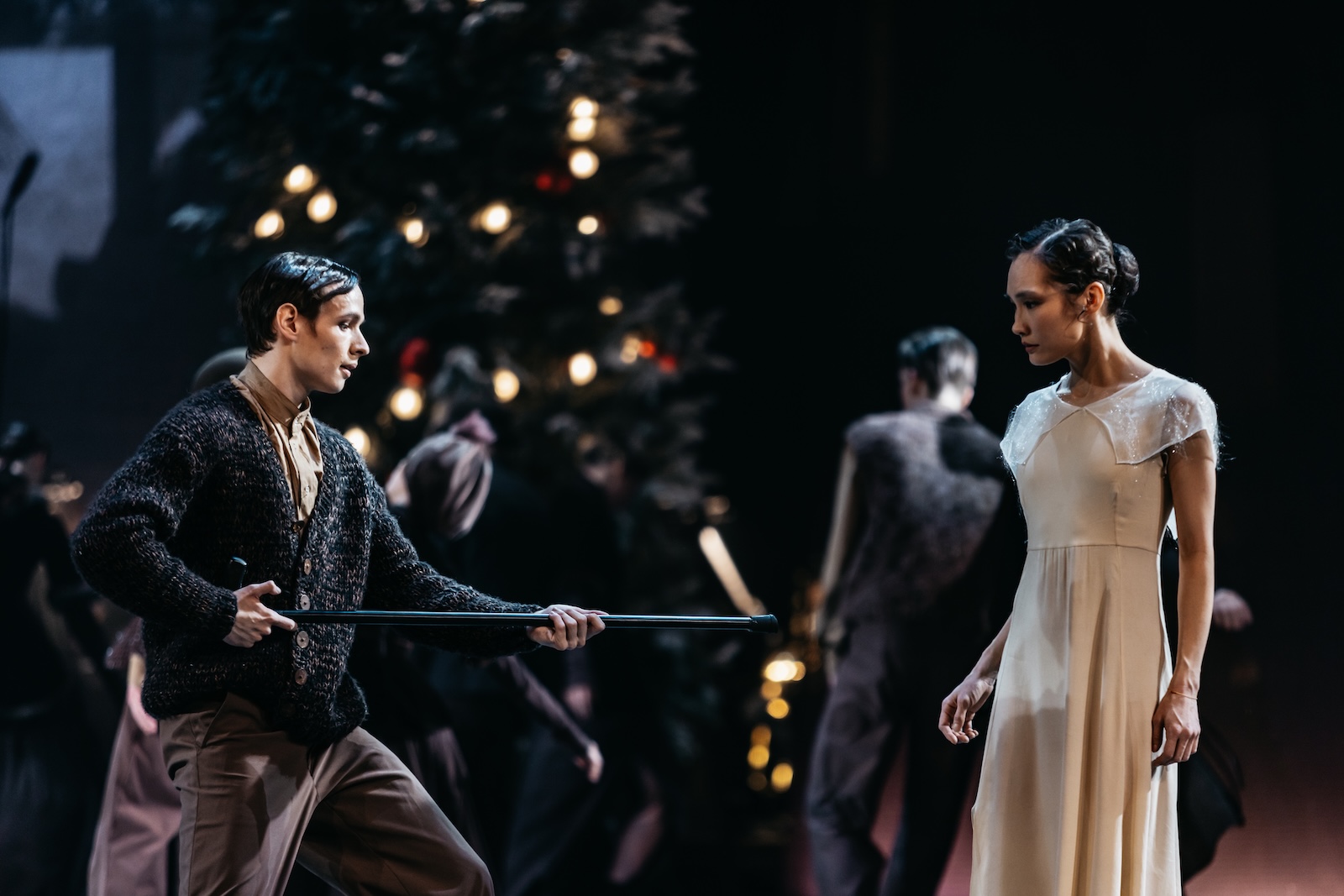
Nathaniel is teaching Clara how to be a soldier

Ira Polyarnaya

This flawless world unravels in the memory of the protagonist, Nathaniel. His adult self (danced alternately by Maxim Isakov and Artur Gevorgyan) reflects on his younger self (Andrey Lega and Mark Feofilov) and notices things that he had overlooked before: the strange rigidity behind the cheerfulness and the casual cruelty with which the group teases the old woman. The aged Nathaniel sees how, as a young man before the war, he eagerly strikes a pose for Clara (danced at times by Daria Komlyakova and at others by Angelina Sivtseva) to rehearse the role of the soldier he will soon become and to display his trained, obedient body. Nathaniel will later understand—or imagine that he understands—how frightened Clara was at this sight.

Anton Torbeev’s Orchestra

Ira Polyarnaya

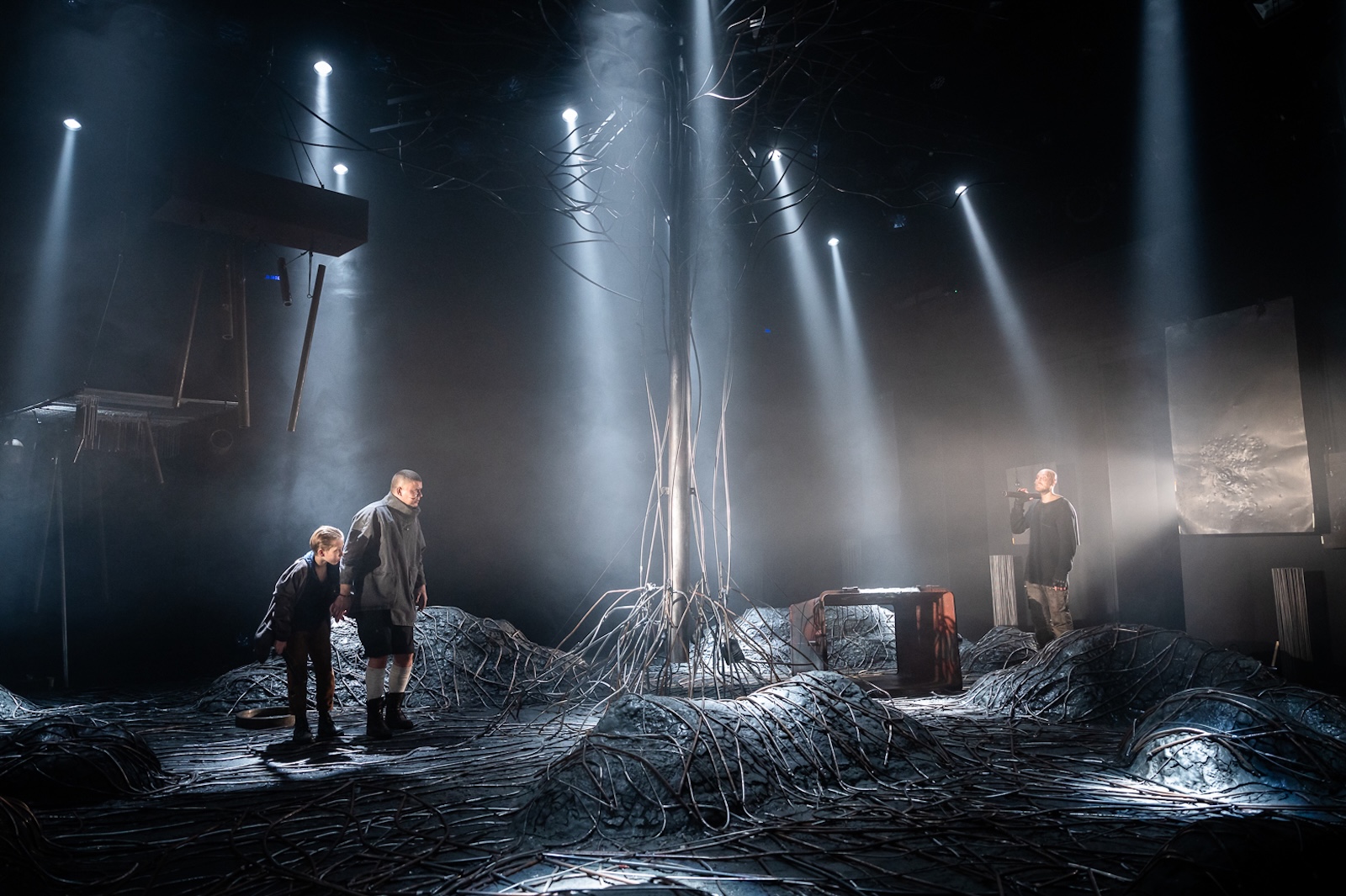
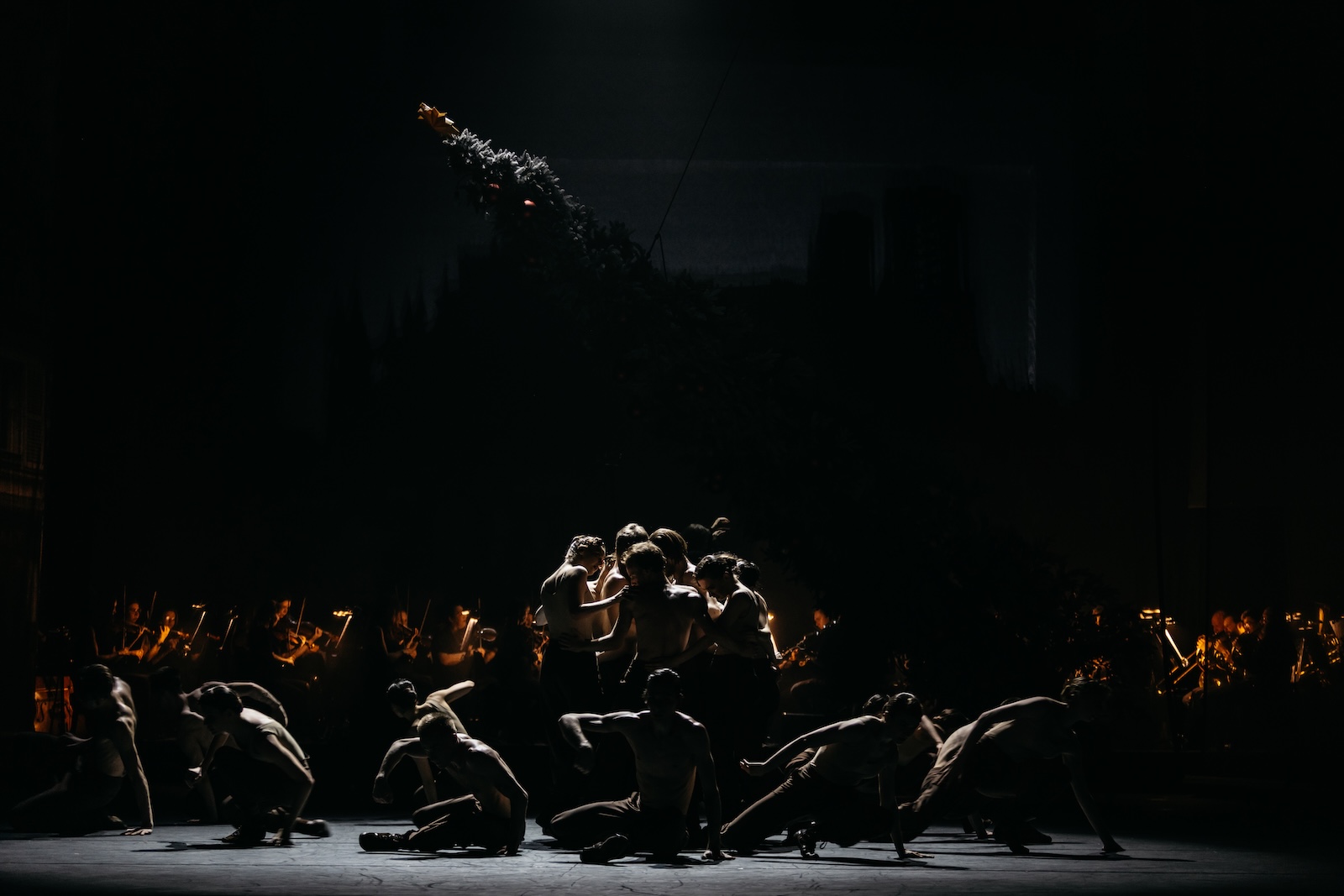
Larisa Lomakina’s set design places the orchestra at the back of the stage, a move that is almost unprecedented in Russian ballet practice. The musicians remain visible throughout, anchoring them in the reality of the stage so that the music generates the events in real time rather than merely accompanying them. Conductor Anton Torbeev, familiar with the New Year’s hustle and bustle of The Nutcracker, drives the score forward at a strikingly brisk tempo, unburdened by the usual heaviness and routine of ballet physics—a notable achievement for a work that often feels very dull due to its repetitions. In this now accelerated, unstable world of The Nutcracker, war breaks out.

Citizens as mouse soldiers

Ira Polyarnaya

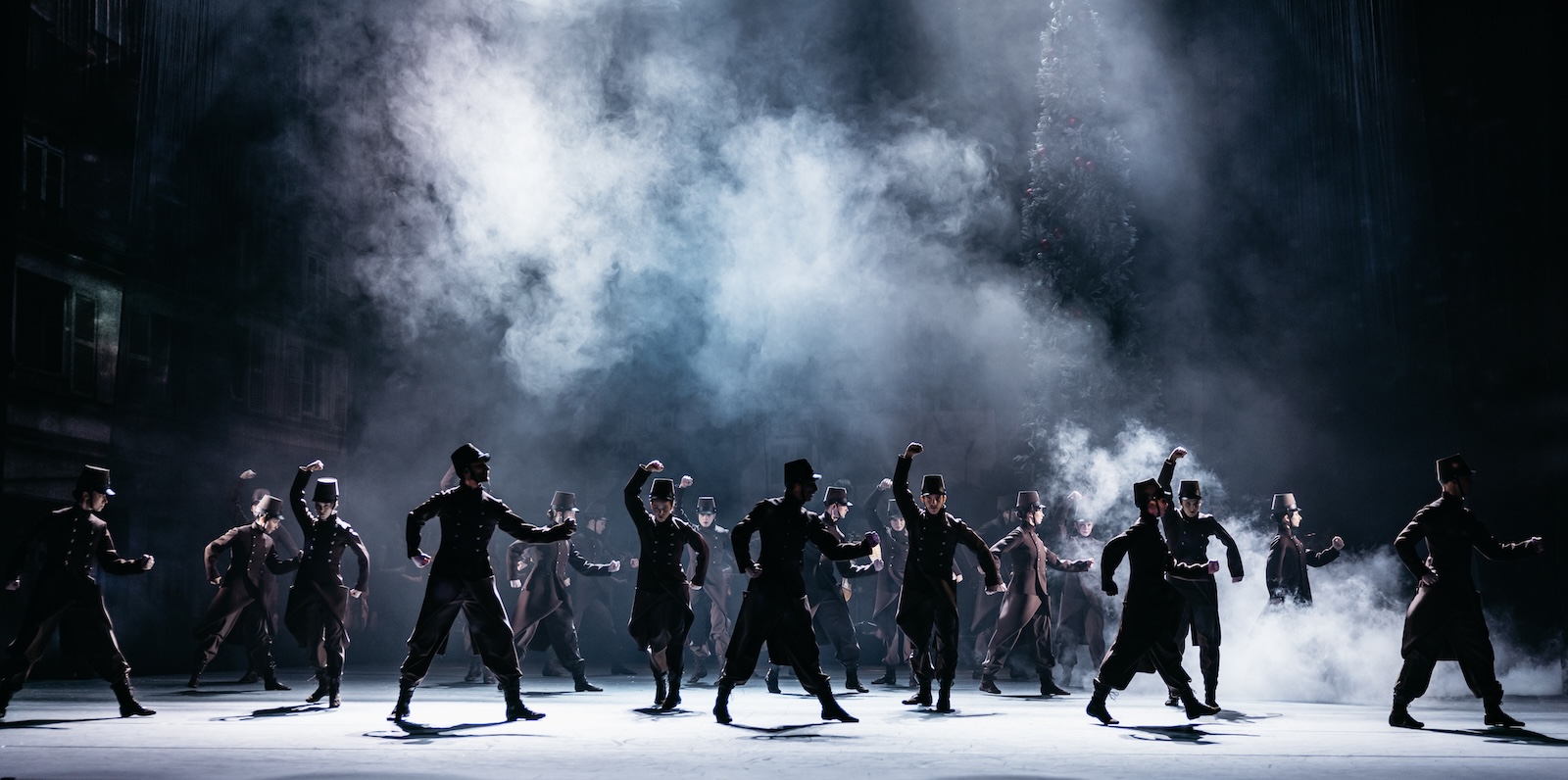
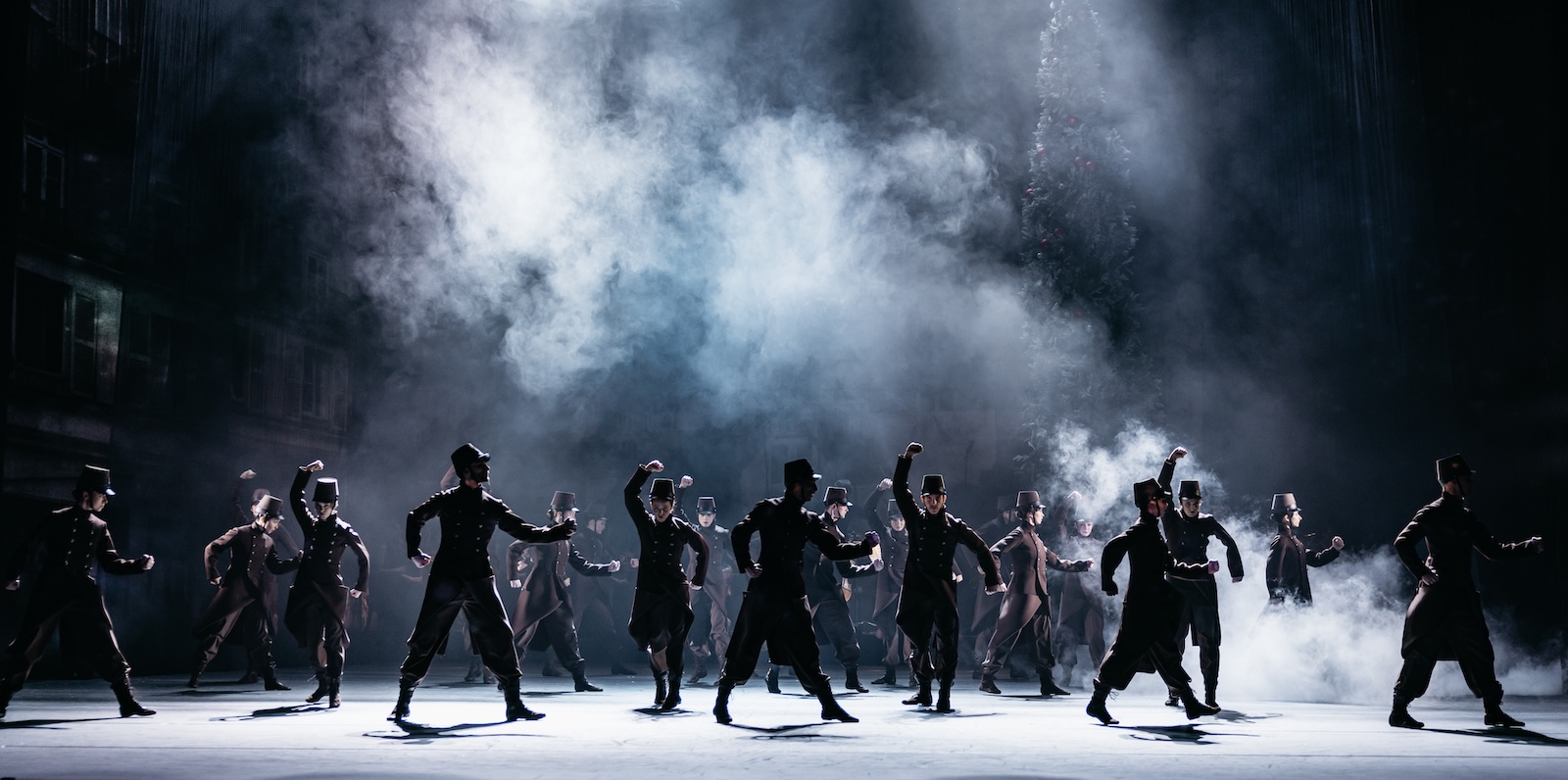
Nathaniel’s merry circle, the residents of Champfleury, appear as soldiers. The entire ensemble, men and women alike, obey the nature of war that engulfs everyone, erases differences, and strips individuals of their identity. Tatyana Mishina’s lighting shifts, and we see movement itself—lifts that make bodies float in the air. Sudden leaps over partners’ backs. Soldiers running hastily, desperately. Are they advancing or retreating? Are they storming forward or deserting? The mechanical movements are the same. The soldiers come to a standstill, their bodies reduced to small, rhythmic back-and-forth movements, as if they are trapped in an unbearable time loop, unable to free themselves. This is the beginning of Dance No. 6 in the original score.

The war

Ira Polyarnaya

Glukhov says this is what he reads from The Nutcracker: There is no just war. There is no villain to defeat to set things right again. There is no Mouse King. War turns inward. It destroys those who wage it, no matter what they believe they are fighting for.

The choreography conveys this idea with quiet persistence. Through consistently complex lifts, densely woven ensemble patterns, and structures that trace a slow process of exhaustion, the dancers face one another—and increasingly, themselves as well. Postwar Nathaniel intervenes, determined to pull his younger self out of the fray—and he succeeds. We know he will survive.

The tree falls

Ira Polyarnaya

This disciplined frenzy of battle culminates in an unexpected yet inevitable gesture. The Christmas tree that dominates the stage—the same tree that magically swells to fantastical proportions in the original—topples over. In the background, the Cathedral of Reims collapses. The first act ends with a waltz responding to the image of the felled tree and the destruction of childlike clarity and any remaining enchantment: the Valse des flocons de neige (Waltz of the Snowflakes). The snowflakes in question are unmistakably intended to be read as a chorus of the dead, an idea previously explored by Alexei Ratmansky and repeated in Mikhail Shemyakin’s production at the Mariinsky Theatre. Here and there, the snowflakes are dressed in black. Here, with Pavel Glukhov, these flakes are the soldiers themselves, dissolving into a swirling void.

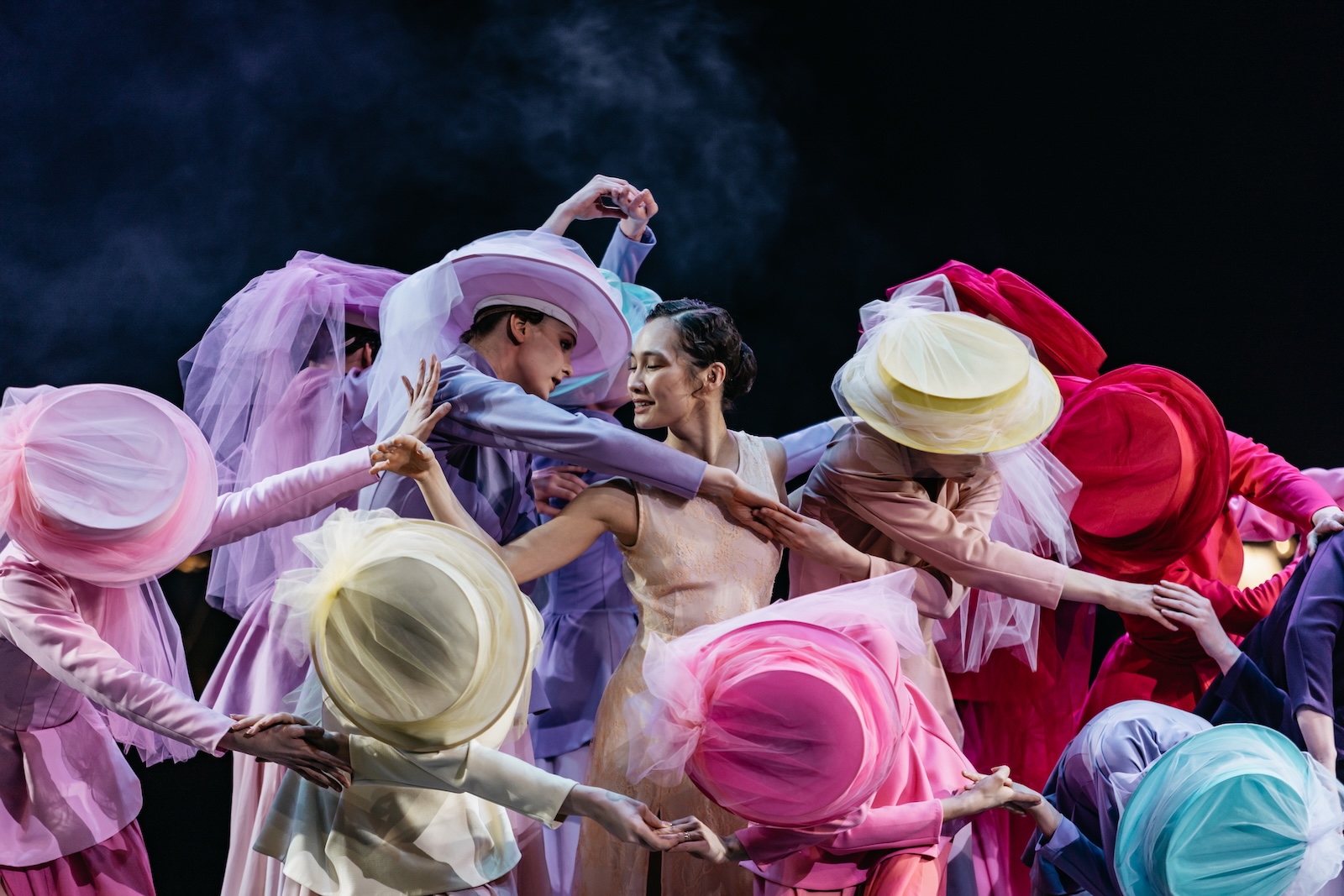
Clara among the women who stayed behind

Ira Polyarnaya

Now that Tchaikovsky’s score has become a divertissement—light and decorative—what could a second act add to this ending? The second act shows the women left behind in the Flowering Meadow: festively and elegantly dressed in hats, seductive, as if they were not real. They inhabit a world stripped of all substance, where color and festivity hover only as a thin veil over something far more unsettling.

Nathaniel’s Return

Ira Polyarnaya

The soldiers return, though not all of them. Here, Glukhov urgently needs the image of the Nutcracker: a doll without a soul or a will of its own; a human being trapped in the form of a toy, clad in a soldier’s uniform. There is no need for grand statements or a search for a culprit. It is enough to show how war mutilates people.

In Russia, we are used to seeing people who suffer from post-traumatic stress disorder. We are also accustomed to the visible traces of physical injuries. What remains foreign is a person who returns without a soul while still looking the same on the outside. Nathaniel is nothing more than a toy. Clara must find a way to play with him because no magic can transform him into a real boy.

Live on

Ira Polyarnaya

This once-cheerful troupe—the only survivors of the battlefield—try to carry on according to the old rules, teasing the old woman and using the women as prostitutes. However, the dancers’ movements no longer possess the lightness of the first act. The women of Champfleury try to carry on as well, appearing in their finest dresses, as if for a wedding—as in Les Noces. Only Clara seeks a connection with Nathaniel, trying to see what he sees: soldiers marching into nowhere, unable to ever return. She is not merely a witness to this hopeless procession into death; she enters it, joins the march, moving alongside the dead.

Despite the title, The Nutcracker. Not a Fairy Tale, Glukhov leaves a narrow opening for a touch of magic: Clara finds a way to reach the man she loves and dances the Doll’s Dance with him. She performs as if to say: If this is the language you understand, then this is the language I will use.

The Flower Waltz

Ira Polyarnaya

Their duet, surrounded by ghosts—for which Glukhov uses the Flower Waltz—becomes a heart-wrenching moment because the ballet expresses what is often forgotten in the struggle between good and evil: individual destiny and every single human life.

Flowers begin to bloom on the soldiers’ graves—poppies on a World War I memorial in 1938. That’s how long it took Nathaniel to recover after returning from the war—just before the start of a new war. Clara and Nathaniel will await the arrival of their child.

Glukhov’s works are significant not only because they are proof that a major artist has emerged under the watchful eye of an increasingly totalitarian state. They also signify that free expression is still possible—even in silence. That is the hope, mine and, hopefully, yours as well, that we still rejoice in—silently and quietly.