

How a tiny Indigenous dance company from a small mountain village in Taiwan’s Deep South ended up on the international stage.
The mountain village of Tjimur
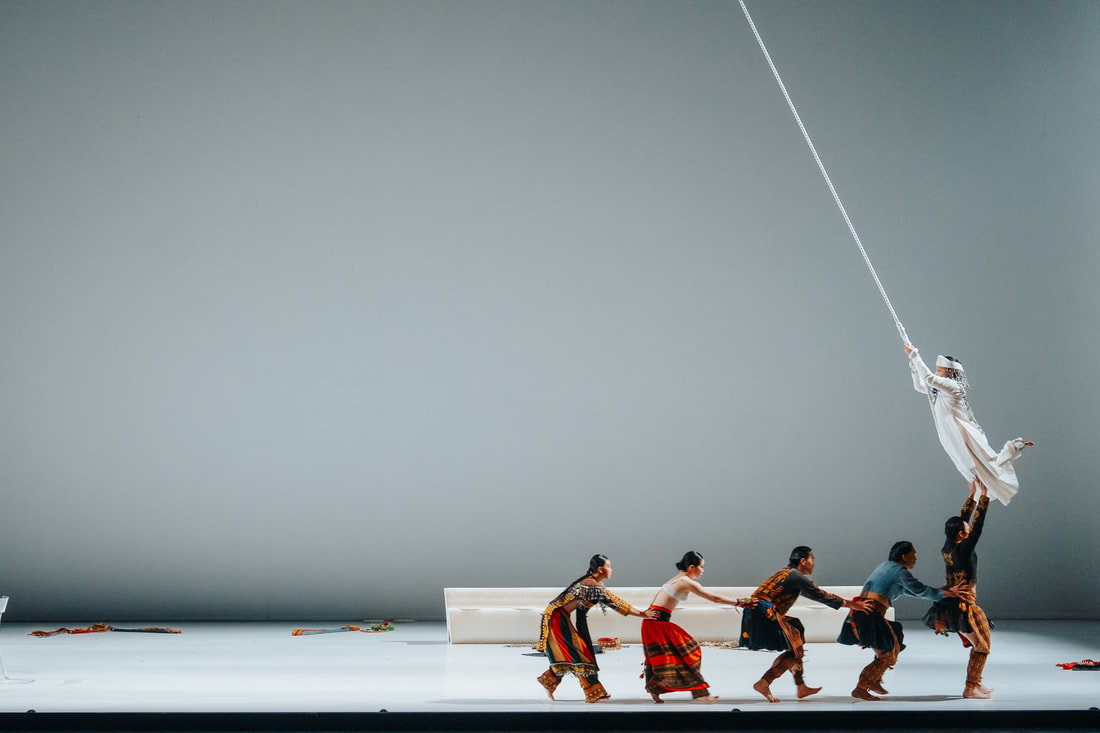
Tjimur Dance Theatre


How a tiny Indigenous dance company from a small mountain village in Taiwan’s Deep South ended up on the international stage.

The mountain village of Tjimur
Imagine taking the high-speed train two hours south from Taipei, then switching to a slower regional train before climbing into a taxi that winds up a mountain road in Taiwan’s southernmost county of Pingtung, past sugar cane fields and betel nut palms and deeper into the foothills until you arrive at a village called Tjimur.
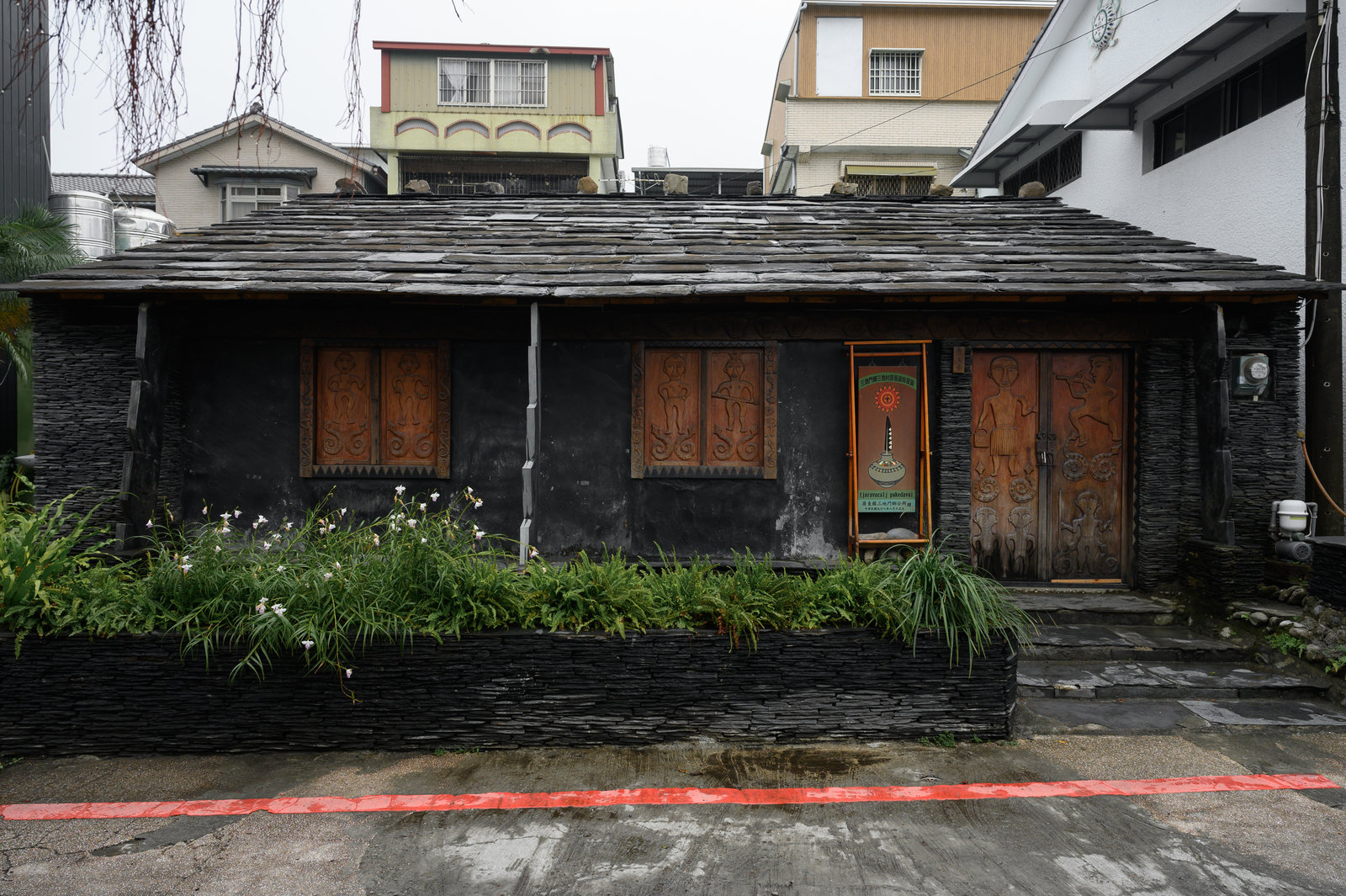
Traditional indigenous slate house in Tjimur
Tucked between traditional Indigenous slate houses, local restaurants, and shops selling handmade glass beads and other crafts, you find a fully equipped professional black box theatre.
The Paiwan Glass Bead Workshop
Inside, women from the village are stringing glass beads by hand – part of a business run by the director’s family, one of several ways the community sustains itself around the work the company provides.
Entrance to the Tjimur Dance Theatre rehearsal studio
Through a floor-to-ceiling glass wall at the back of the ground floor, you can watch dancers rehearsing in a room that smells of sweat and wood.
Café on the third floor of the Tjimur Dance Theater
Upstairs is a dining terrace with mountain views, where the Madilijn family also runs a coffee business – drinks named after choreographic works chalked on a blackboard. Tjimur Dance Theatre itself stays focused on the making of dance, but the world it inhabits is this: family, craft, coffee, mountain air, and, through that glass wall, rehearsal.
From the beginning, the company’s work emerged directly from Paiwan cultural experience and practice. Its early productions drew on stories, rituals, and social structures familiar within Paiwan communities – not simply as thematic material, but as a way of shaping movement and performance itself.
“Umaq · The Slate House” (2013) moved into the architecture of Paiwan life – the stone slab houses built into the mountain, the layered cosmology of home and ancestry –
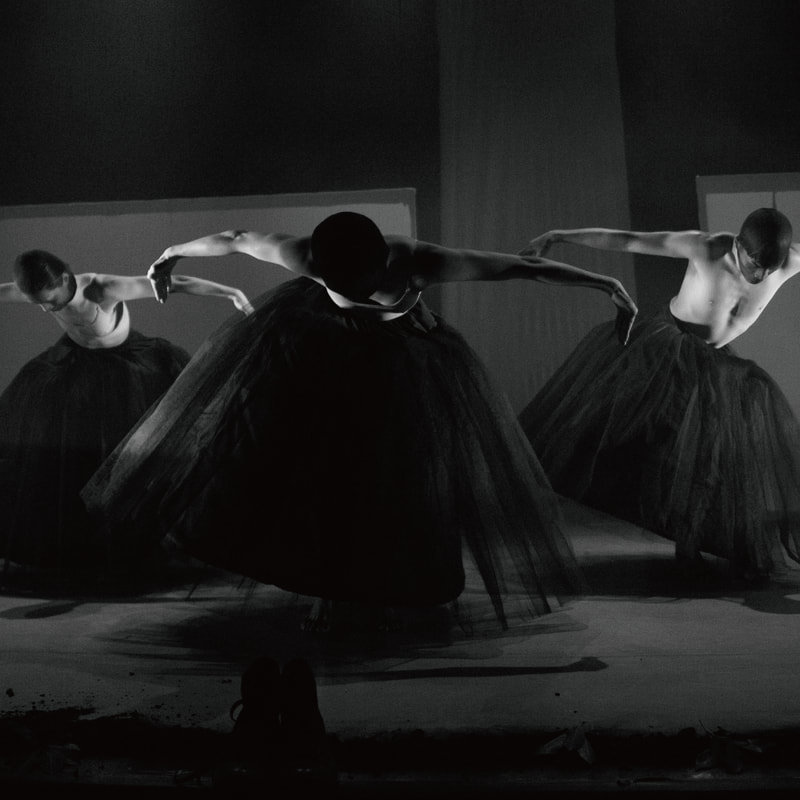
Umaq – The Slate House
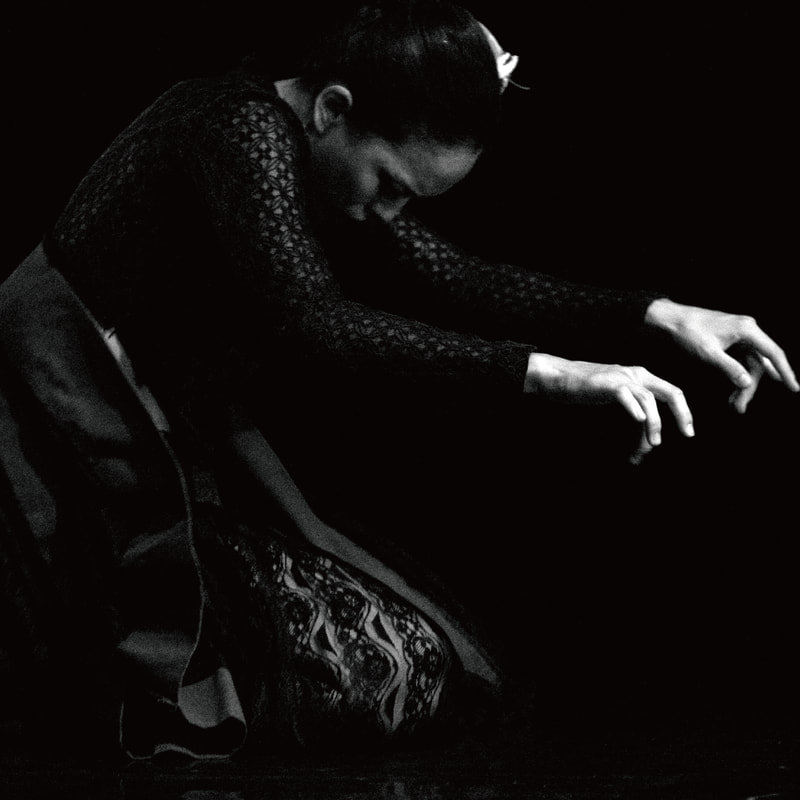
Kurakuraw – The Dance of Glass Beads
while “Kurakuraw · The Dance of Glass Beads” took the peacock bead with its grammar of love and lineage and let that grammar drive the movement. In these works, Paiwan culture was not treated as a visual reference or external identity marker. Rather, it provided the conceptual basis for the choreography itself. Movement developed from within the cultural logic of the material rather than being added onto it afterward.
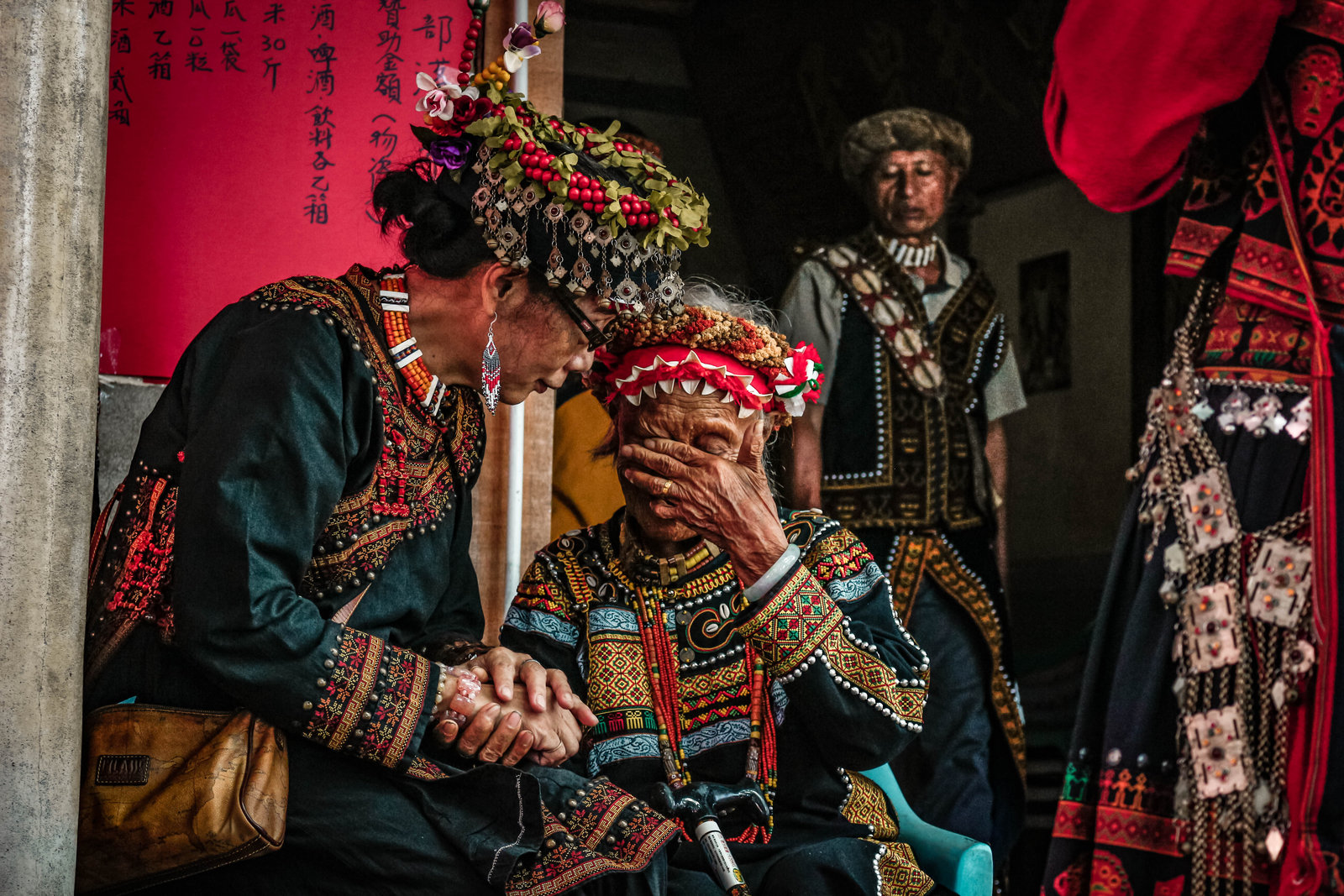
Meeting of the Elders at the Annual Paiwan Festival
But who are these Paiwan? They are one of Taiwan’s sixteen officially recognized Indigenous peoples and have been living in the mountains of southern Taiwan for thousands of years. When outsiders encounter their traditional social structure for the first time, they instinctively call it a hierarchy – chief at the top, nobility below, then warriors, then commoners in descending tiers. But the Paiwan themselves describe their society differently: not as a pyramid, but as a series of concentric circles.
In a pyramid, power flows downward from those who have it to those who don’t. In concentric circles, the chief (mamazangilan in the Paiwan language) sits at the center, and the rings of community radiate outward from there. The chief’s position is not primarily one of privilege but of responsibility: managing the community’s land, rivers, and hunting grounds; redistributing the harvest so that the most vulnerable are cared for; showing up personally at the life ceremonies of every family in the village; settling disputes and negotiating with neighboring communities. In return, community members contribute labor and a share of their harvest. A Paiwan chief who fails to protect and provide for their people is not doing their job; the center only holds if every ring around it is actively tended to. And crucially, this position passes to the firstborn child regardless of gender – the eldest daughter of a chief’s family carries exactly the same authority and obligation as a firstborn son.
It is precisely this layered social order, in which rank is not merely inherited but visibly worn, displayed, and passed down, that gave rise to what many consider the most elaborate material culture among Taiwan’s Indigenous peoples. Because status in Paiwan society is something that must be made legible to the entire community, the finest objects are not decorations but declarations: each piece a marker of where one stands within the circles, and what one owes to those around them.

The old ceramic vessel (reretan)
Paiwan culture is remarkable for its material richness, nowhere more so than in three sacred objects known collectively as the Paiwan Three Treasures – the ceramic vessel (reretan, 古陶壺), the bronze knife (tikuzan ni tagaraus, 青銅刀), and the glass bead (qata, 琉璃珠) – which serve as symbols of nobility, ancestral power, and chiefly status. The ceramic vessel is believed to house ancestral spirits, passed down through generations as an irreplaceable family heirloom.
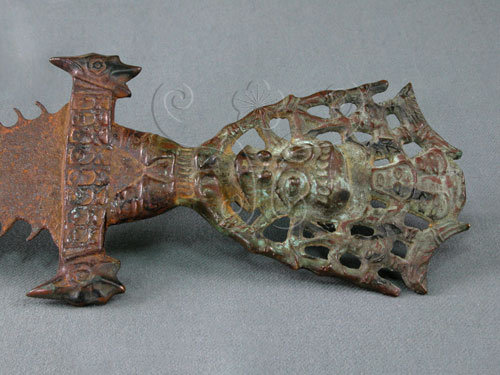
The Bronze Knife
The bronze knife is a ceremonial blade worn by chiefs and warriors as a mark of rank and protection, its hilt often engraved with the diamond pattern of the hundred-pacer snake. The glass bead is perhaps the most intricate of the three, handcrafted in patterns each with their own name and meaning, exchanged between families at weddings and ceremonies as tokens of lineage, alliance, and blessing.
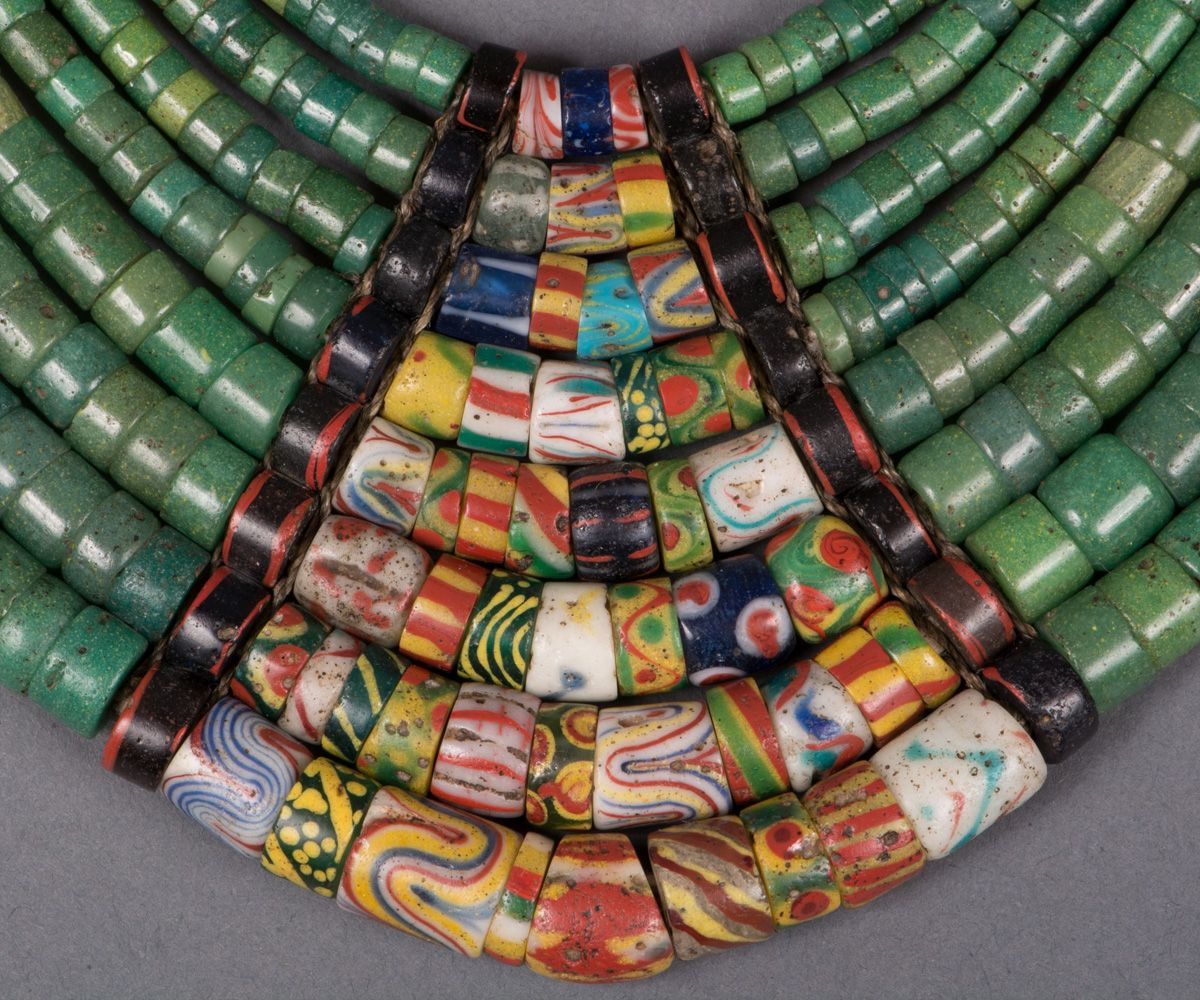
Paiwan necklace
Paiwan necklace
The Paiwan have made these beads for centuries in designs of extraordinary specificity: for example, the “peacock bead,” a blue, white, and red concentric circle pattern said to carry the power of love, health, and deep friendship or the “warrior bead,” bearing the diamond markings of the hundred-pacer snake. These are not decorative objects or museum pieces, but living carriers of Paiwan identity – still present at ceremonies, passed between families, and worn on the body.
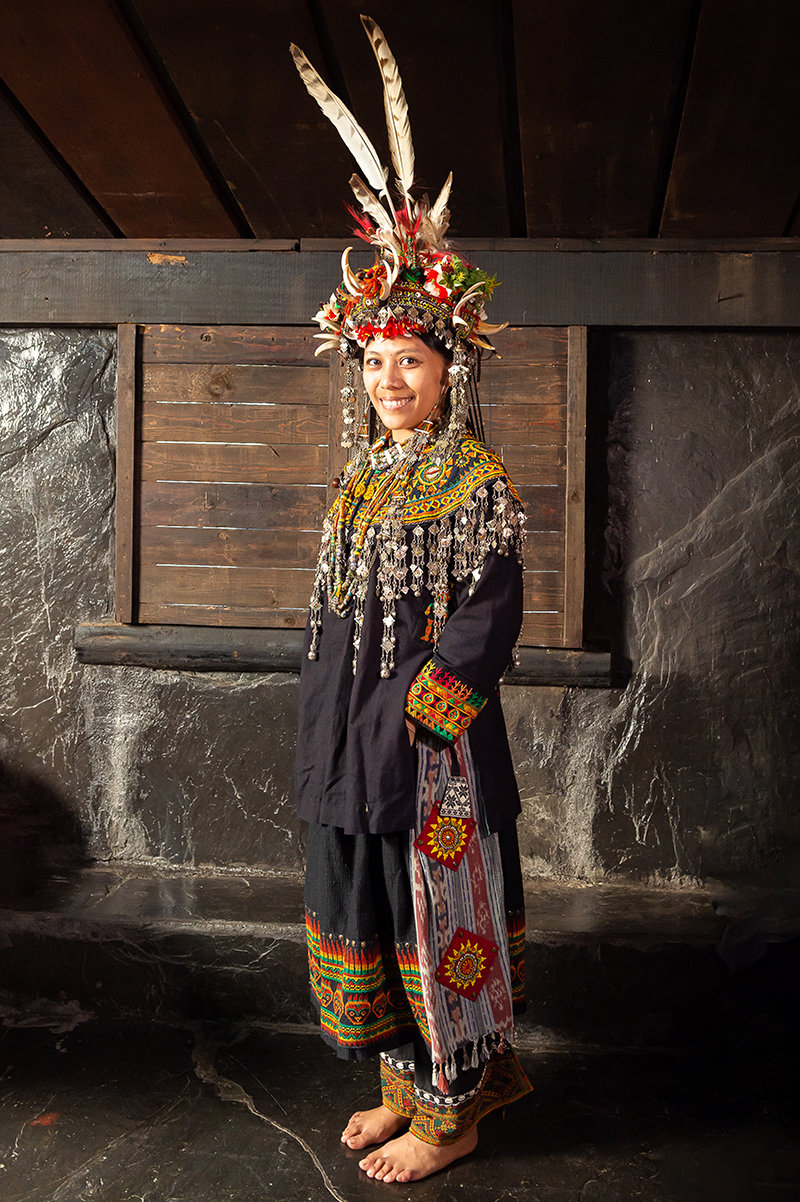
The Paiwan Dress
A full set of traditional Paiwan ceremonial dress – woven indigo and crimson fabric, bronze coins sewn into the hem, a shell and bone headdress, and strings of glass beads draped across the chest – weighs about twenty-five kilograms. Wearing it is a statement. It is the physical act of carrying your ancestry on your body. When these objects appear in a dance performance, you are watching thousands of years of cultural memory walk onto a stage.
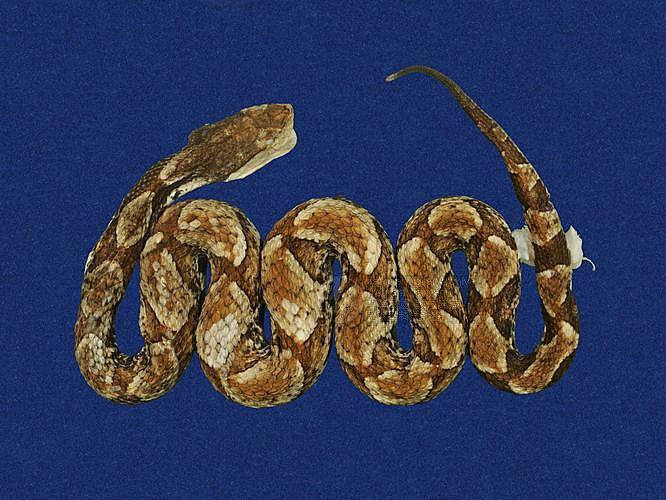
Hundred-pacer snake (vulung)
Then there is the presence that runs through Paiwan mythology like a heartbeat: the hundred-pacer snake (vulung, 百步蛇). Named for the folk belief that its venom is so potent that its victim, once bitten, will drop dead within a hundred steps, the hundred-pacer is far more than a dangerous reptile in Paiwan cosmology. The culture’s central creation myth goes like this: In the beginning, the sun descended to earth and laid two eggs in the ceramic vessel. Before leaving, it entrusted the hundred-pacer snake with guarding them. When the eggs hatched, out came the first man and first woman – the original ancestors of the Paiwan nobility.
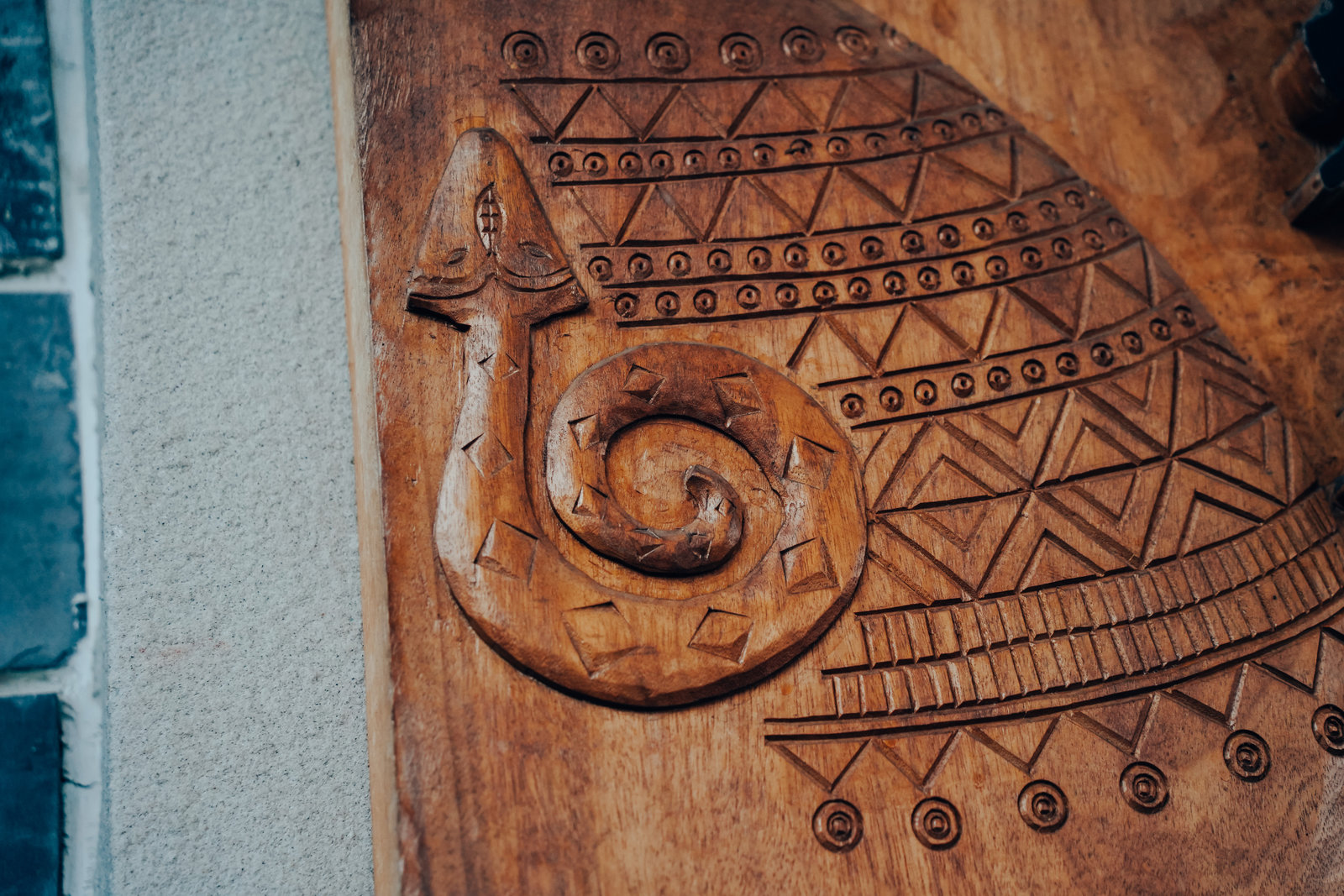
Wood carving featuring the “Hundred-Step Snake” motif
Wood carving featuring the “Hundred-Step Snake” motif
Wood carving featuring the “Hundred-Step Snake” motif
The snake’s scale pattern of neat, repeating geometric diamonds running down its back became the central motif of Paiwan visual art: carved into house posts, woven into textiles, pressed into the clay of ceremonial pots, etched onto the hilts of bronze knives. This pattern is not available to everyone. In traditional Paiwan culture, the hundred-pacer motif belongs exclusively to the noble and chief classes – a symbol of lineage from the sun’s chosen eggs. When you see that diamond motif on a Tjimur dancer’s costume or carved into a stage set, you are not looking at a design choice. You are looking at a cultural genealogy.
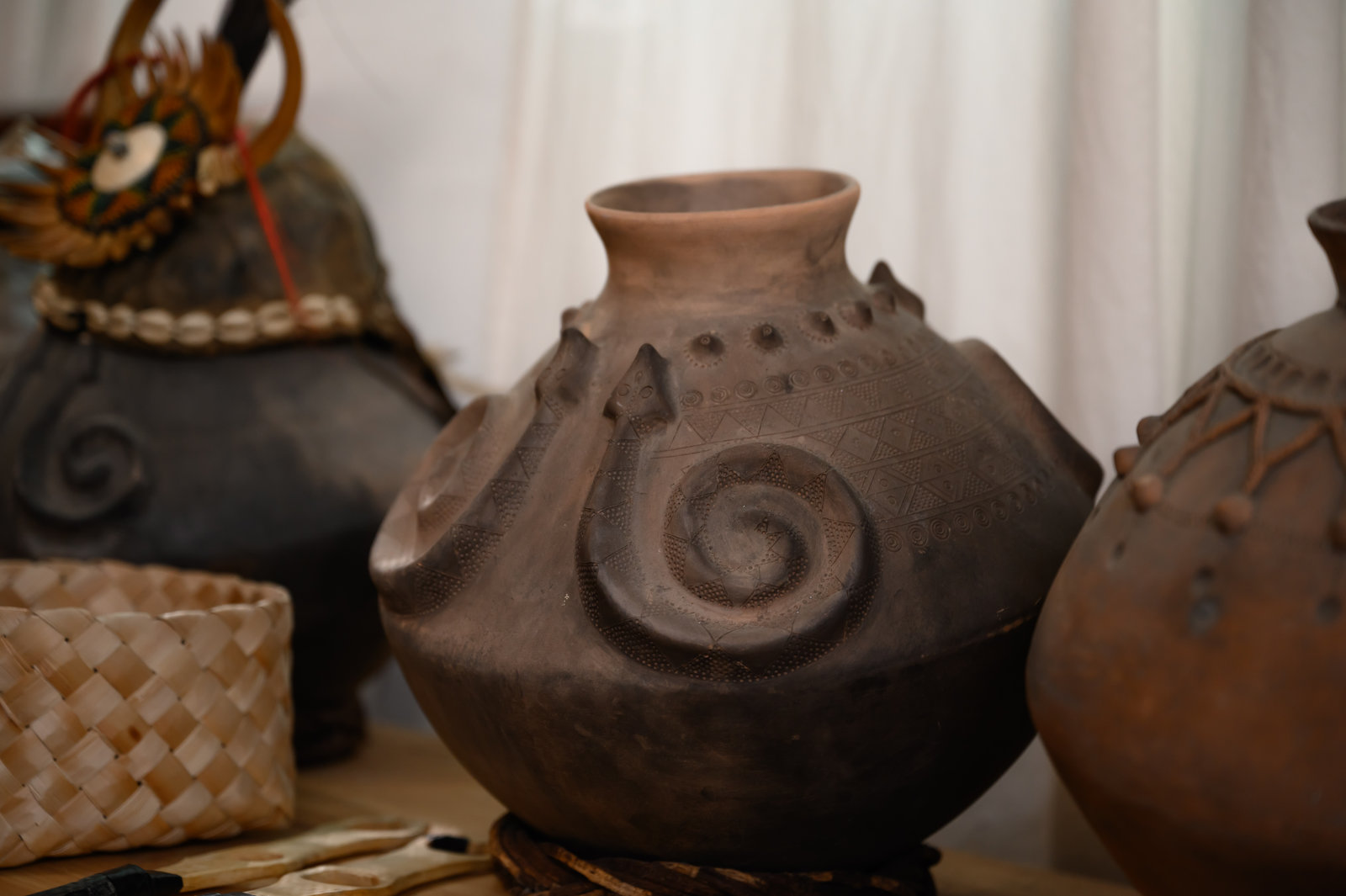
Paiwan ceramic vessel
A ceramic vessel placed at the center of a Tjimur performance, as in Ljuzem’s Walk and other pieces, represents the dwelling place of ancestral spirits – the home the dead return to and the point from which new life emerges. It appears at births, at weddings, at funerals. The most precious vessels are passed down across generations, as irreplaceable as the glass beads. In the Paiwan world, a ceramic vessel is never just a pot. It is the accumulated presence of everyone who came before, available to the living if approached with the right respect.
“Ljuzem’s Walk” in the village of Timor
Tjimur Dance Theatre (蒂摩爾古薪舞集) was founded in 2006 by Ljuzem Madiljin (路之·瑪迪霖). She is the artistic director, general manager, cultural gatekeeper, and (unofficially) the person everyone in the company seems slightly afraid of disappointing.

Baru Madiljin
Her younger brother Baru Madiljin (巴魯·瑪迪霖) is the choreographer and dance director.

Shatao Madiljin
Their father, Shatao Madiljin (廖英傑), founded a Paiwan cultural performance troupe in the 1970s and took it on international tour – though the context of that touring tells you something important about the era. His troupe’s performances were largely what was expected of Indigenous culture at the time: colorful, photogenic, reassuringly exotic. They were invited to diplomatic events as a kind of living postcard, representing Taiwan’s cultural diversity to foreign dignitaries who wanted a taste of the island’s “ethnic heritage” before getting back to the real business of statecraft. They were cultural tourism in motion – valued and beloved by the communities they came from, but ultimately performing Indigeneity for an audience that had already decided what Indigeneity was supposed to look like.
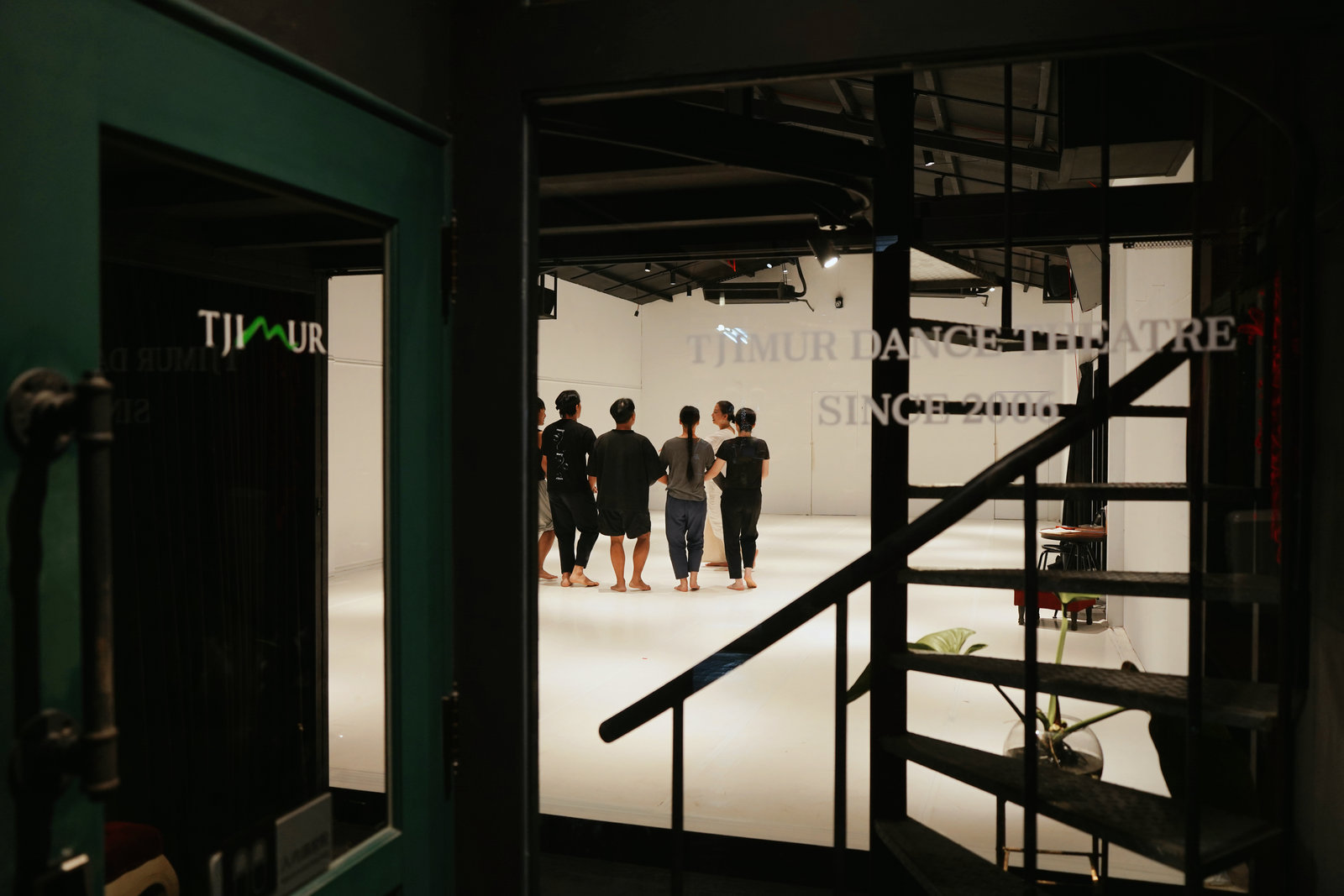
Rehearsal room of the Tjimur Dance Theater
When Ljuzem Madiljin founded Tjimur Dance Theatre in 2006, she was doing something categorically different, even if it looked the same on the surface: Indigenous Paiwan people on international stages. But Tjimur is a professional contemporary dance company, not a cultural showcase. A cultural showcase presents tradition as a finished object: Here is what we are, preserved in amber, available for your appreciation. A contemporary dance company treats tradition as a living material: Here is what we come from, and here is what we are doing with it right now, in conversation with the present, in dialogue with the world. The Madiljin family inheritance, then, ran deeper than a habit of international touring. It was the belief that this village belonged on stages far from this village – but the next generation had very different ideas about the terms on which it would arrive there.
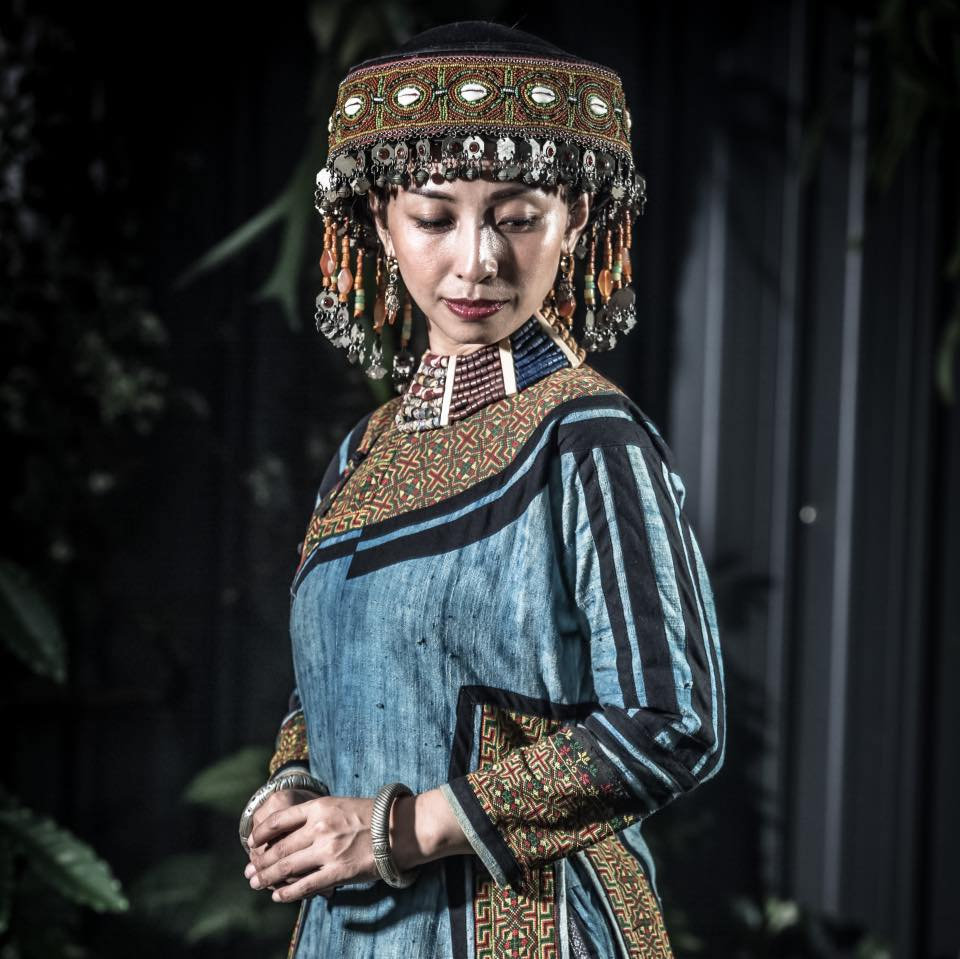
Ljuzem Madiljin
When Ljuzem returned from her professional dance training in Tainan to establish a full-time company in Tjimur (Timur in Chinese and on Google), the Taiwanese performing arts world had not yet coined the fashionable phrase “returning to one’s Indigenous roots.” That conversation would come later. She simply did it, years before it became a trend. Baru trained at the Taipei National University of the Arts – where Lin Hwai-min, founder of the well-known Cloud Gate Dance Theatre of Taiwan, established the dance program. After completing his studies, he came home, too.
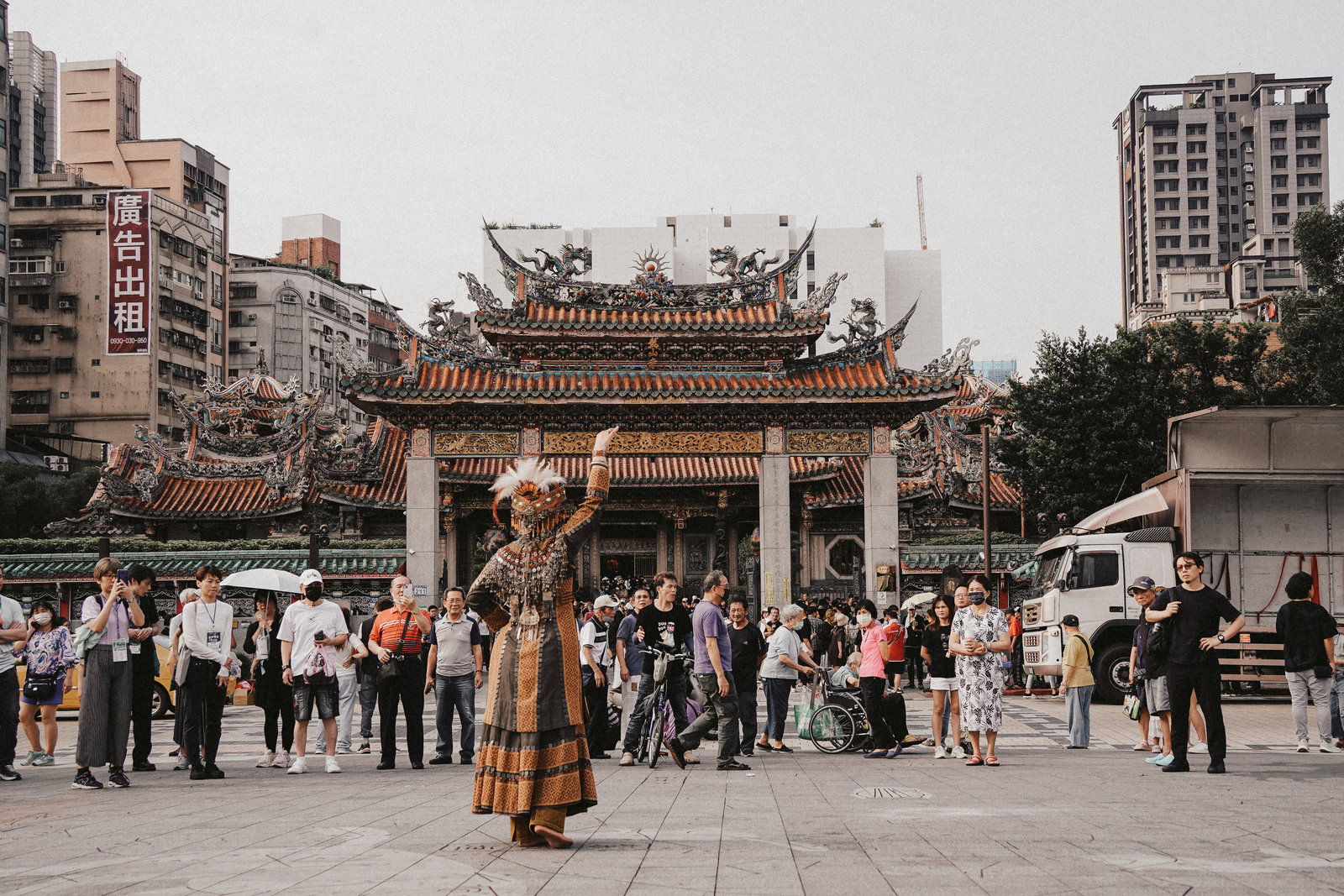
“Ljuzem’s Walk” in Taipei
Running a professional dance company in a remote mountain village is extremely difficult. There are no walk-in audiences, no arts ecosystem nearby, no cluster of venues and galleries keeping a local scene alive like you’d find in Taipei or Paris. You have to build everything from scratch, and you have to convince talented dancers who could move to the city and find easier work to come live in the mountains with you. What Tjimur offers in return is rare: a clear artistic identity, a full-time position as a professional dancer, and a cause that feels larger than career advancement along with, eventually, an impressive international touring schedule.
They have been at it for nearly twenty years. The company has performed at the Edinburgh Fringe, the Festival International Cervantino in Mexico, the GUIdance festival in Portugal, the Festival Off Avignon in France, The Place in London, and the Dance Festival in Munich, among many other stages across Asia, Europe, and the Americas – almost two hundred international performances in total. That is why they have been selected as one of Taiwan’s “Top Performing Arts Groups” for seventeen consecutive years, a government recognition that brings both funding and prestige.
The snake’s scale pattern of neat, repeating geometric diamonds running down its back became the central motif of Paiwan visual art: carved into house posts, woven into textiles, pressed into the clay of ceremonial pots, etched onto the hilts of bronze knives. This pattern is not available to everyone. In traditional Paiwan culture, the hundred-pacer motif belongs exclusively to the noble and chief classes – a symbol of lineage from the sun’s chosen eggs. When you see that diamond motif on a Tjimur dancer’s costume or carved into a stage set, you are not looking at a design choice. You are looking at a cultural genealogy.
If you have never seen them perform, here is a rough sketch. The lights go down. The dancers begin to hum – not quite singing, something lower and more internal, a sound that seems to come from the chest itself. Then their bodies start moving in response to that sound, as if the voice is the engine and the limbs are what it drives. Their weight drops. They stamp the floor – not with aggression, but with something more like gravity, as if the earth is pulling them down and they are giving in to the pull, then bouncing back up, then giving in again.
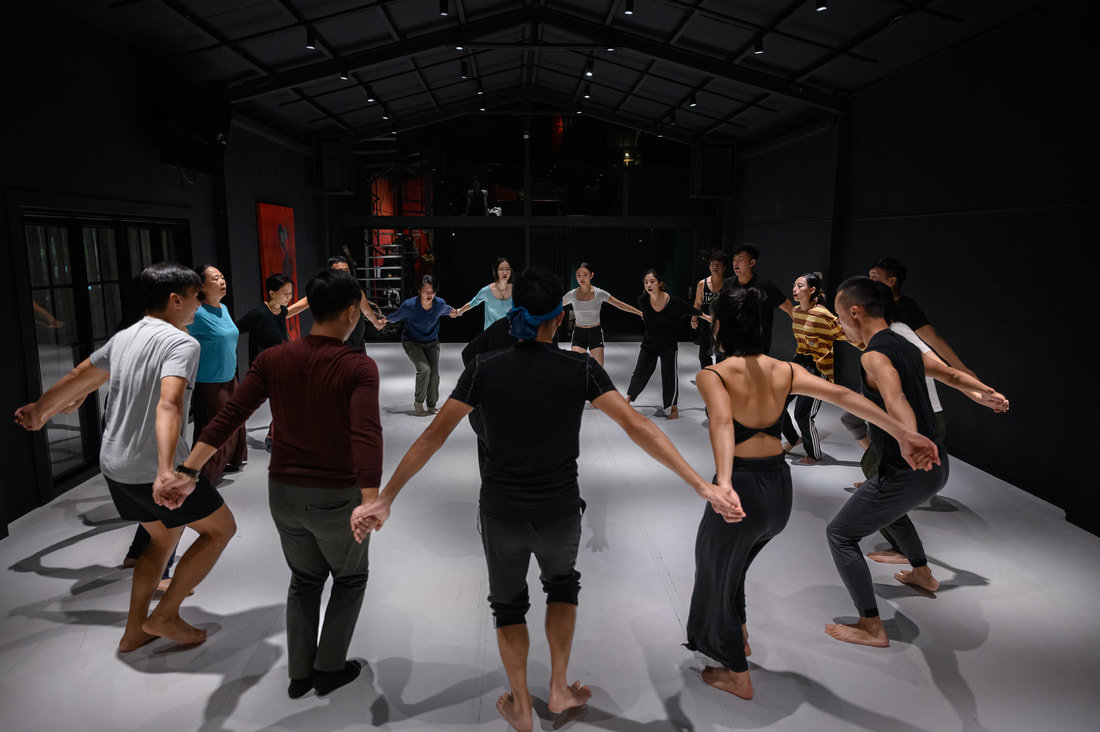
When they hold hands and move in circles, you notice a kind of collective breathing – everyone’s inhale and exhale subtly aligned as if the group shares a single set of lungs. When they jump, the bells and metal decorations on their costumes ring out like punctuation. When the formations shift from circle to line, from line to cluster, it feels less choreographed than governed by some shared internal logic you are only partially following from the outside.
Where does that logic come from? The answer is the voice. Before a limb moves, someone is singing – an ancestral chant whose rhythm is not accompaniment but instruction. The body listens to the song and translates what it hears into motion. The pulse of the chant becomes the pulse of the step; the breath between phrases becomes the breath between movements. Dance, in this framework, does not illustrate the music. It is what the music does when it moves into the body and has nowhere else to go. This movement is being driven from somewhere lower than the limbs themselves – almost from the breath. This movement vocabulary – Tjimur Technique – is what Ljuzem and Baru Madiljin have spent nearly twenty years building together: rooted in Paiwan ceremonial movement and ancestral song, stripped down and rebuilt using the tools of contemporary dance.
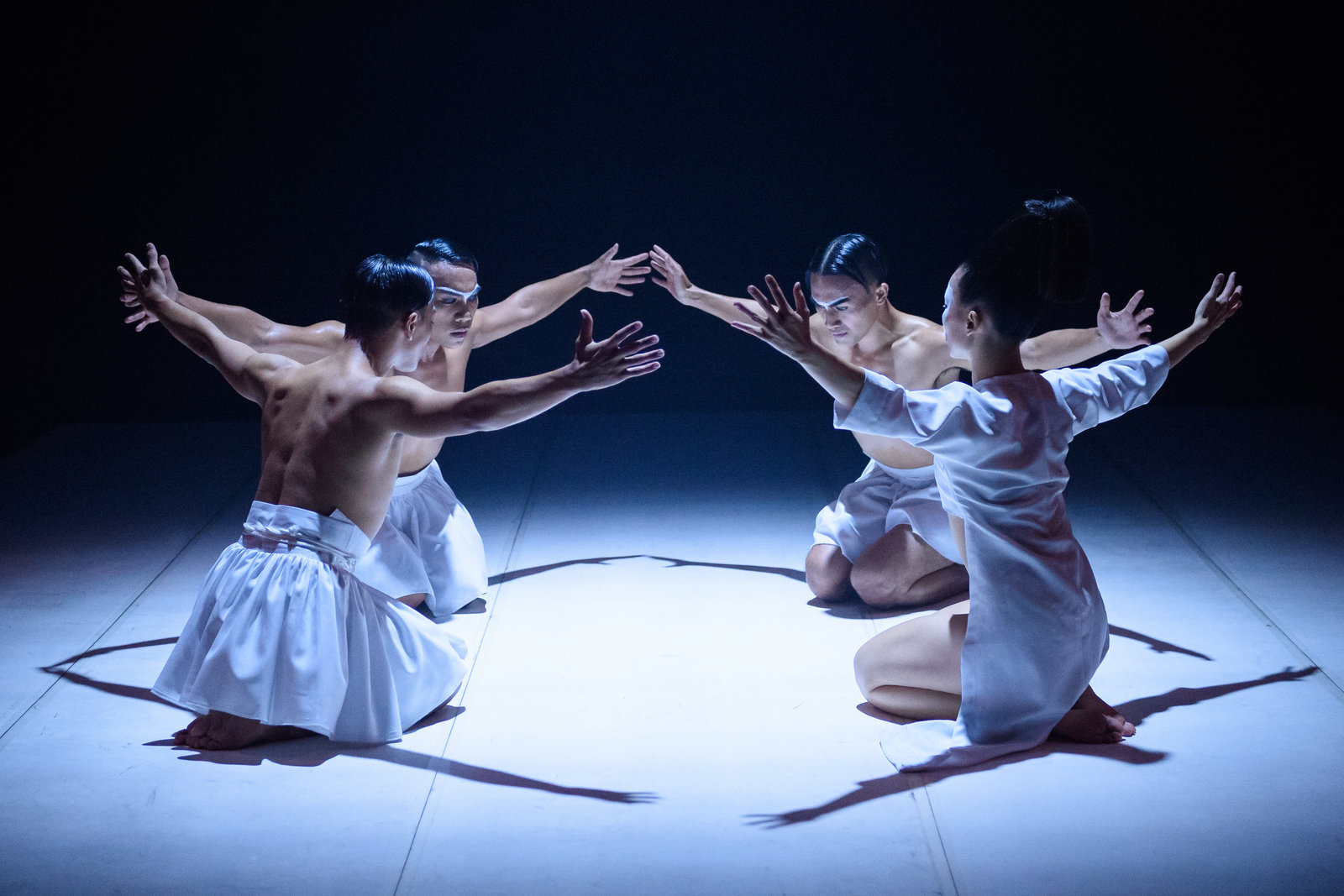
„As Four Step“
The raw material for all of it is deceptively simple: four steps. Left-forward-close, right-forward-close, left-back-close, right-back-close. Done in circles, holding hands, with singing along the way. The basic Paiwan festival dance – the one you would see at a wedding celebration that lasts two whole days, danced outdoors in full costume with the mountains at everyone’s backs.
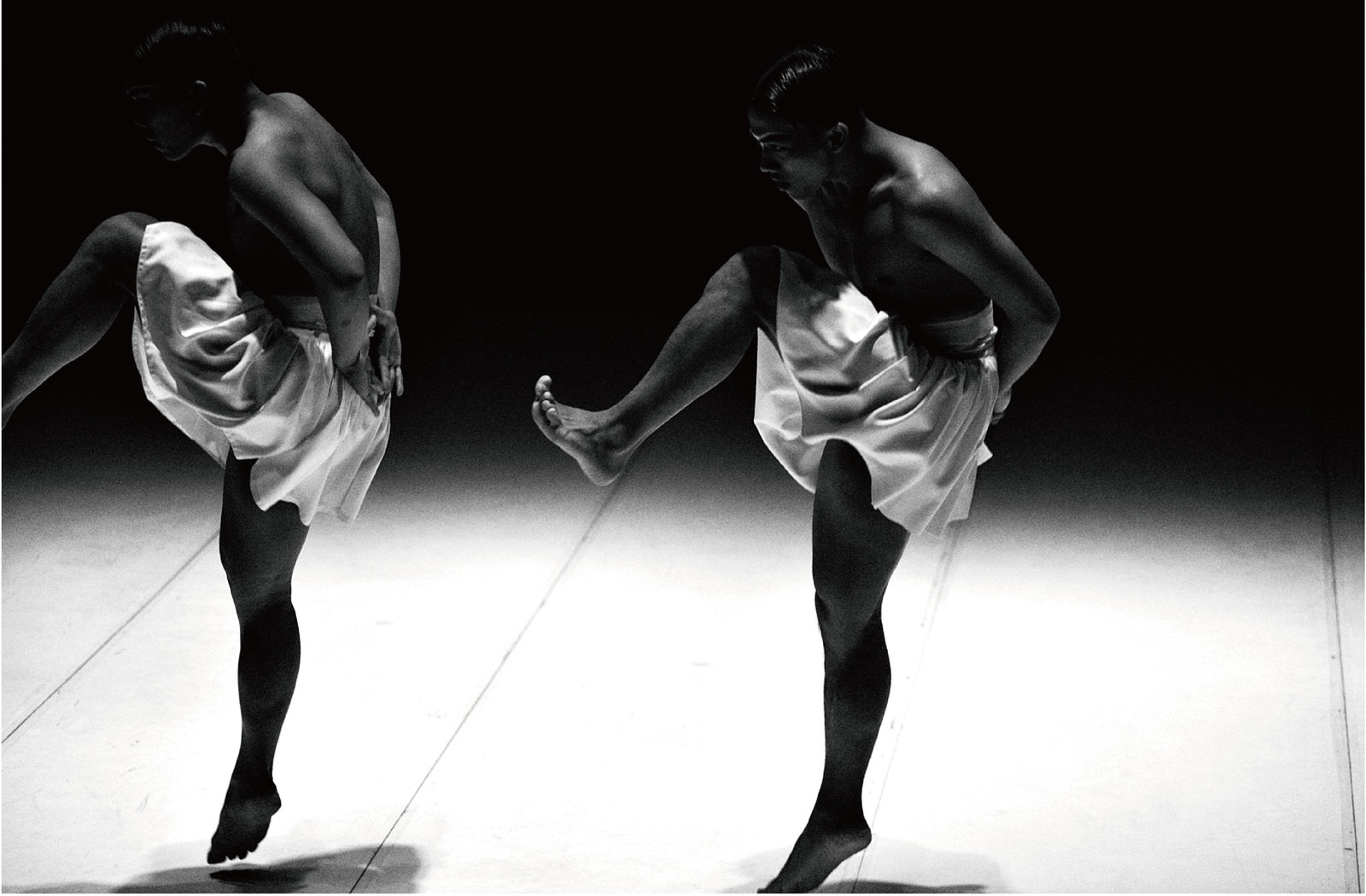
„As Four Step”
The 2015 work “As Four Step” is probably the clearest demonstration of what Baru Madiljin does with this material. He took those four steps and put them through a process of rigorous deconstruction, isolating what was physically happening in each one: the shift of weight, the relationship to the ground, the way the arms move in linked formation, the snakelike undulation of the spine that the Paiwan associate with the hundred-pacer snake. He then rebuilt all of it using the grammar of contemporary dance: repetition, minimalism, duration, the kind of slow-burn intensity you associate with choreographers like Trisha Brown or Anne Teresa De Keersmaeker. The result is a piece that looks like nothing else: not traditional Paiwan dance performed for tourists, and not contemporary dance wearing Indigenous costume as decoration, but something that has grown and rooted in its own soil, from Paiwan knowledge about what the body is, where it comes from, and how it belongs to the earth and the people standing beside it.
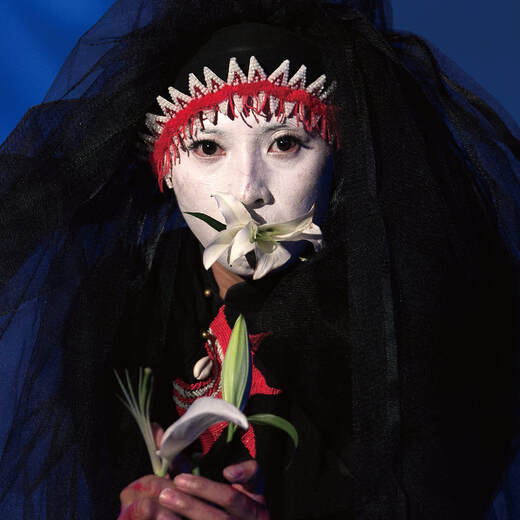
Ljuzem Madiljin
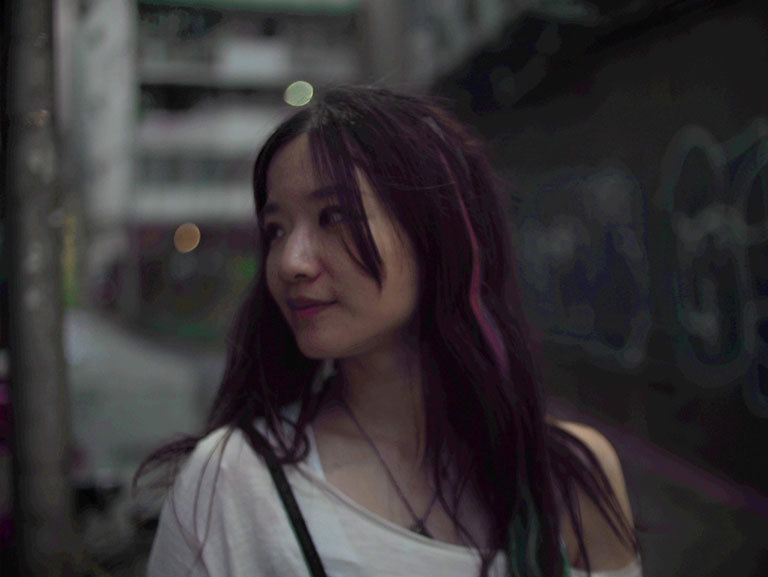
It’s worth spending a moment on Ljuzem Madiljin herself, because she is an unusual figure in the contemporary dance world in Taiwan whose story gets at something important about what Tjimur Dance Theatre is. Ljuzem is the eldest daughter in her family. In Paiwan society, this is a significant position: The firstborn inherits both the family’s cultural responsibilities and its standing, regardless of gender. She is also a commoner who married into a chiefly family in Tjimur – a cross-class marriage that carries real weight within the traditional logic of Paiwan society. Her own daughters (one of them the youngest dancer in the Tjimur troupe) are now considered part of the chief’s family line. All this means Ljuzem is not just an arts administrator. She is a cultural figure in a much older sense: someone who carries obligations to her ancestors, her community, and the future. What’s more, the financial survival of the dance company rests largely on her shoulders, too. The touring schedule, the grant applications, the payroll: All of it moves through her.
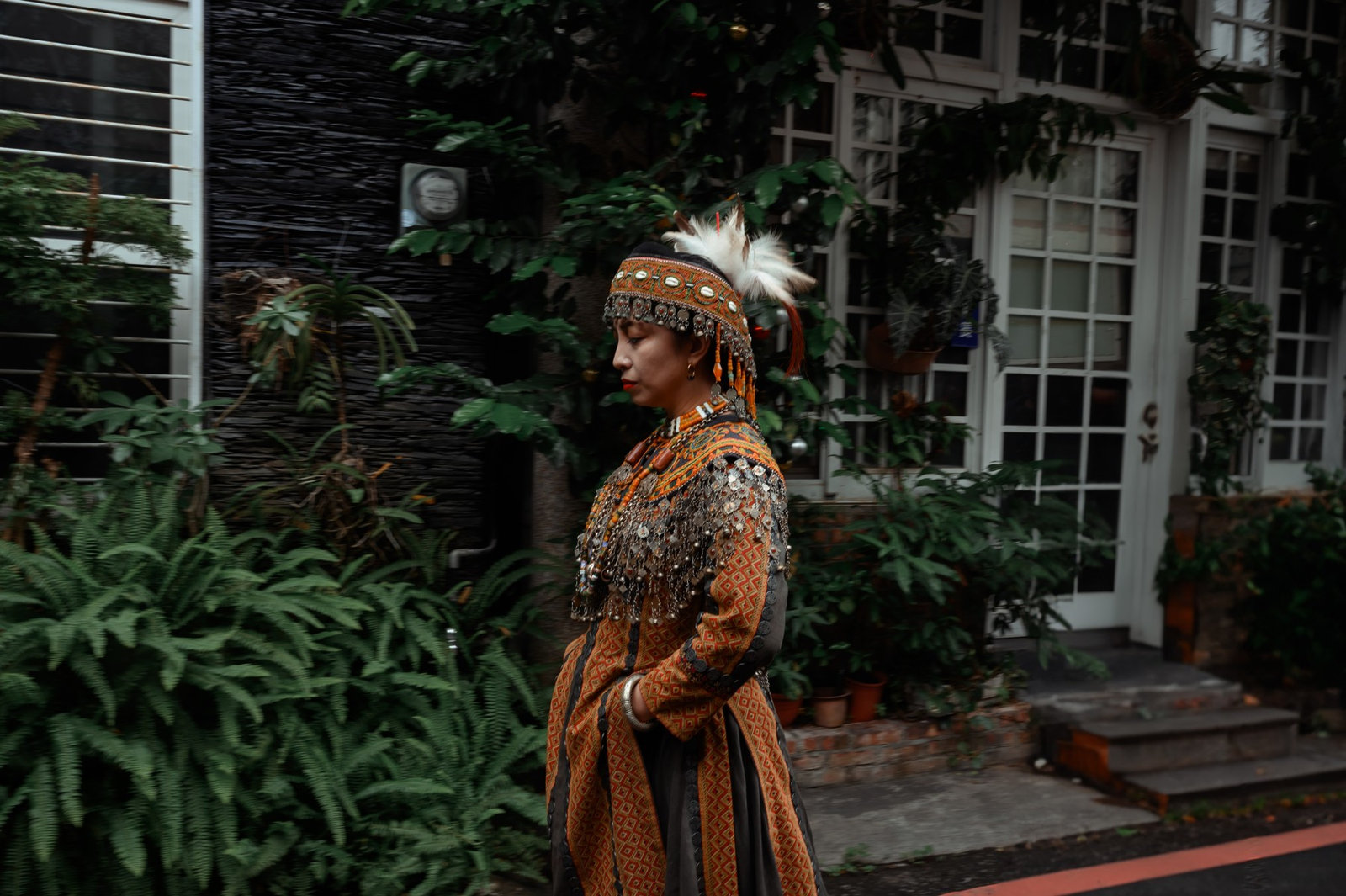
Ljuzem Madiljin
For about a decade between 2014 and 2022 or thereabouts, Ljuzem largely stepped back from performing. She let Baru do the choreographic work while she ran the company, managed the finances, built international partnerships, and wrote grant applications. But in every interview about this period, she describes a role that goes far beyond administration: She was the critic, the cultural authority, the person who checked every new work against the standards of Paiwan tradition, who invited village elders and scholars to comment on works in progress, who decided when a piece went too far or not far enough. She was the artistic director and the conscience of the company, not a passive manager.

“Ljuzem’s Walk”
In 2022, Ljuzem launched a project called “Ljuzem’s Walk,” a performance action that has been evolving ever since, and is probably the most personal and radical thing the company has made. She puts on the full ceremonial Paiwan dress – all twenty-five kilograms of it – and she walks. She walks through art museums in Taichung. She walks barefoot through the lanes of her home village. She has also walked through a neighborhood in Lisbon. She has walked along a harbor in Oslo in winter, in bare feet on the cold pavement, until strangers came forward to hold her up. She walks and she hums and sometimes she screams from deep in her throat and sometimes she weeps and sometimes she grabs someone’s hand in the crowd and presses it to her forehead.
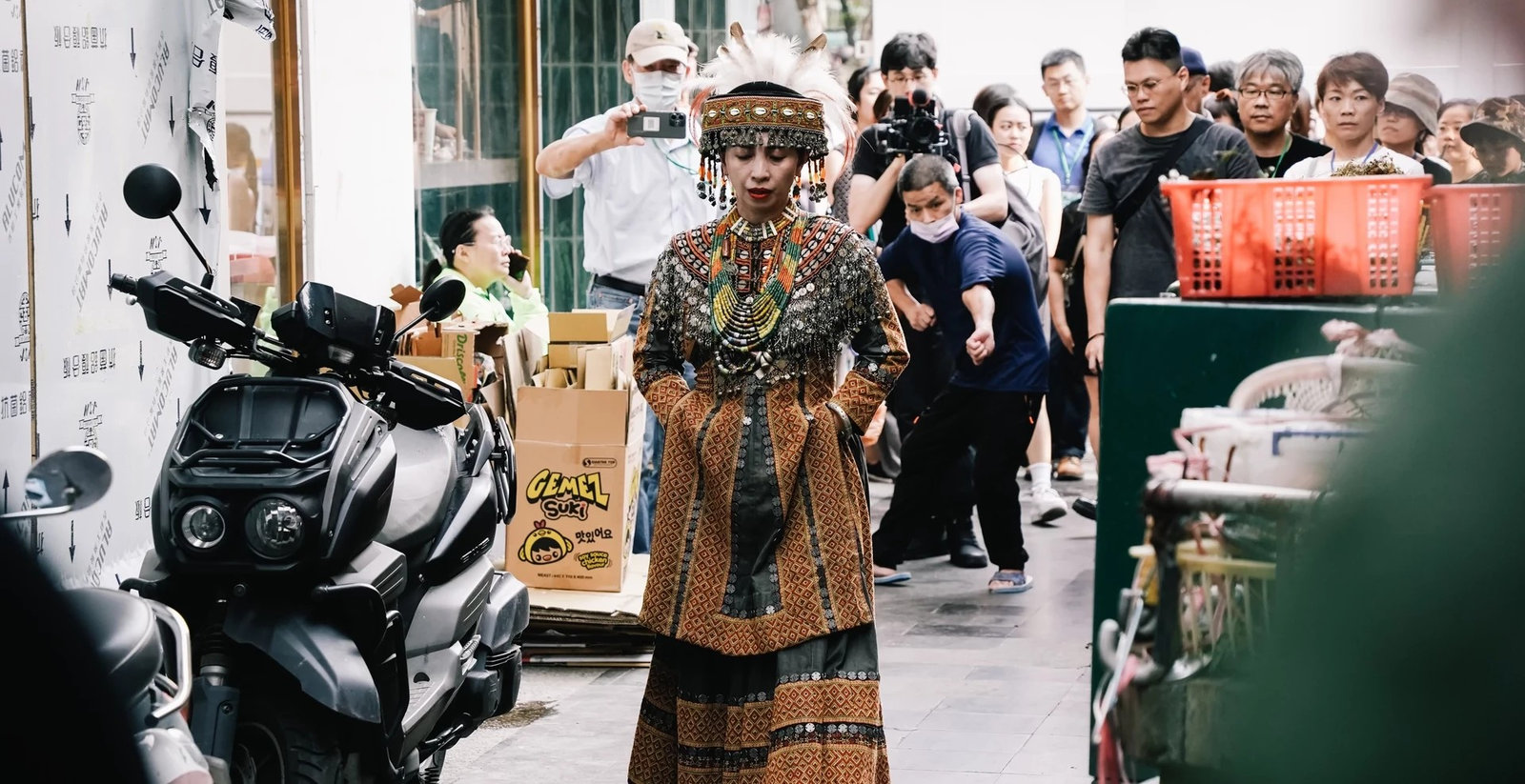
“Ljuzem’s Walk”
Each time she does it somewhere new, the piece becomes something slightly different. At the National Taiwan Museum of Fine Arts in Taichung, she became a living archive moving through an institution of modernity – a woman whose outfit contained more cultural information than most of the displays around her, walking freely through a space designed to contain and classify things like her. In Oslo, the endpoint of her walk was a patch of grass that had been the site of a Sámi protest. The Sámi are the Indigenous people of Scandinavia, and their history of dispossession resonates with that of the Paiwan in certain respects. A woman in Paiwan ceremonial dress, singing and walking on Sámi ground: a kinship between two peoples who had never met but recognized something in each other.
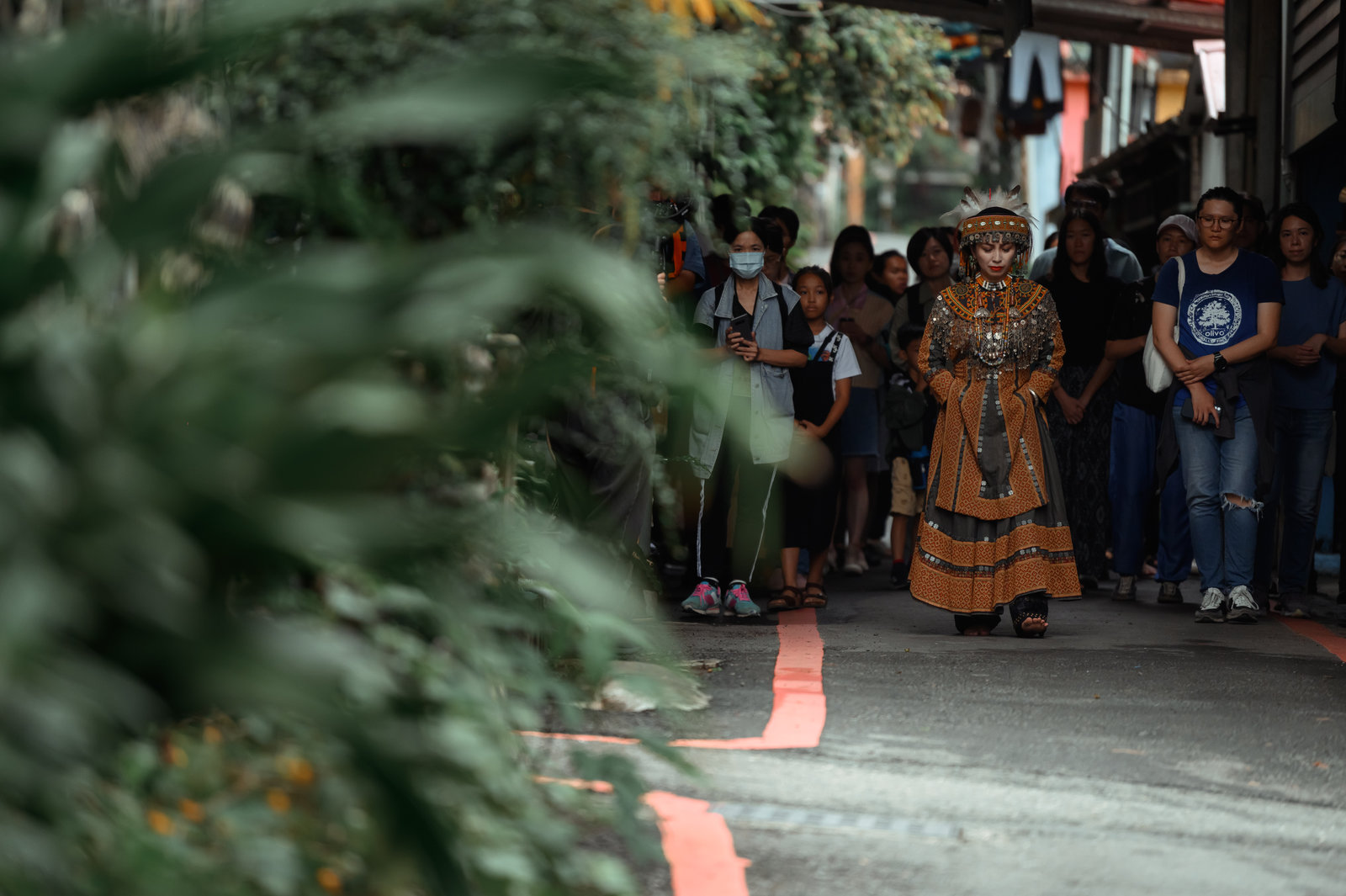
“Ljuzem’s Walk”
In Taipei’s Wanhua district, walking near Longshan Temple into areas where homeless people gather, she spontaneously grabbed people’s hands, ran, spun, and at one point found herself doing the four-step Paiwan dance with strangers who had no idea what it was but joined in anyway. In that moment, something happened between a person carrying thousands of years of cultural inheritance and people living on the edges of a twenty-first century city, that no museum wall text or academic paper could fully account for.
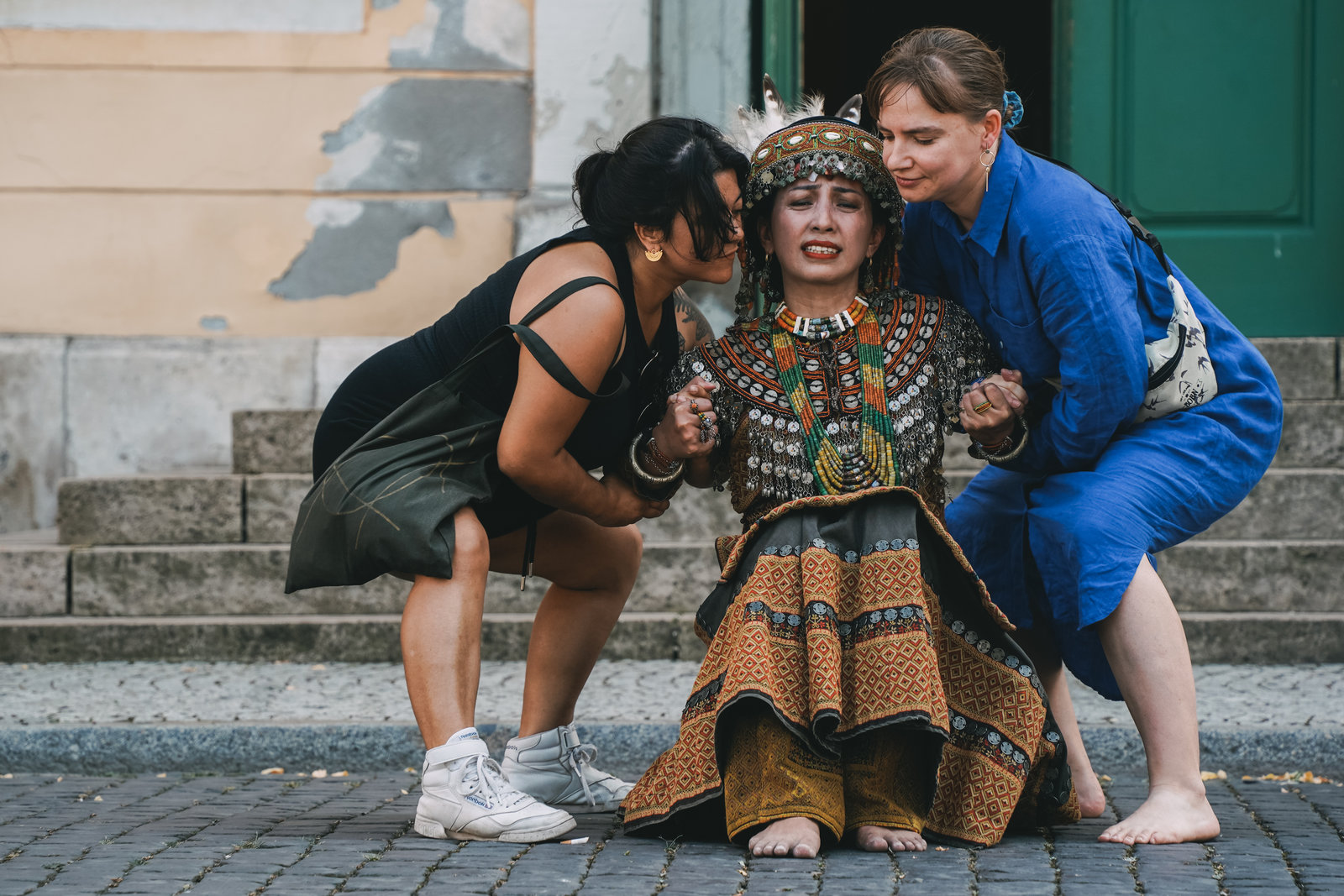
“Ljuzem’s Walk” in front of Longshan Temple, Taipei
Ljuzem has described her state during these walks as something like a trance: “I have a soul that comes out and watches others watching me.” The Paiwan have shamanic traditions, frameworks for what it means to exist between worlds, to be a conduit between the living and the ancestors. Ljuzem does not address her work in dramatic mystical language, but neither does she deny that there is a degree of mysticism in what is happening.
In 2018, Tjimur started doing something rare in the world of contemporary performance: hosting an international arts festival in their village. Not in Taipei. Not in Kaohsiung. In Tjimur – accessible only by completing that long, winding journey described at the start of this piece.
The Tjimur Arts Festival runs for one or two weeks every year or two. Its slogan is six words in Mandarin that resist clear translation: “Where my tribe is, that is where the international begins.” Or more bluntly: “The village and the world are not opposites.” Or just directly: “The village is the most international place there is.” International artists come for residencies, experiment with Tjimur dancers on new works, and run workshops for local residents. People arrive from India, Japan, Indonesia, the Philippines, and Europe. The work that comes out of the event is sometimes rough, sometimes astonishing, always strange and alive in ways that polished theater-house productions rarely manage.
“XVII” by Kaishiki Nrityabhasha and the Tjimur Dance Theatre
One year, Tjimur collaborated with the Odissi classical dance company Kaishiki Nrityabhasha from eastern India. The resulting piece, “XVII,” was about rhythm: how an Indian dancer uses finger-tapping to count and feel time, while a Paiwan dancer uses the stamp of the foot. Two completely different systems for measuring the body against time, brought into conversation. Not “fusion” in the usual sense – not something blended into comfortable sameness – but a genuine dialogue between two traditions that each have their own logic and their own history, and were willing to sit with the difference.
Heidi Voet and Ching-Hao Yang – Fast Life (《快速人生》)
Another year, Belgian visual artist Heidi Voet came to the festival and collaborated with Tjimur dancer Ching-Hao Yang (楊淨皓) to create a piece involving a concrete ball (a symbol of modern infrastructure) and a watermelon. The latter object carries more cultural baggage than you might think: The watermelon has a long history in Western visual art as a stand-in for the exotic “other,” a shorthand for tropical abundance. Voet and Yang were really asking a question about compression and expansion under pressure – what happens to a thing, or a body, or a culture, when external force is applied – and the concrete ball and the watermelon turned out to be surprisingly good at holding that question open.
For most of modern history, the story of contemporary art has been told from a handful of cities – New York, London, Paris, Berlin – and everyone else has had to travel toward those urban centers to be taken seriously. A dancer from an Indigenous village in southern Taiwan who wanted to be “international” was expected to leave and seek validation from the institutions that decided what counted. Tjimur Arts festival is a rejection of that logic. It raises some uncomfortable questions: Why do the most interesting conversations in contemporary dance have to happen in those cities? Why can’t a mountain village in Pingtung be the room where the future gets figured out? Why would artists from India and Belgium and Japan come all the way here if not because this place has something the world needs?
The avant-garde has no fixed address. It lives wherever someone is asking the most urgent questions. And sometimes that’s on a mountain at the end of a long journey, in a black-box theatre that a dance company built with their own hands.
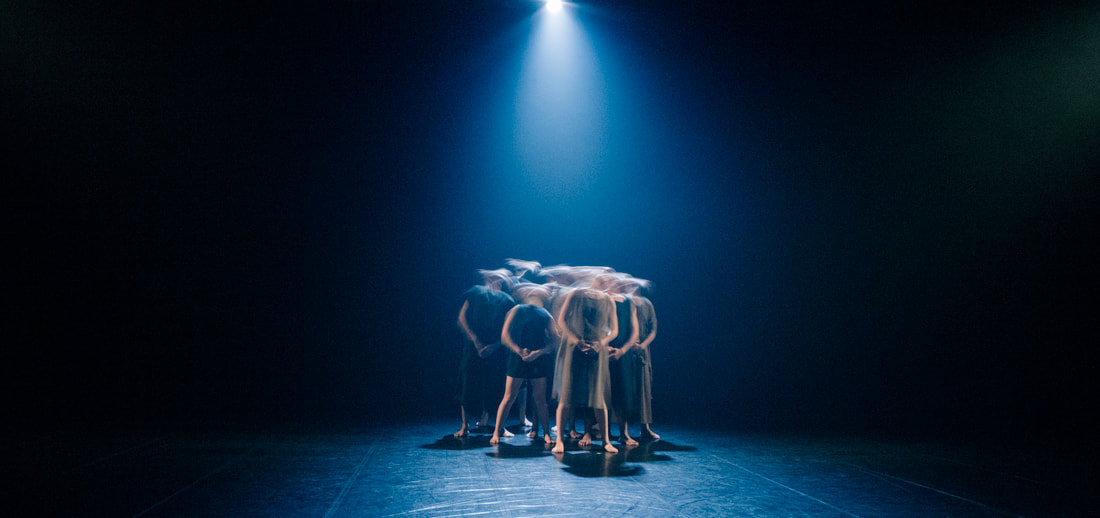
“2 Gether”
There is a question that hangs over every discussion of Indigenous contemporary art, and it’s worth being direct about it: What exactly is the relationship between honoring a tradition and evolving it? When does adaptation tip into appropriation, even of your own culture, by the forces of the contemporary art market?
Tjimur’s answer, implicit in everything they do, is blunt: The question is a trap. The very idea that a tradition must be preserved in a fixed state, that any evolution is somehow a betrayal, is a legacy of the way colonial powers treated Indigenous cultures – as objects in a museum, pinned down and labelled, not as cultures that breathe and change like any other. Paiwan culture has always adapted and absorbed. Some of the glass beads were originally made from imported materials; the tradition of bead-making involved the constant absorption of new techniques and outside influences. The four-step dance has probably changed many times across the centuries. The question is whether the change comes from within or is imposed from outside – and whether the community doing the changing has any say in it.

“2 Gether”
When Baru reconstructs the four-step dance using post-modern minimalist choreographic strategies, he is not contaminating a tradition. He is doing what artists in living traditions have always done: taking what they inherited, understanding it as deeply as they can, and then asking what it has to say to the world they are actually living in. The difference is that he is doing this in a community that has lived through colonization – first by Westerners as a result of 15th-to-17th-century European exploration, then by the Japanese from 1895-1945, and then by the Nationalist Chinese government that arrived after World War II. As a result, the stakes are higher, and the awareness of what it means to lose or misrepresent your culture runs closer to the surface.
What Tjimur does brilliantly is hold multiple truths at once. The tradition is real and it demands respect. The present is real and it demands response. The art lives in both places at once – and has to, or it means nothing.

“2 Gether”
Audiences from Asia or Europe or elsewhere, unfamiliar with Taiwan or the Paiwan people, often report a strong, visceral reaction to Tjimur’s performances. Viewers who may start the show confused by the unconventional choreography are often visibly affected by the end of the performance. Many may struggle to articulate their experience, but describe a sense of gravity behind the work. They felt the weight of it – the physical weight, the emotional weight, the historical weight. The dancers’ feet landing on the stage floor. The hum rising from many chests at once. The bells and coins sewn into costumes ringing with each step. Something gets through to them that no program note could have predicted.
That is the thing about Tjimur that is hardest to write about and easiest to experience: They have found a way to make their specificity universal. Not by smoothing it out, not by explaining it, not by making it palatable or familiar – but by going so deeply into it that they break through to something on the other side that anyone can feel.
It is a little like the best music you have ever heard from a culture you don’t belong to. The first time you really heard flamenco, or qawwali, or a sacred Georgian polyphony – the moment you stopped trying to understand it and just let it land. Tjimur does that.
And they do it while hosting artists from around the world in a mountain village. While walking through Oslo in a twenty-five-kilogram ancestral outfit in the middle of winter. While keeping a professional black-box theatre alive in a place that’s an hour away from the nearest city. While arguing internally, no doubt, about money and touring schedules, struggles around representation, and whether the next piece should go this way or that.
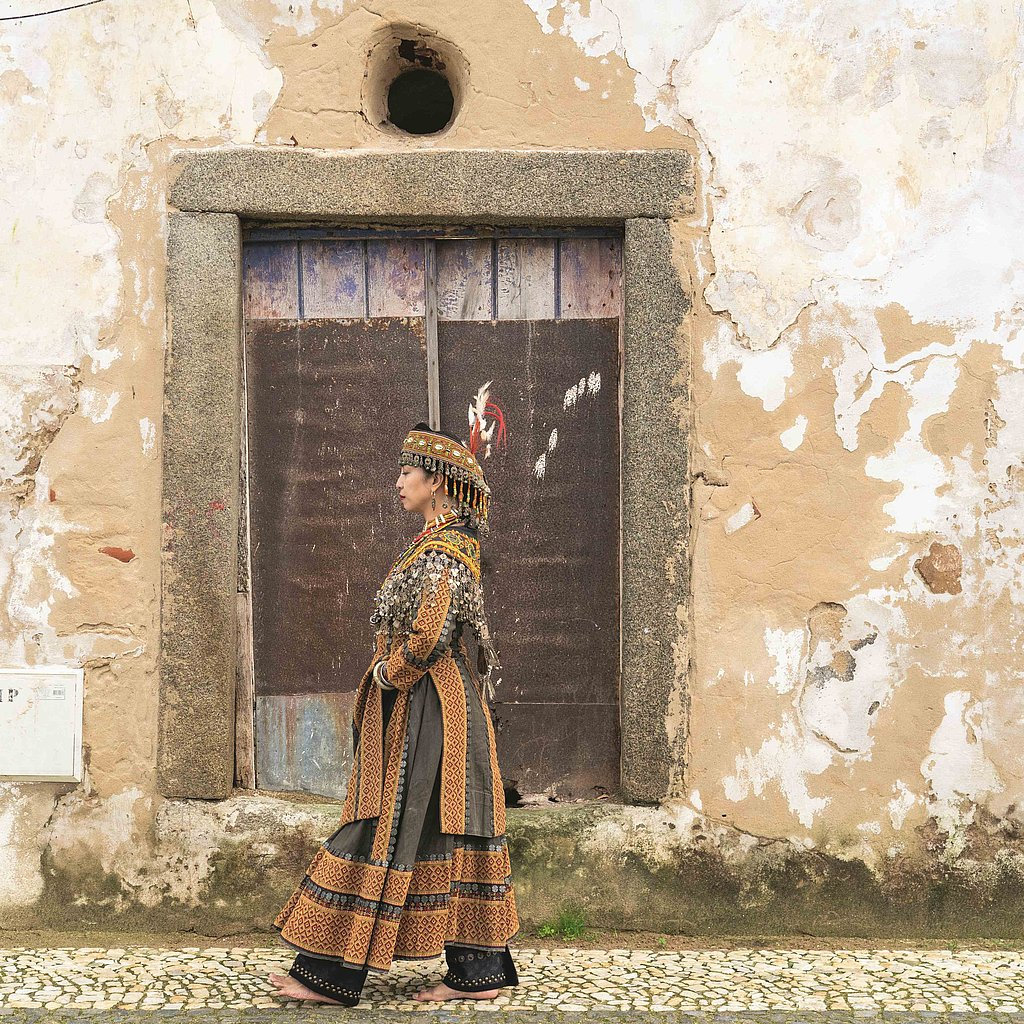
“Ljuzem’s Walk”
What this description leaves out is how close to the edge all of this actually runs. There have been periods when the company could not cover its costs, when Ljuzem took out personal loans to make sure the dancers got paid, to keep the lights on, to get everyone to the next venue. This is not unusual for small independent companies anywhere in the world, but the stakes here are different: If Tjimur folds, it is not just an arts organization that disappears. It is a full-time professional dance ensemble embedded in a mountain village, one that took years to build. So, they keep going. They apply for every grant. They make new works even when they don’t yet have the budget for it, because stopping would cost more than the debt.

The entrance to the Tjimur Dance Theatre
And perhaps that is exactly why the boundary between the company and the village disappeared at some point, when it became clear that survival depended not just on the work but on everything around the work. The café staff know the dancers. The bead-makers wander about outside the rehearsal studio. Children run through the courtyard during tech setup. Tjimur dance theatre doesn’t feel like an arts organization visiting a community. It feels like the community itself has learned how to make contemporary dance. It raises an argument – quiet, patient, and quite persistent – about who gets to define what “contemporary” means, who gets to be “international,” and even whether the true center of the art world lies precisely where life and art converge.
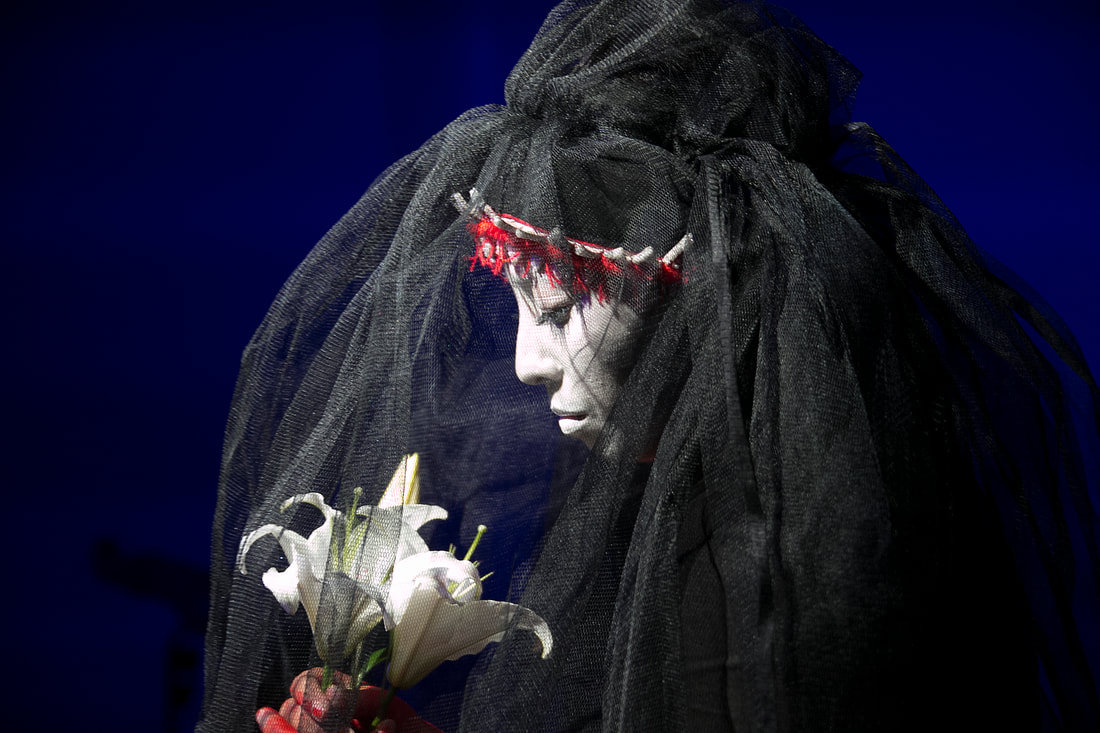
Ljuzem Madiljin
Tjimur Dance Theatre (蒂摩爾古薪舞集) is based in Tjimur village, Sandimen Township, Pingtung County, Taiwan and has been touring internationally since 2012.
Dr. I-Wen Chang is a dance scholar and Associate Professor at Taipei National University of the Arts with a PhD from the University of California, Los Angeles (UCLA). She writes about contemporary Taiwanese dance, Indigenous performance, and the ways bodies across cultures talk to each other. Her work has appeared in books, journals, and arts publications, including Inter-Asia in Motion: Dance as Method (Routledge, 2023) and Contemporary Choreography: A Critical Reader (Routledge, 2026). iwenchang.tw@gmail.com