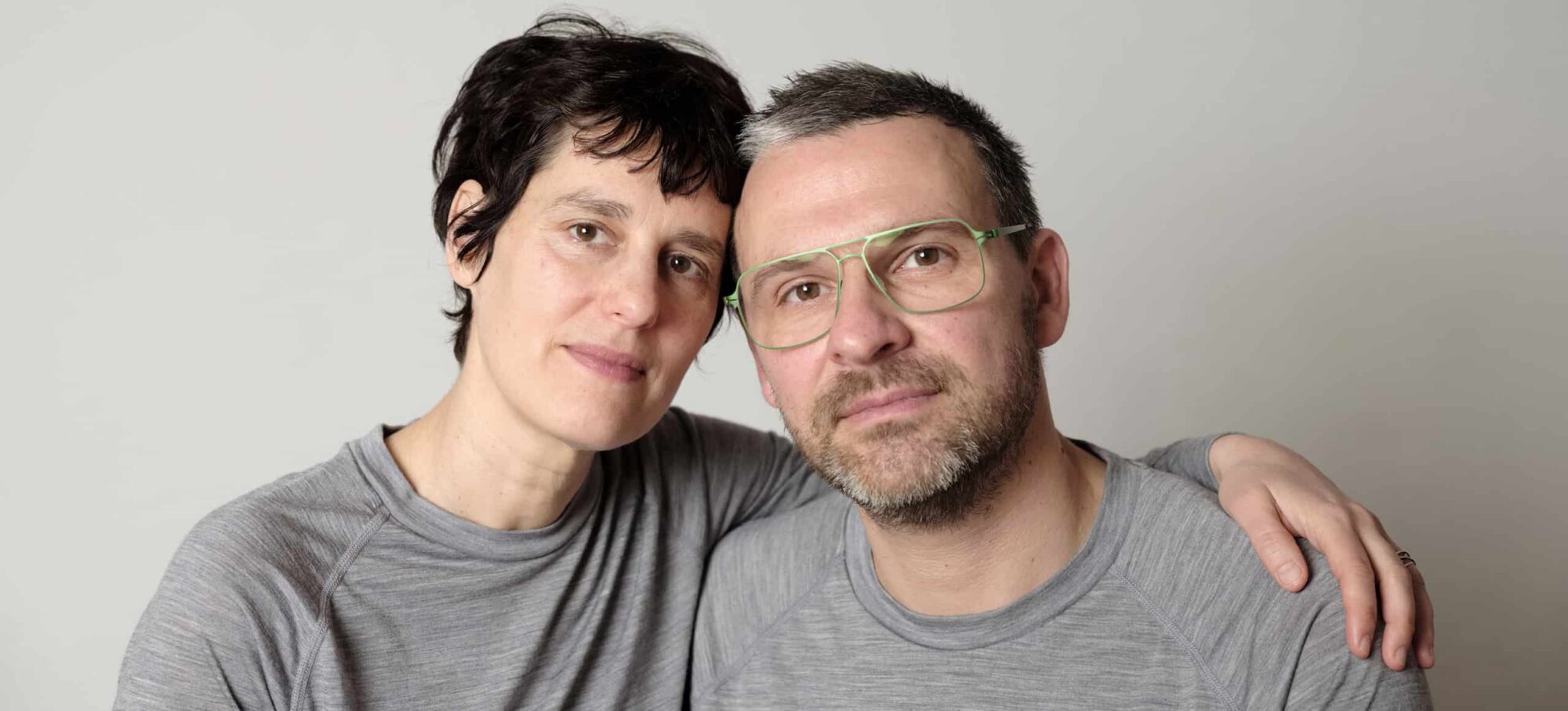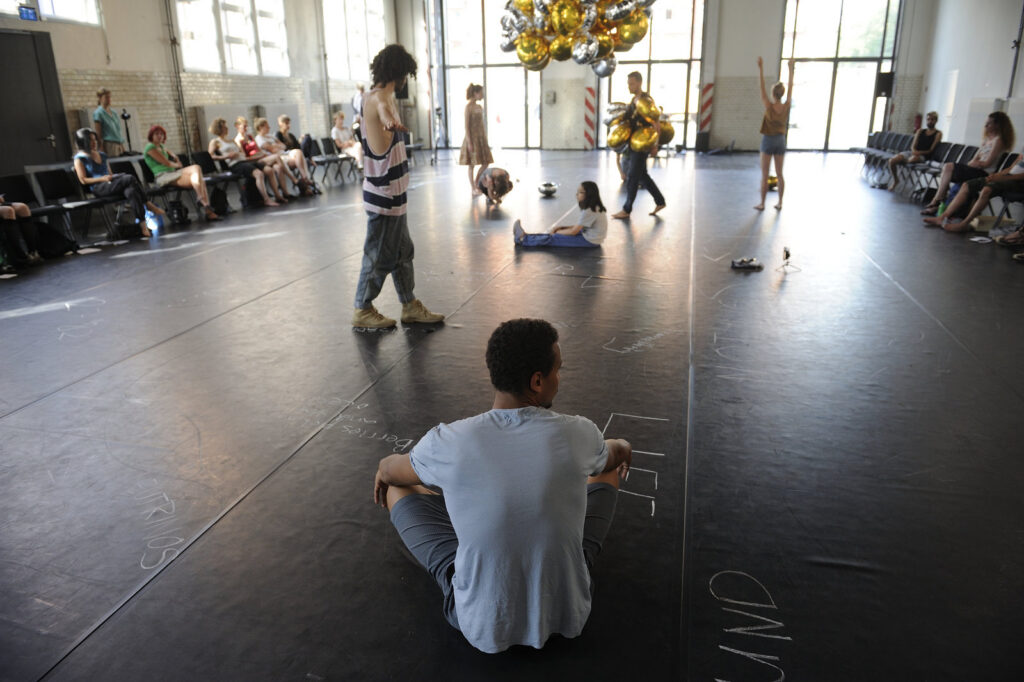
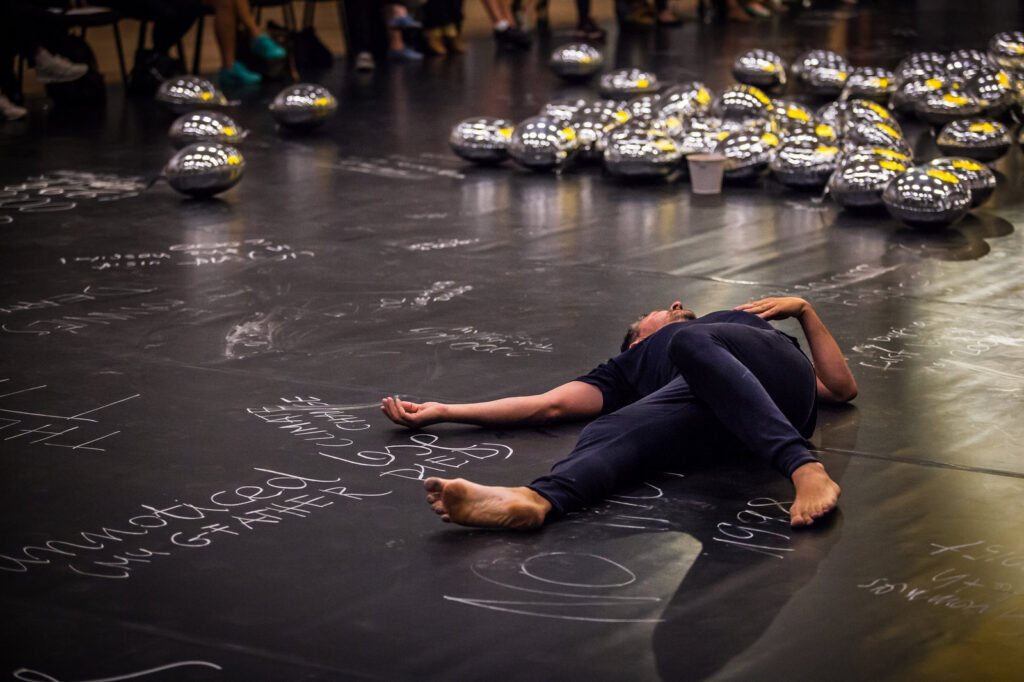
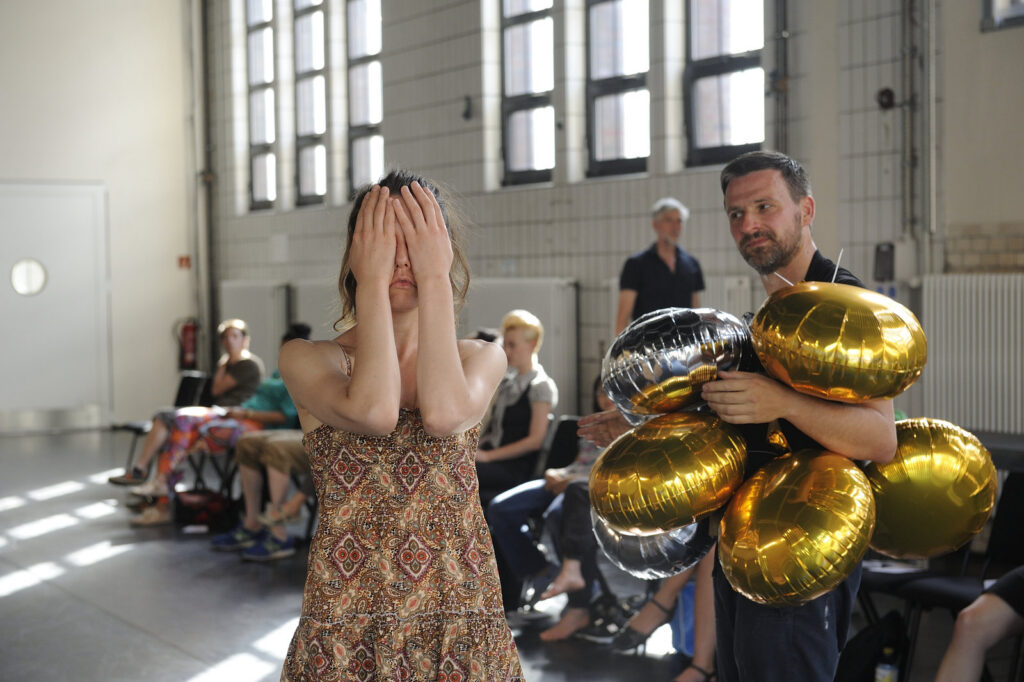

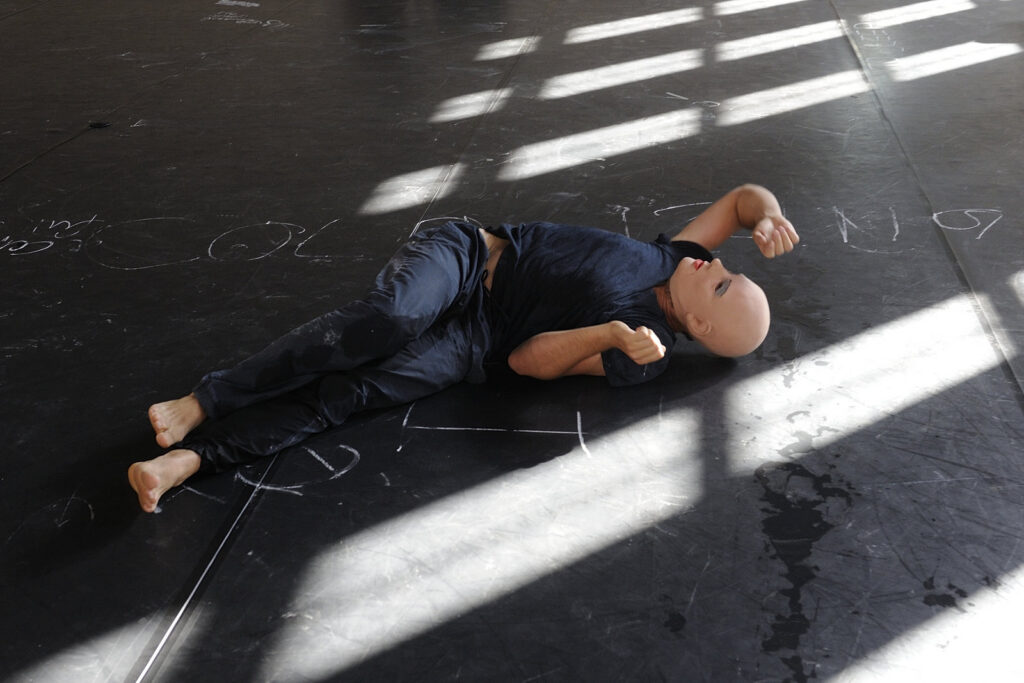
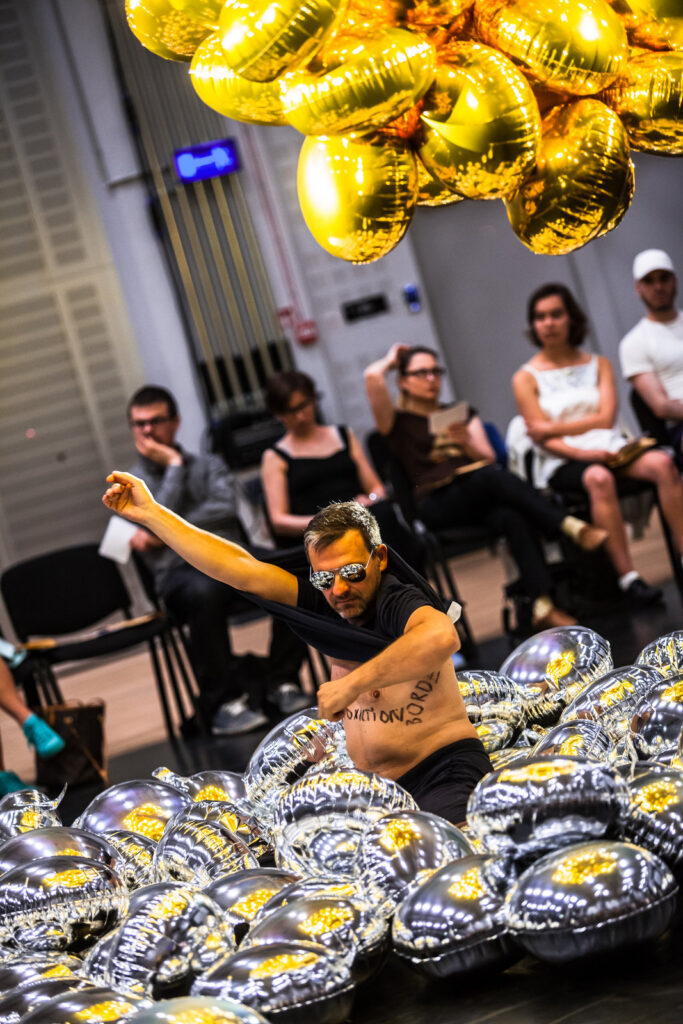
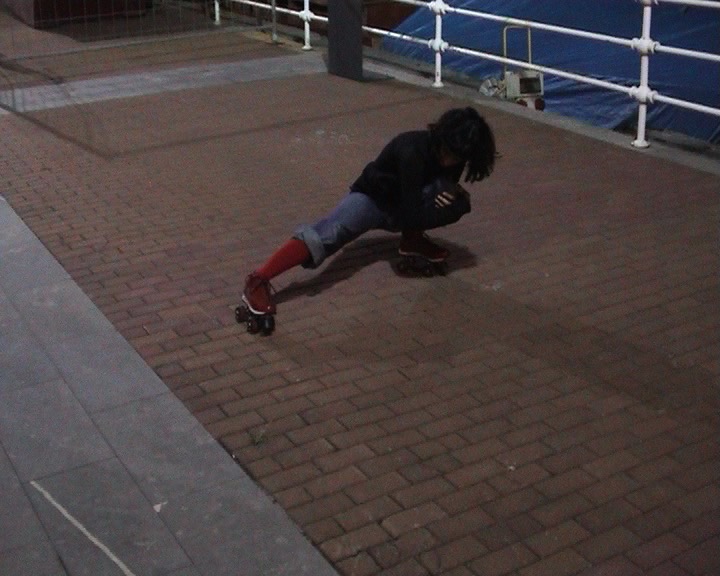
Before their first joint performance in 2001 at the ZKM in Karlsruhe: “How to Knit Your Own Political Body”
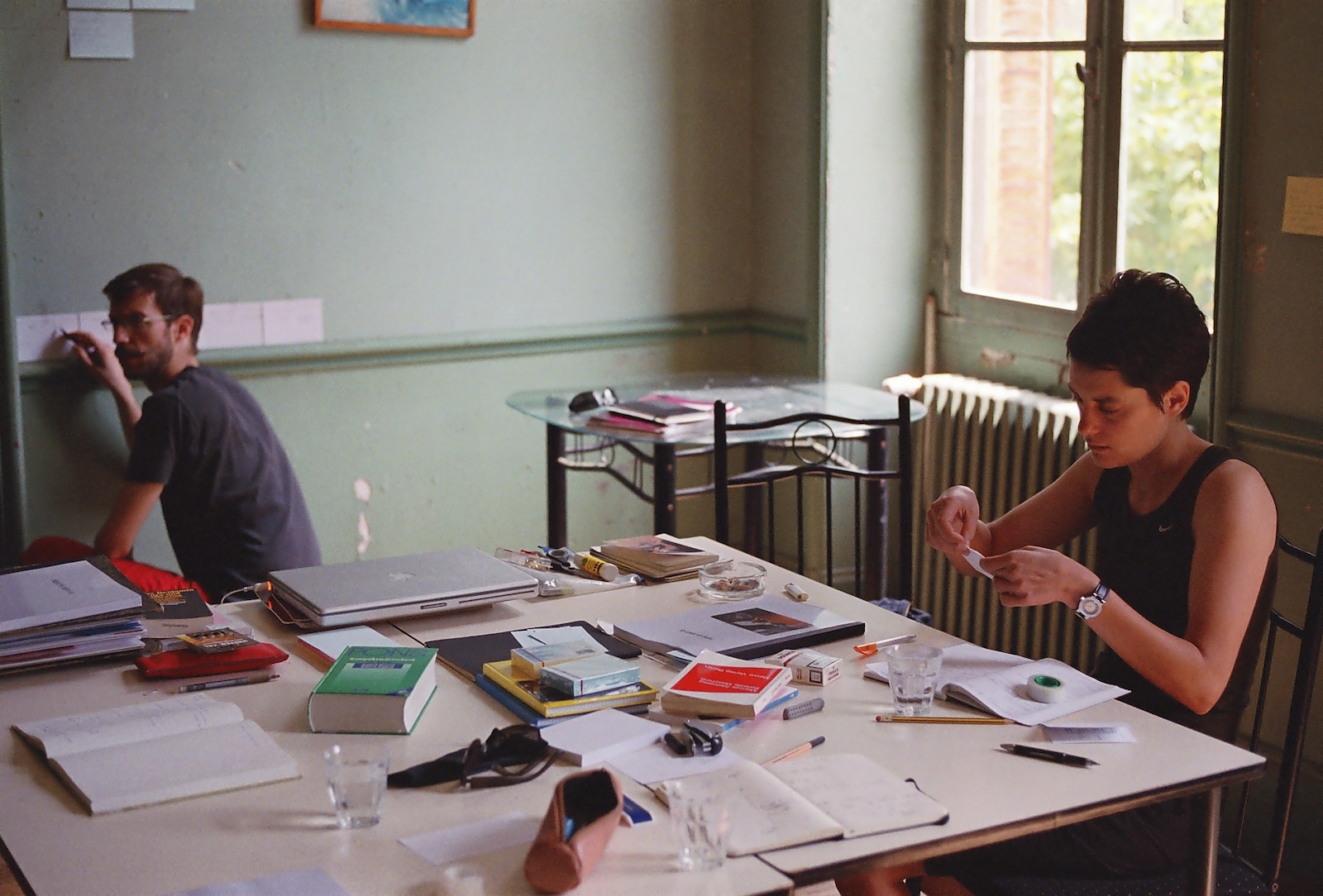
Brussels at the turn of the millennium: Kattrin Deufert is studying at the Université Libre de Bruxelles while also participating in the “Körperinszenierungen” graduate research program in Berlin. In Brussels, she works on her dissertation every morning from 6 a.m., then works part-time in the programming department of the Goethe-Institut. She also keeps a diary. The title: “mythos europa.”
In her diary, the future feels like a state of rootlessness that has taken a radically positive turn. The whole world is open to everyone. Everything is possible.
Everything will be different. Even dance training. In Brussels, Thomas Plischke, a student of choreographer Anne Teresa de Keersmaeker, belongs to the first generation of the newly-founded P.A.R.T.S. school. He completes his studies in 1998 with a solo titled “Fleur (Anemone).” It will never let him go.

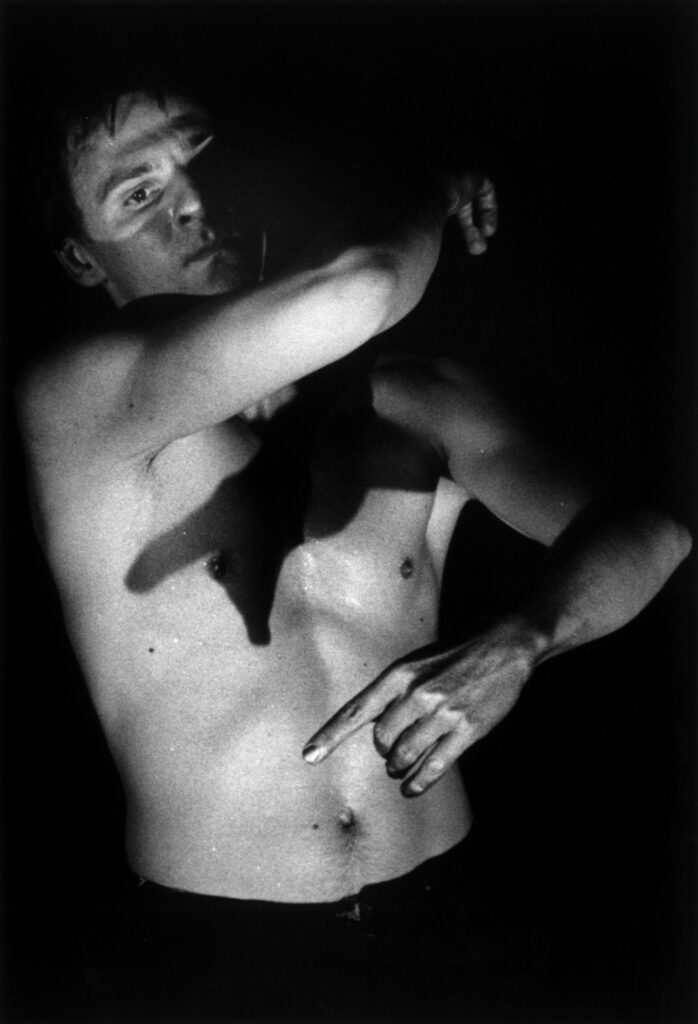
Thomas Plischke, 2002
This solo becomes a home for a radically homeless man after his Brussels apartment burns down – an apartment for which he had no fire insurance, for whose ruins he is fully liable, and which saddles him with a debt equivalent to 40,000 euros as he leaves the courtroom. He is left with little more than a slim volume of Gottfried Benn’s “Static Poems,” which also contains a poem celebrating an anemone.
The stage of “Fleur (Anemone)” represents the burned-out apartment where Thomas Plischke combs his hair, stumbles, and falls. Tucked into his jacket is a crushed bouquet of flowers, which he presents to the audience. It’s also about a bet with a fellow student, Salva Sanchis. Can you pee on command, can you time it down to the note? Thomas Plischke dances to a Shostakovich waltz, pees in his pants, takes them off, then his T-shirt, wipes everything up, and puts everything back on as if nothing has happened. Back to square one, with no apartment, no money, no future: “It was the worst possible situation, considering how happy I’d been just to be able to study dance at all and make this lifelong dream come true,” says Plischke.
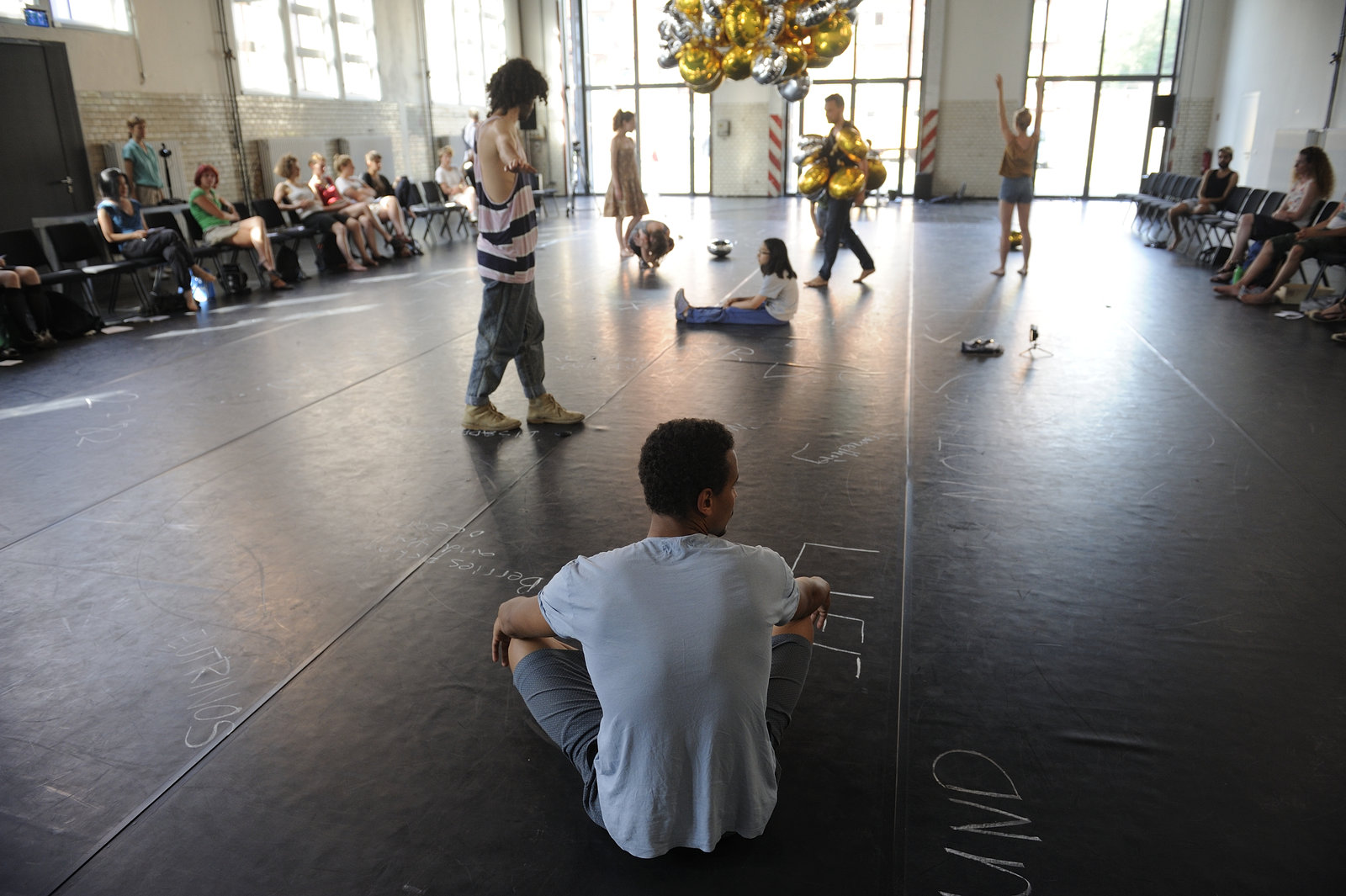
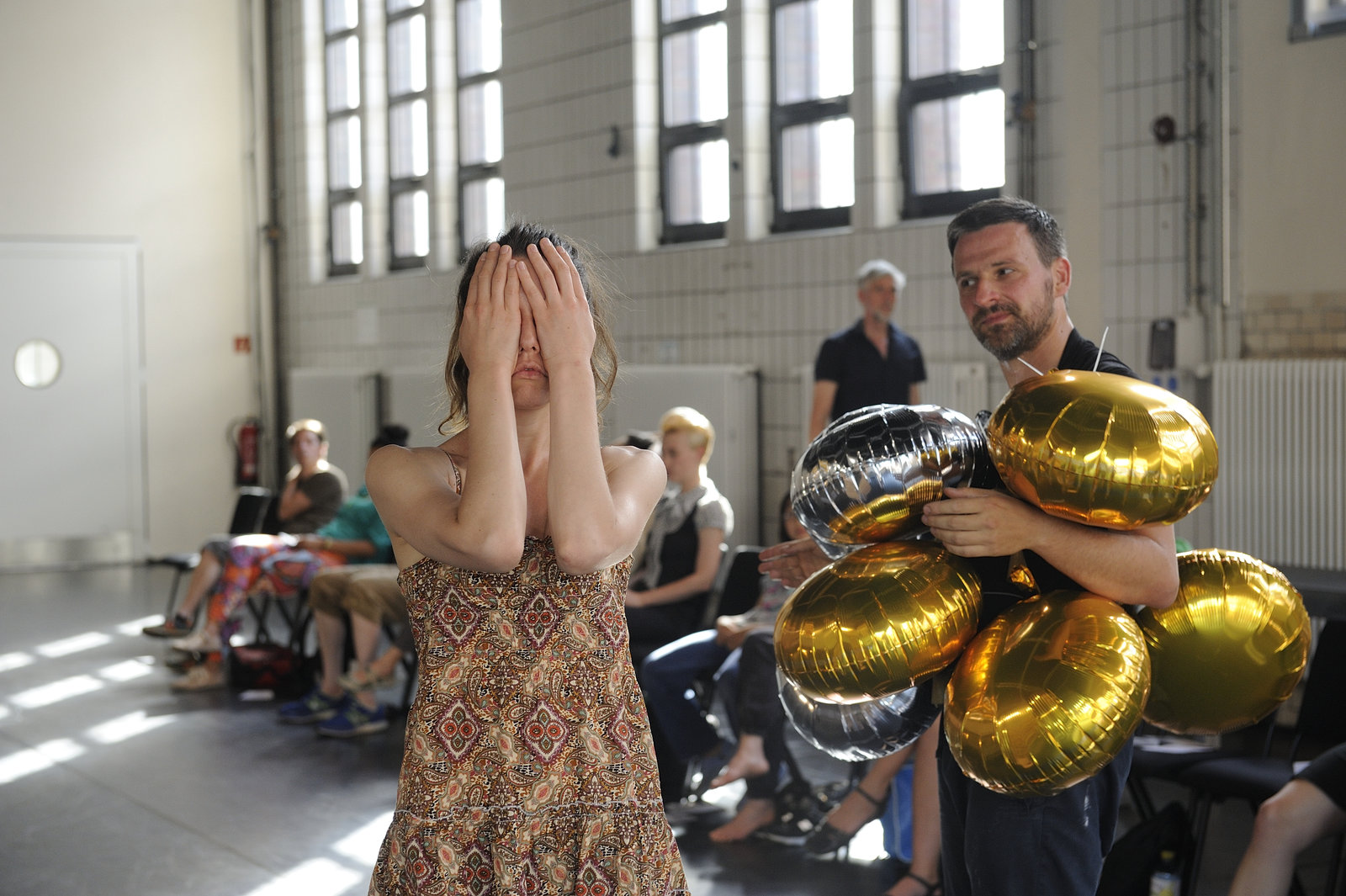
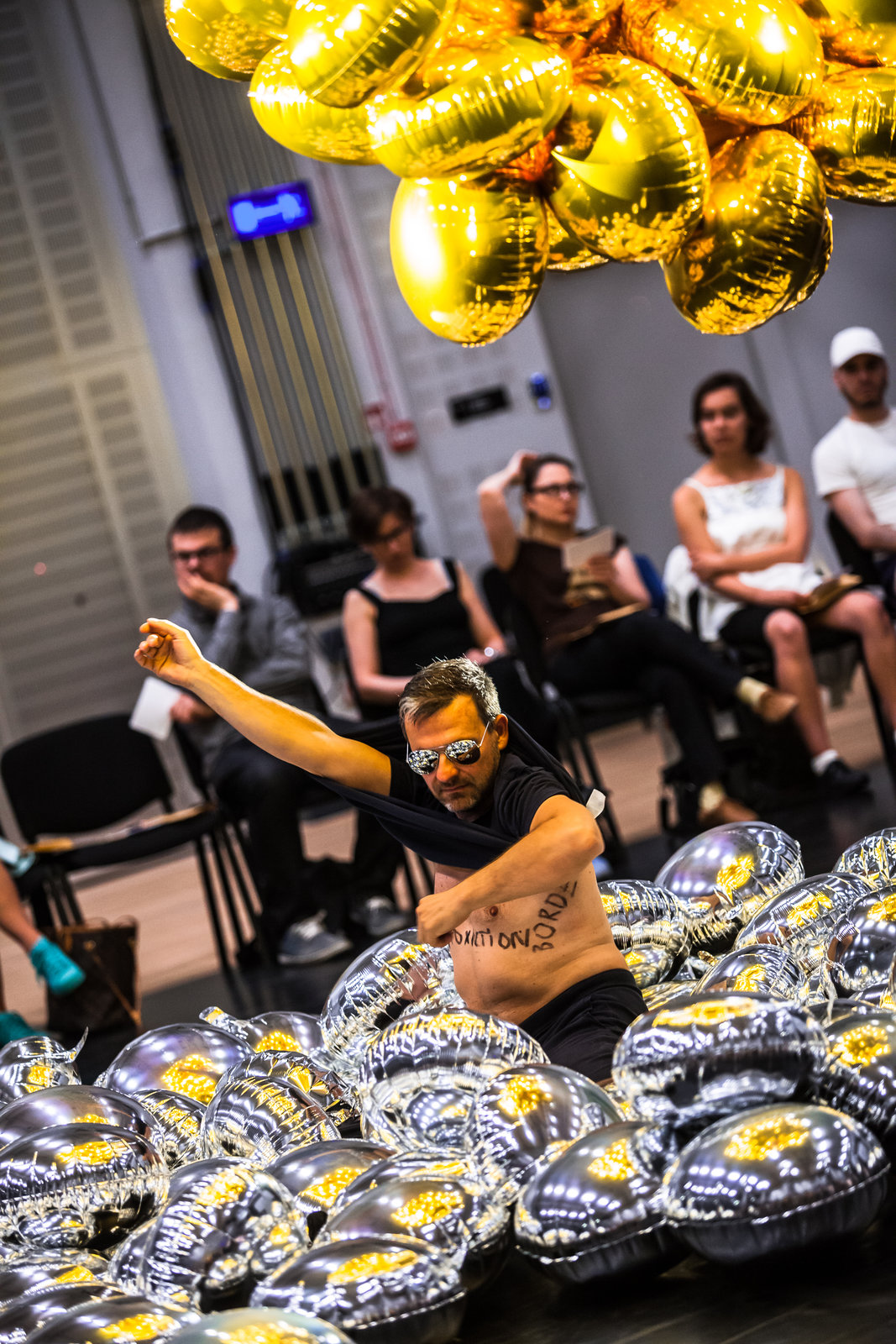
The piece currently being rehearsed at the city’s Uferstudios there is called “Niemandszeit.” It is a participatory project, meaning that whoever shows up can join and become part of the ensemble. And what an ensemble: Meg Stuart, Christina Ciupke, Wanda Golonka, Helena Waldmann, Alain Franco – the biggest names on the scene. Joining this who’s who of the dance world are festival organizers (Florian Malzacher), theater directors (Ludger Schnieder), dance policymakers (Madeline Ritter), and dramaturgs (Bojana Cvejic). Together they rock the stage.
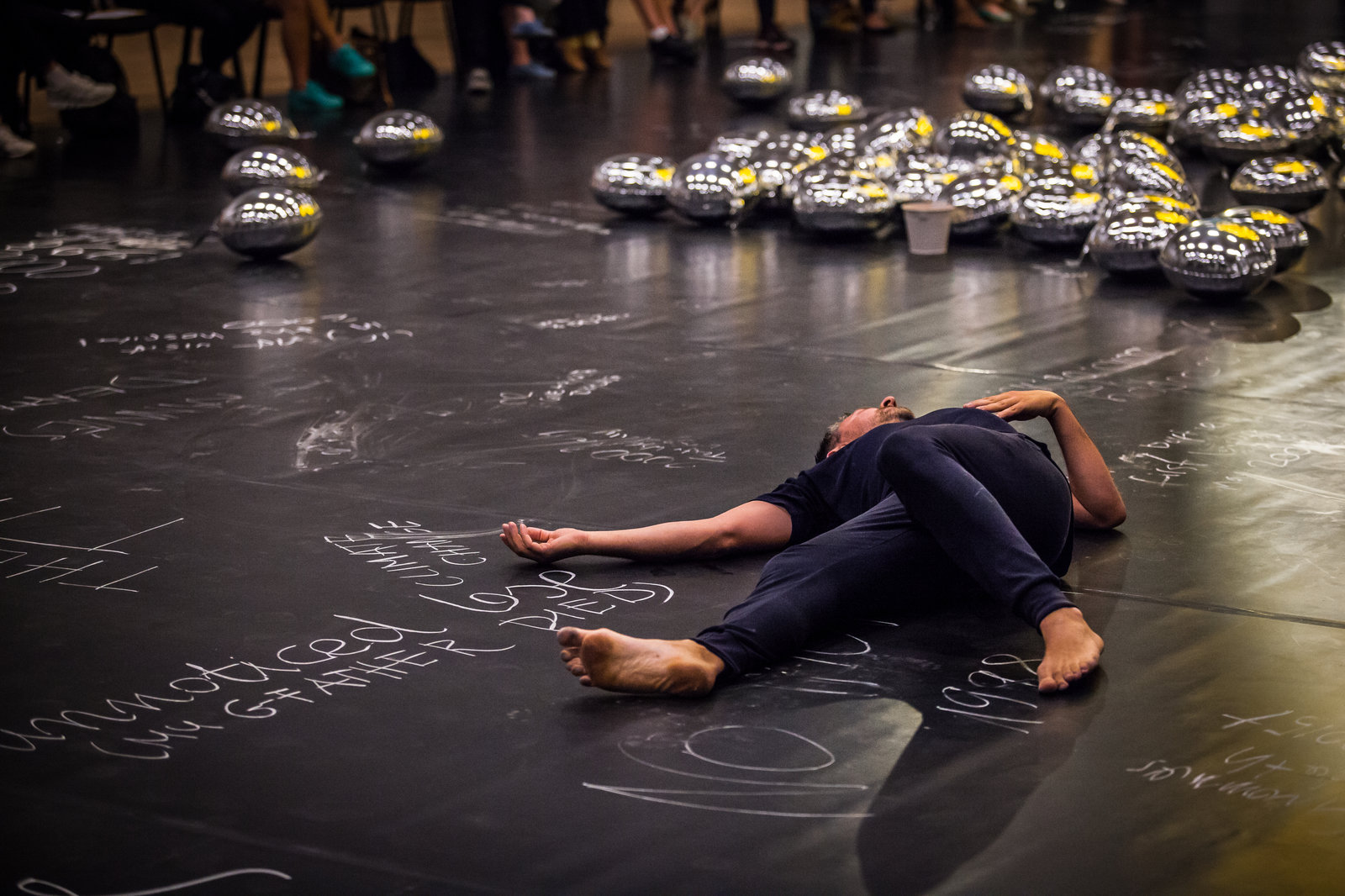
The audience members are the stars. On cue, they writhe across the dance floor. Above them, a large, German high-precision clockwork mechanism displays the time to the second. On every chair is an envelope containing five event cards: “Minute 0:30:00: Walk slowly onto the stage, find a spot on the dance floor. Bend your knees, make yourself as small as possible. Stay in this position until you’ve silently counted to 100.

”Everyone obeys and listens to the voice of Kattrin Deufert, who, shortly before the birth of her second son, sets the scene. She reads about ill-tempered Orthodox Jews in Jerusalem. She also reads that most suicides in Denmark occur on Palm Sunday. And that “Ruth” is the only book in the Bible with a female protagonist. It’s about religion. “Minute 0:53:00: Use the piece of chalk to write the answer to the question on the dance floor: What will you leave behind?”
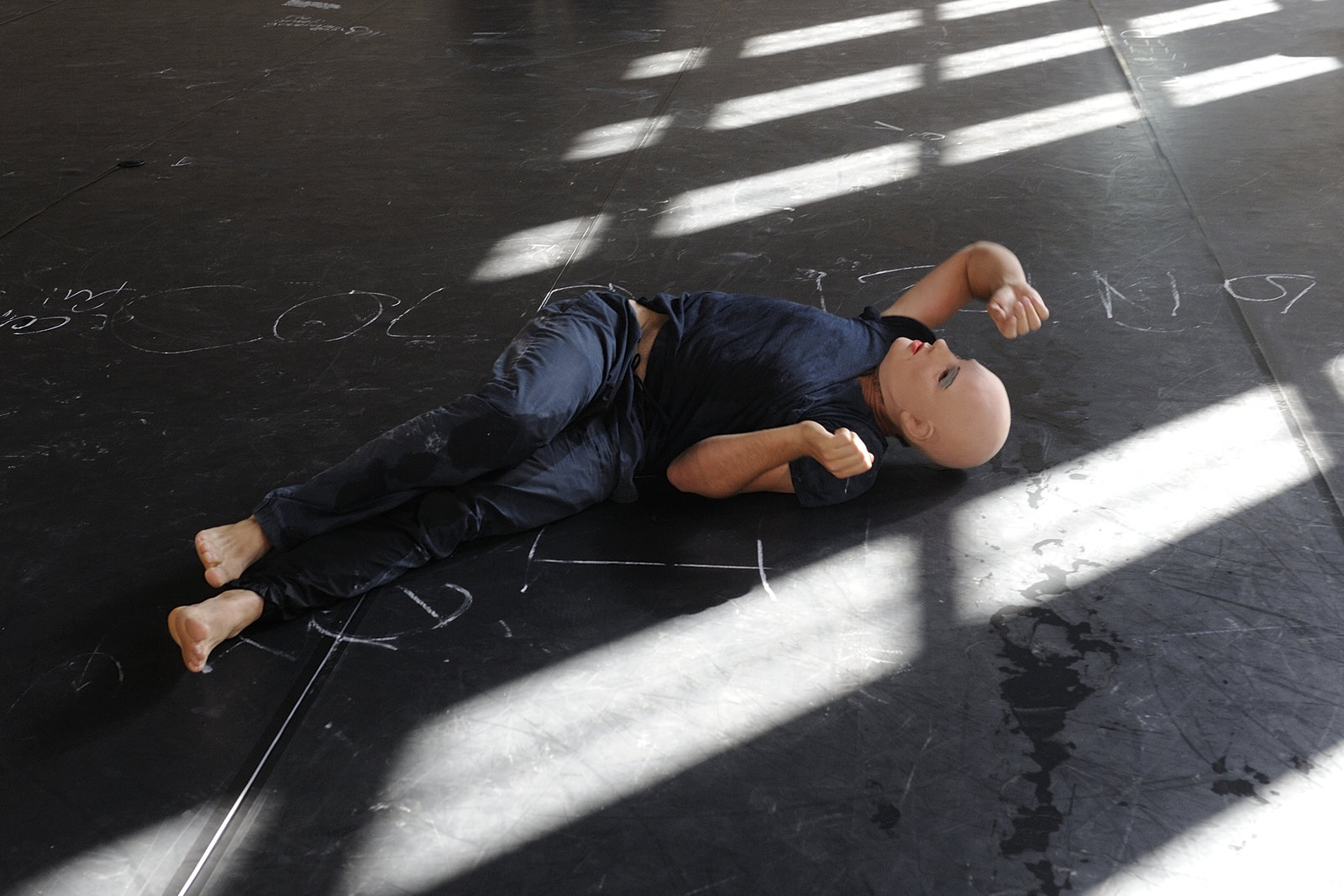
“My corpse,” some in the ensemble reply. deufert&plischke create a dance space that the participants shape themselves. No corps de ballet represents the crowd. The dance scene itself takes on the role, pledging its voluntary service and joining. Only a crazy shaman, Thomas Plischke – who has attached little bells to his shirt with cable ties – disobeys instructions, instead freely forming the center amidst the compliant dancers, whose respect for art is always accompanied by the fear of disrupting it. He throws himself at the assembled crowd like a young Artaud, with Indian-style leaps, hidden behind the mask of a mannequin. As is customary in archaic communities, he plays the artist as a scapegoat. The victim urinates into his T-shirt and wipes the floor to absorb the community’s wishes and fears, written in chalk. Then he puts the dirty shirt back on, as if it were a religious act in a time known as the postmodern era.
In postmodernism, so they say, the old world orders – including those of religion – have been overcome. The peace of a new beginning still reigns. No chaos. More like a cleanup. The kings of communism have fallen. New dictators have not yet emerged. The bourgeois world calls itself democratic, even though it is not organized that way itself; instead, it delegates all power as urgently as if it were a hot potato. Just like in the theater. The audience delegates all power to the dancers, who hand over their power to the director or choreographer, who in turn strictly adheres to the rules set by an artistic director, who aligns closely with the prevailing politics – which, 25 years ago, simply had no intention of intervening in the culture of its time in order to control it.
Twenty-five years ago, Kattrin Deufert was a frequent visitor to Brussels Airport and Berlin’s Tempelhof Airport – a guest at such “non-places,” as the French anthropologist Marc Augé calls them: non-lieux. He was a widely read author during this era, when people were discovering the nomadic way of life. As early as 1985, the philosopher Jean-François Lyotard got to the heart of what he defined as postmodernism with his Paris exhibition “Les Immaterieaux” at the Centre Pompidou: It is not the places and their settlement that are important, but the space between places that are only supposedly stable – the journey, the path, the in-between, the nomadic. This also refers to the interstices of history following the fall of communism.
Here, art offers more guidance than any politics. Kattrin Deufert is writing her dissertation on John Cage, a star of this way of life. His friend, choreographer Merce Cunningham, is just as much a part of this as Heiner Müller and his exegete, the influential theater scholar Hans-Thies Lehmann – the inventor of postdramatic theater, under whom Kattrin Deufert is writing her dissertation. Lehmann is the champion of the idea that theory is an art – the art of seeing.
“b-visible”
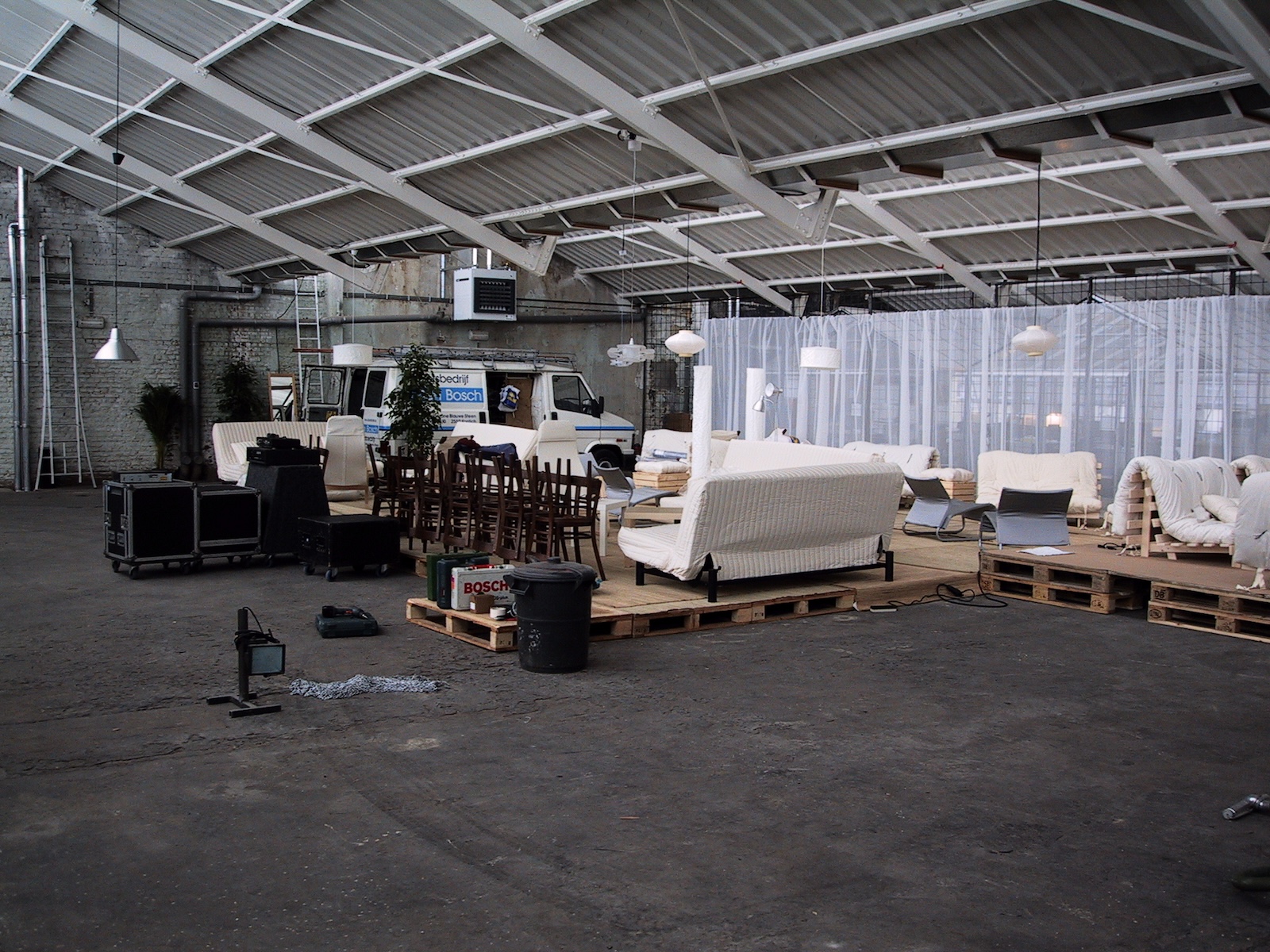


The old Beursschouwburg, theater next to the stock exchange is being renovated. The team moves into an old furniture warehouse on Kazernestraat as a temporary venue, which they call bsbBIS. Because the new spaces don’t look like a theater, all the parameters of what is understood to be a theater can be altered effortlessly. Why does a theater performance last three hours or less? Why not ten days? Why not day and night? Why not bring a toothbrush? People could meet at the theater just as they would at a club. Around eighty beds would invite the audience not to be an audience, but a community that eats, rests, talks, and remains silent together – to experience both themselves and the art.
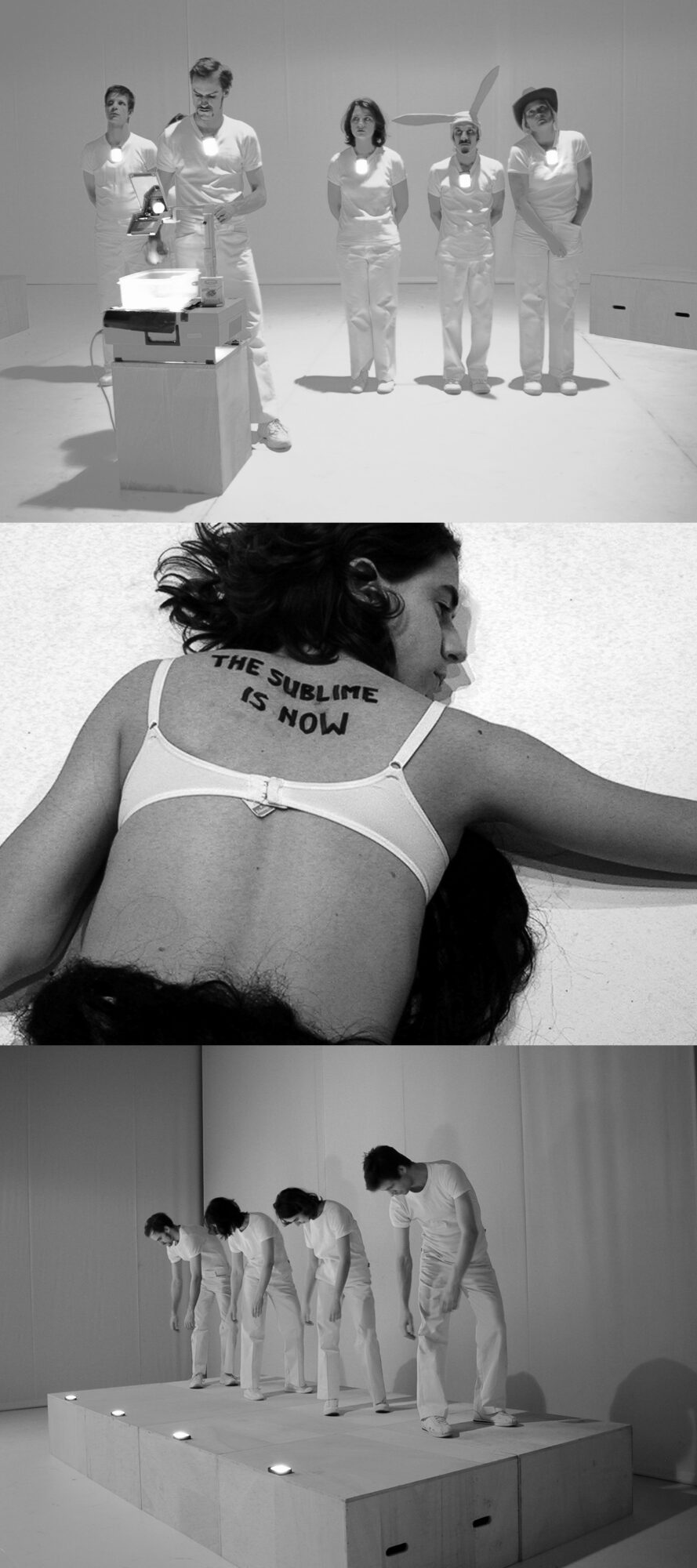
This is what the Brussels-based collective BDC (for Best Dance Company), led by Thomas Plischke, Alice Chauchat, Hendrik Laevens, and Martin Nachbar, has created: a ten-day festival lasting ten times 24 hours, during which Kattrin Deufert and Thomas Plischke become a couple.
Ten days is a long time – long enough to entangle not only oneself but also theory and practice in a romantic relationship. There are workshops led by Kattrin Deufert and Stefanie Wenner on the topic of “Illegal Experience.” Meg Stuart’s brother, Davis Freeman, Martin Nachbar, and Lilia Mestre are organizing workshops. Thomas Plischke: “With so much talent around us, we were smart enough to delegate everything. Yves Chauchat curated the films, Hendrik Laevens curated the concerts, I put together the performance programs, and I also made sure to create gaps so that people could actually meet.”
“b-visible”
A new understanding of theater is born. A theater born of the spirit of the club. A club born of the spirit of the theater. Mind meets body. Dramaturgy leaves the lecture hall and takes the dance stage. The dancing body leaves the mirrored hall and enters the train of thought. Thomas and Kattrin are a couple embarking on an uncertain path, out of love for one another.
And while we’re on the subject of love: Who or what do we love? The other person? Their opposite sex? Do we simply love a body? In other words, ourselves? It takes time to figure that out. In 2002, Kattrin Deufert and Thomas Plischke organize a 72-hour symposium, a “Queerathon,” in Ghent, together with Jeroen Peeters and Barbara Raes. This time, the Vooruit, the city’s cultural center, will be transformed into a “castle of beds” for three days, where they will delve into the concept of gender politics. What is queerness? Suppose “queer” denotes the ability to think of the world in non-binary terms: The question isn’t just “man or woman.” One might equally question whether there is only “right or wrong,” “good or bad”? What happens when the political “left or right” no longer yields any distinctions? Or when the hierarchical “top or bottom” disappears in collective action? How does the rampant attitude of being “alive yet dead” fit with the categorical distinction between “alive or dead”?


What about “normal” and “abnormal”? What is normal in theater? Would it be normal if the audience claimed, “You dance and I do nothing”? Just waiting for something to happen to them as they watch, while they observe a dancing body that “quite normally” meets the expectations we apply to the anatomy of a dancing body: to be slender and supple?
That is what it says in a letter from deufert&plischke to the body. Is the anatomy of the body nothing more than a mere fixation of our image of the body?

“Directories: #1 Europe Endless“
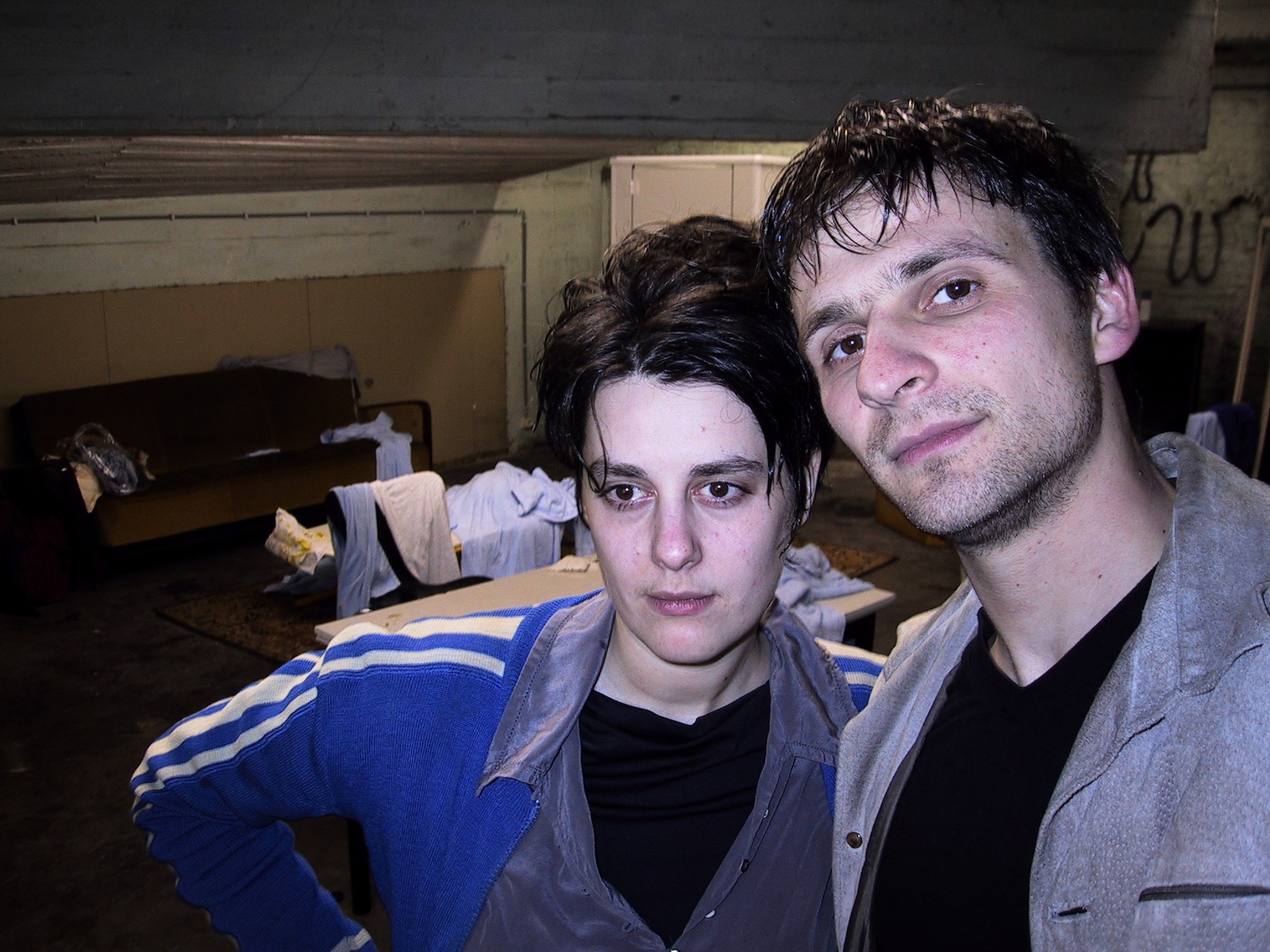
Back in Brussels in 2003, they launch their “Directories: Songs of Love and War” series, beginning with “Directories: #1 Europe Endless,” once again at the Beursschouwburg. For six hours, everything revolves around memories of their own childhoods, family life, the search for identity, the “gender trouble” of growing up, along with the experiences of first losses and the grief that follows.
It is the story of Kattrin Deufert and Thomas Plischke, who had been in long-term same-sex relationships before meeting in Brussels, where they first realized they’d both been born on the Main River: Thomas in Aschaffenburg, Kattrin in Würzburg.
Thomas Plischke, 11 years old; Kattrin Deufert, 13 years old
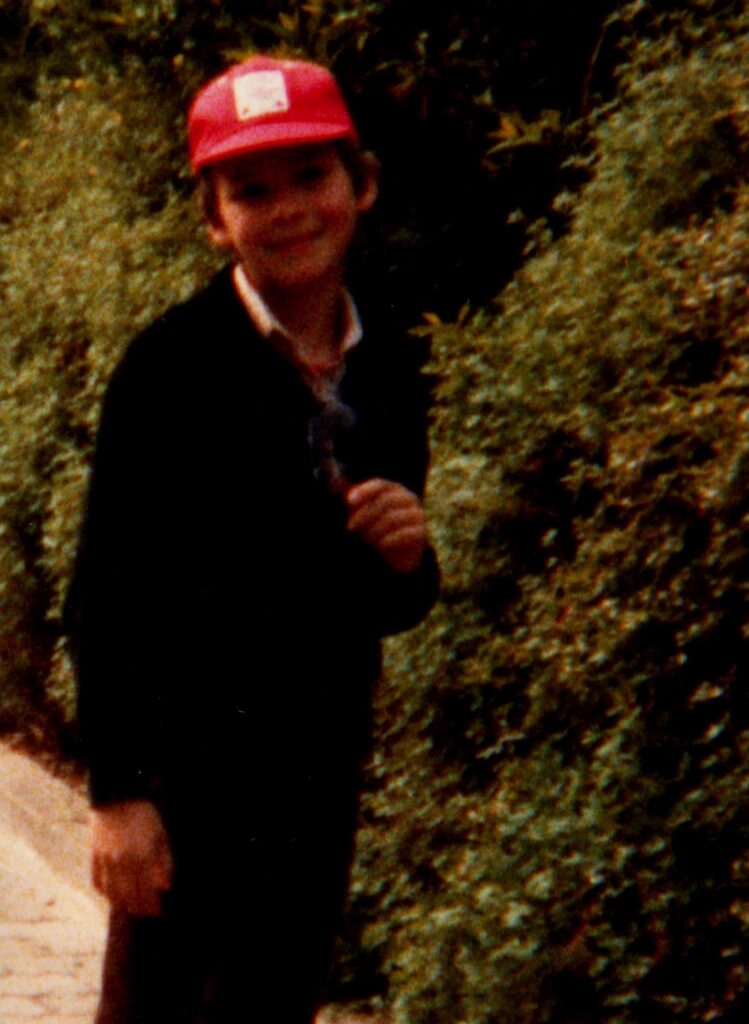
Thomas’s parents met in the kitchen of the posh Hotel Tobler on Lake Maggiore, serving a style of French cuisine strictly choreographed by his father, which would later also be put to use in Garmisch-Partenkirchen and other Bavarian locations (the family always moved along with him).

Kattrin’s parents taught at a school in the conservative Catholic – and often homophobic and xenophobic – city of Würzburg. Early on, her mother developed catatonic schizophrenia, her life swinging uncontrollably between hope and sheer despair. Kattrin discovered the symptoms while studying Antonin Artaud’s physical texts on theater and founded the Frankfurter Küche together with Pirkko Husemann. They were soon joined by Alexander Karschnia (who founded the theater collective andcompany&Co in 2003) and Stefan Kaegi (co-founder of the theater collective Rimini Protokoll) among others. There are wonderful cooking events and “intellectual clubbing”: reading Adorno aloud and laying beats over it. (Frankfurter Küche Reads the Frankfurt School)

In 2002, Thomas Plischke and Kattrin Deufert are given the use of the Sparkasse 1822 Forum, a gallery space in the Frankfurt am Main pedestrian zone, for a few days. This space can be viewed from the street – but only with the help of a stepladder – for anyone hoping to catch a glimpse of what the two get up to there for five days under the title “I like Erika and Erika likes me,” namely: exactly what the title promises. Drawing inspiration from a performance by Joseph Beuys (“I like America and America likes me,” 1974), Thomas and Kattrin take turns playing the role of Erika, sleep together or in bed, cook, read, or take photographs. In the mornings, the early risers among the retirees have fun waking up the lazy artists by banging loudly on the storefront window, having been made aware of the initiative by the timely and sufficiently smug reporting of RTL and Bild newspaper.
In “Directories: #1 Europe Endless,” both explored their own history and noticed that the same story changes simply because a truth is told by another person – that is, from a different perspective. A new truth emerges immediately. Which biography is true? Or are all biographies a fabrication?
“Directories: #2 Songs of Love and War”



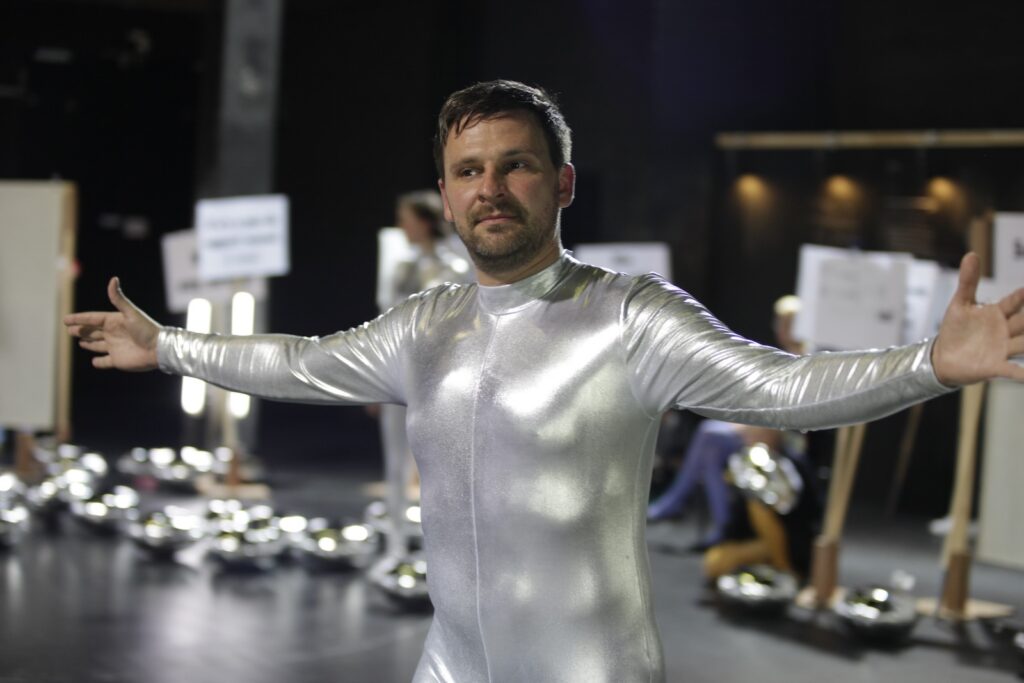


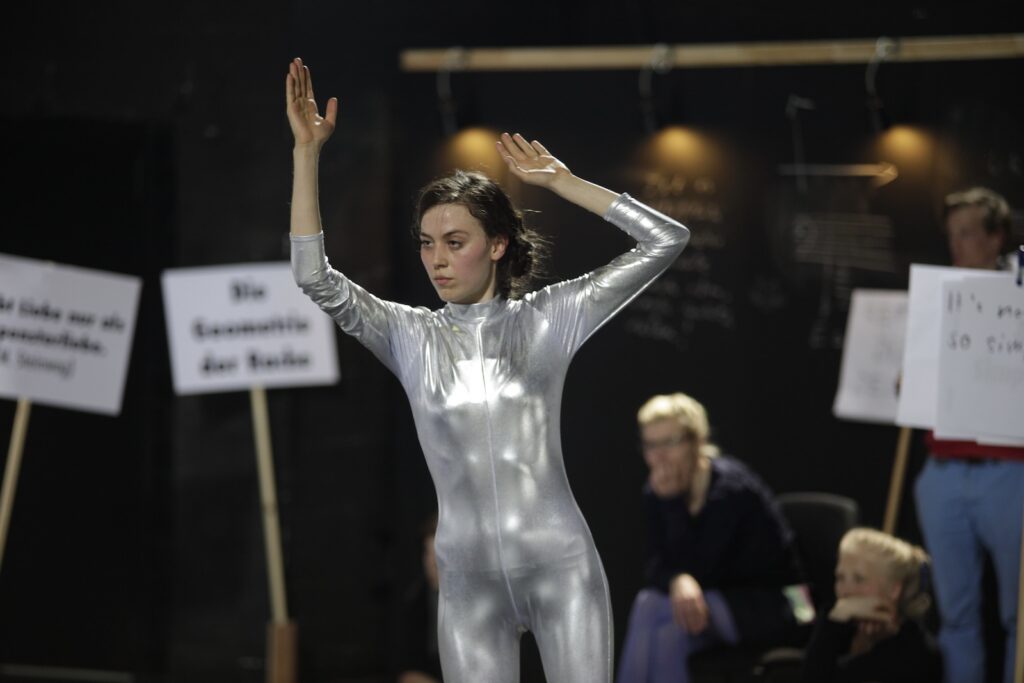

What if, in their “Directories: #2 Songs of Love and War,” the gay couple were to become siblings who dress alike, wear the same hairstyle, and share the same biography – such as that of Kattrin’s highly gifted brother or Thomas’s sister, who works as a server at their parents’ restaurant? The year is 2005.
“We wove our life stories together in such a way that we were now brother and sister. Because that is the greatest taboo concerning a man and a woman – the passionate relationship between brother and sister as an act of incest.”
Being roughly the same age, it was no problem to become artistic twins, an “artistwin.” To keep the whole thing from fizzling out immediately as an incest scandal, the story had to continue:
“We staged our own sterilization and made it public. So we had ourselves sterilized publicly in Prague, then went to Mariánské Lázně and took photos. There was a huge outcry”
– at least among those who didn’t even want to imagine that Kattrin Deufert and Thomas Plischke would one day also be the parents of two sons.
Their “artistwin” became their trademark overnight. The “artistwin” concept from dance fits seamlessly into the tradition of the visual arts, into the lineage stretching from Eva and Adele to Pierre & Gilles and Gilbert & George – who, in the 1980s, were just as inseparable a pair as the Kessler twins before them or Irina and Marina Fabrizius today – pairs that create harmony and ensure that authorship does not rest solely with one person.

Slideshow from “As if (it was beautiful)”
This idea is just as much a part of the zeitgeist as the realization that dance is not an end in itself, that nothing stands alone, and that dance is actually quite happy to pass on to society all the questions that arise about it and about the body. No dance has to be solely about dancing, even when costumes, photography, language, and the art of knitting come into play: the knitting of stories, mirror-reversed photography, white tights. “Kattrin brought cameras from her treasure chest into our relationship, and I brought the tights. In our first performance at the Spessart, we photographed each other that way,” says Thomas.
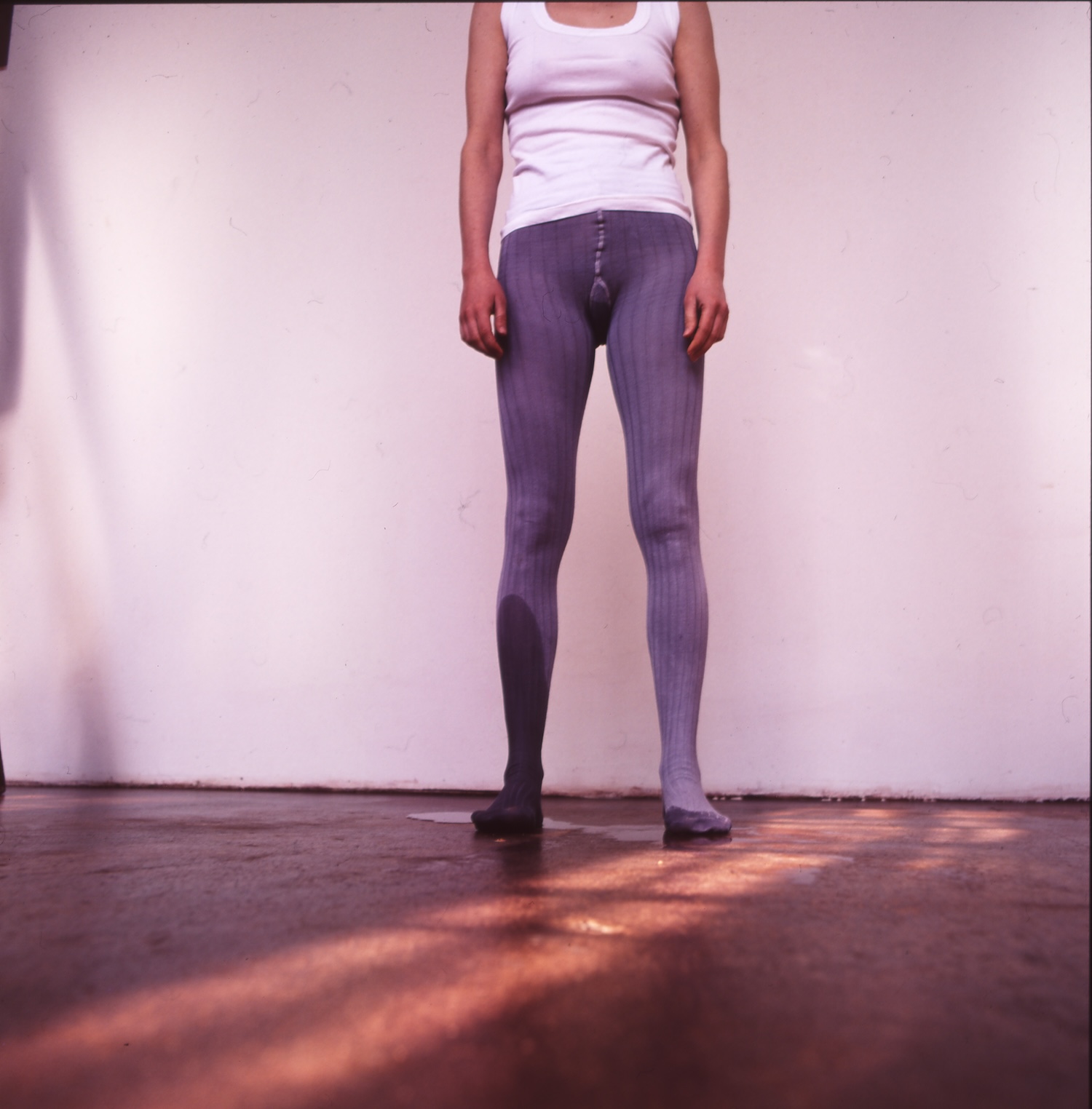

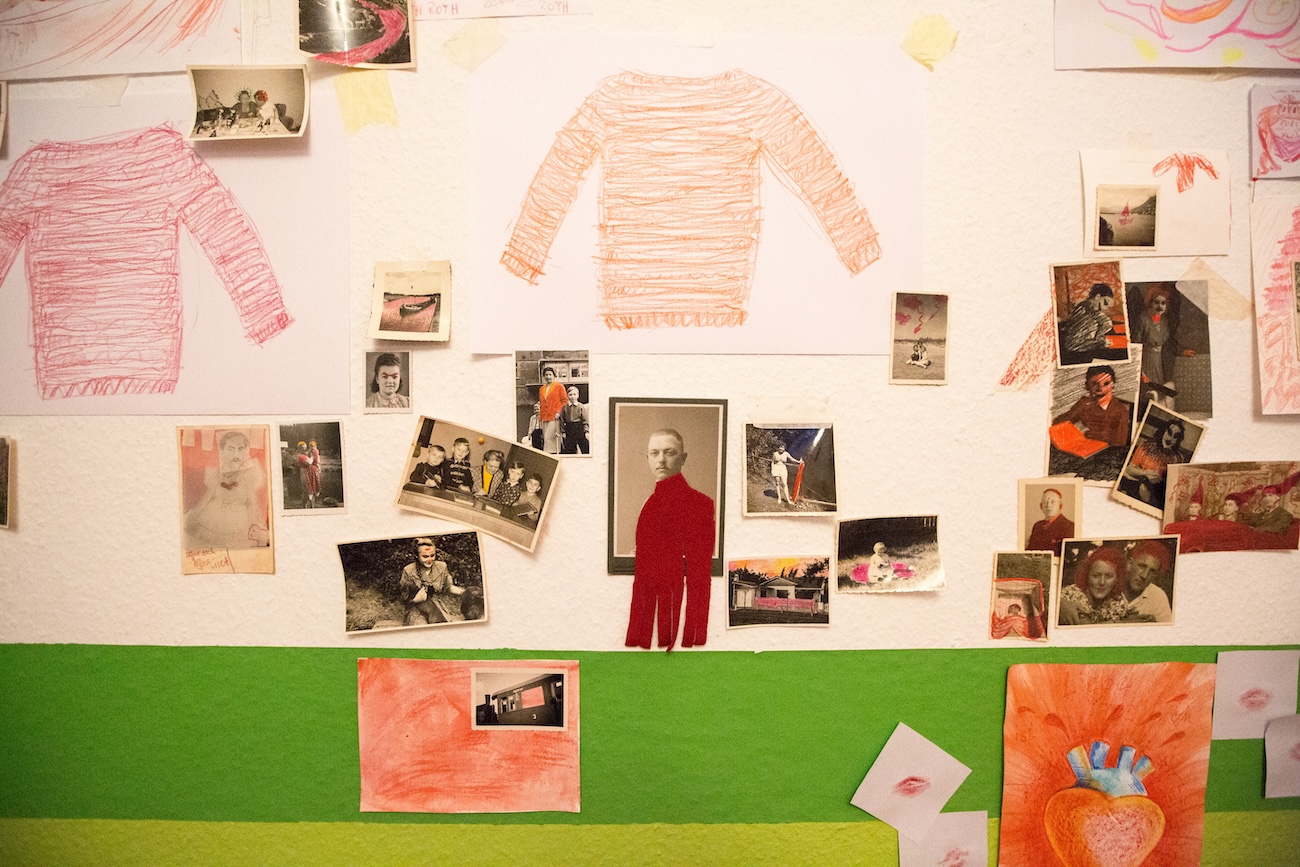
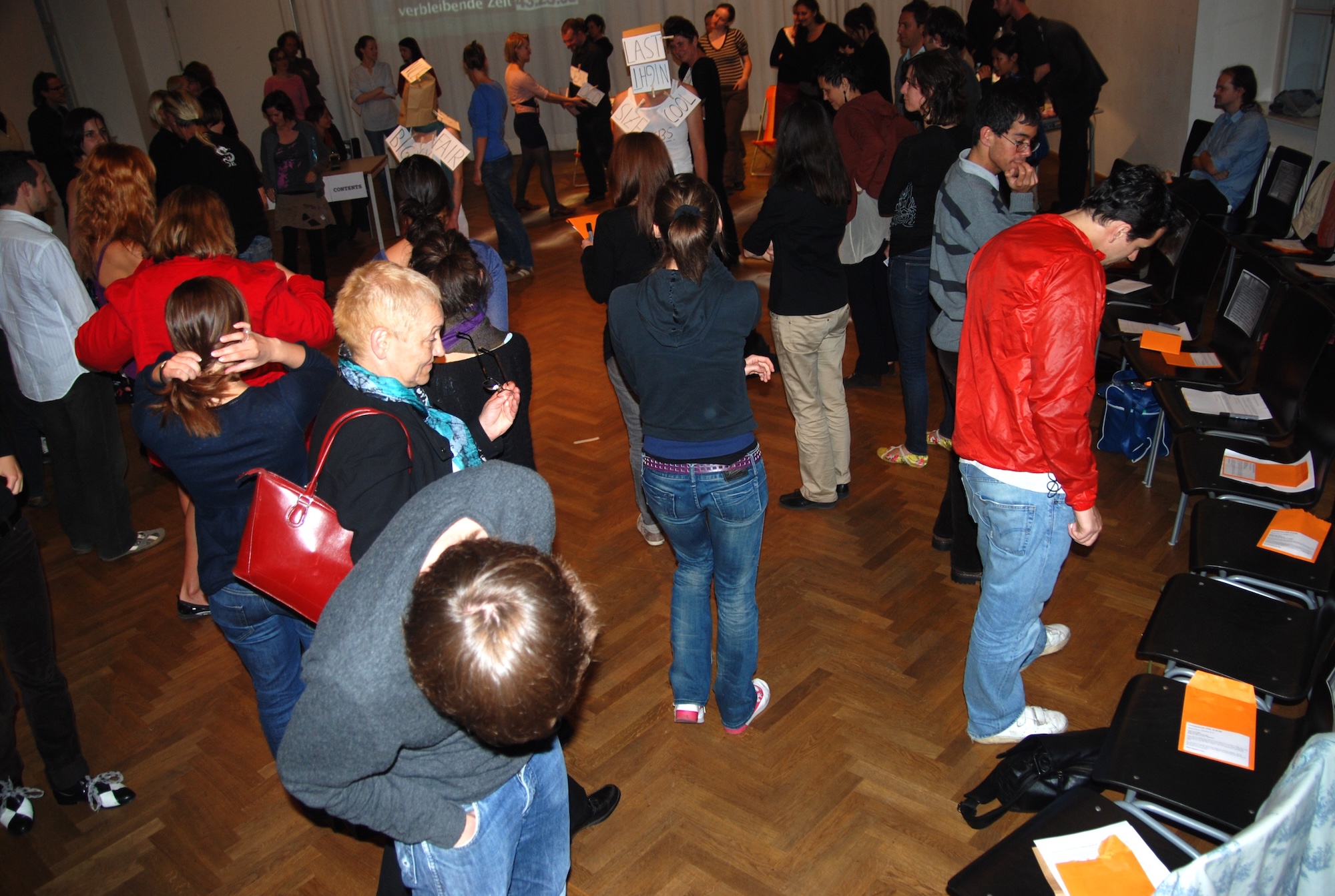
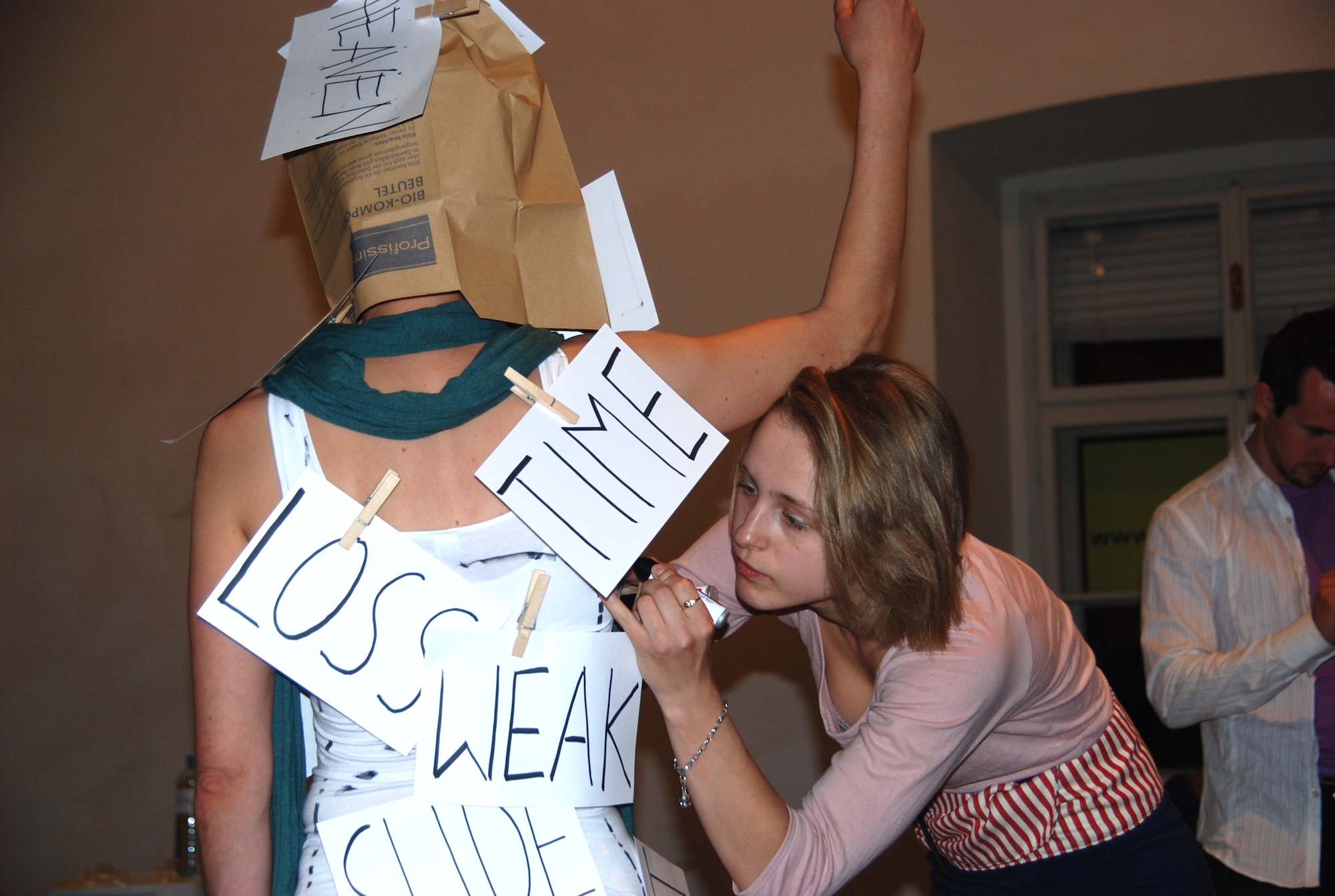
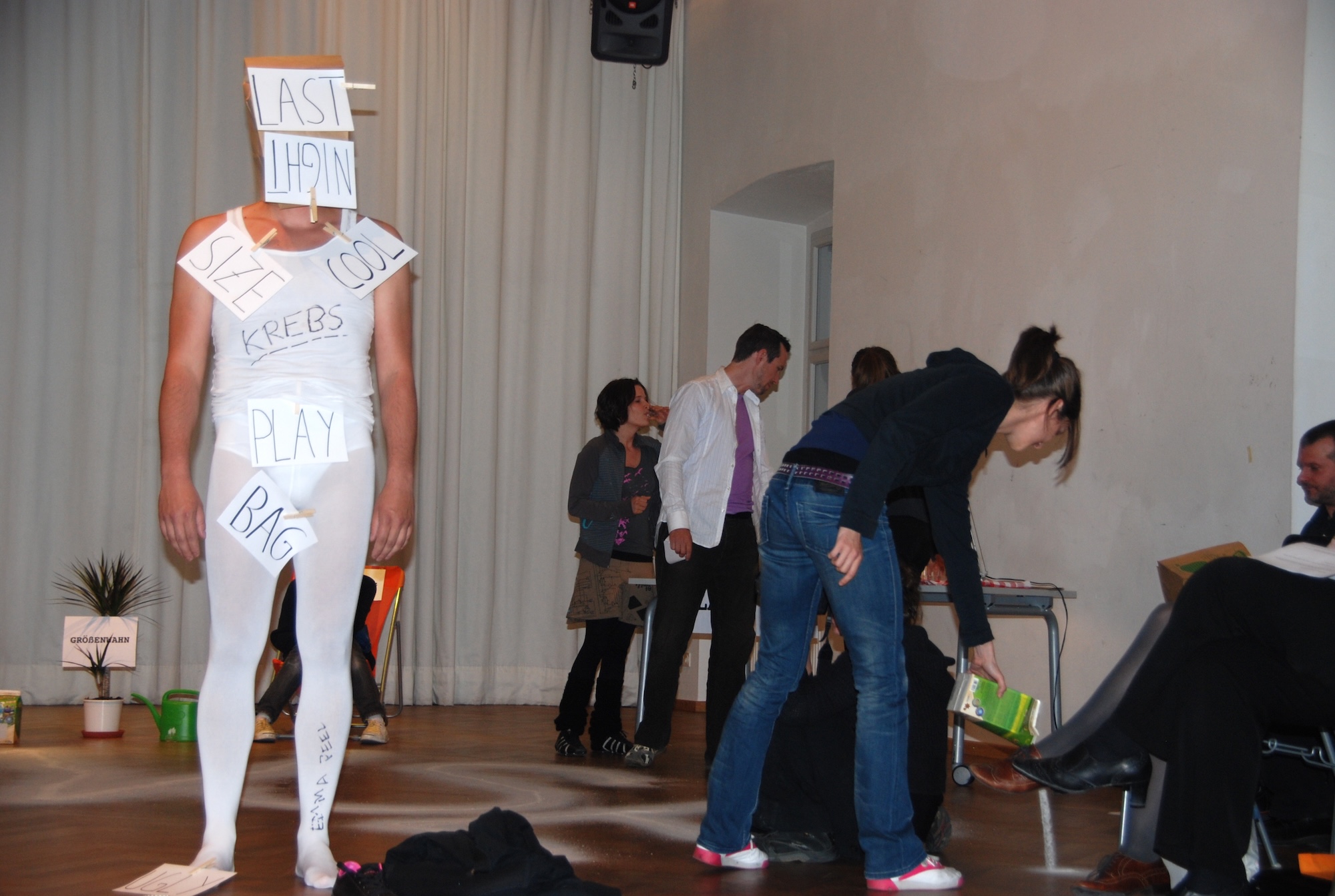
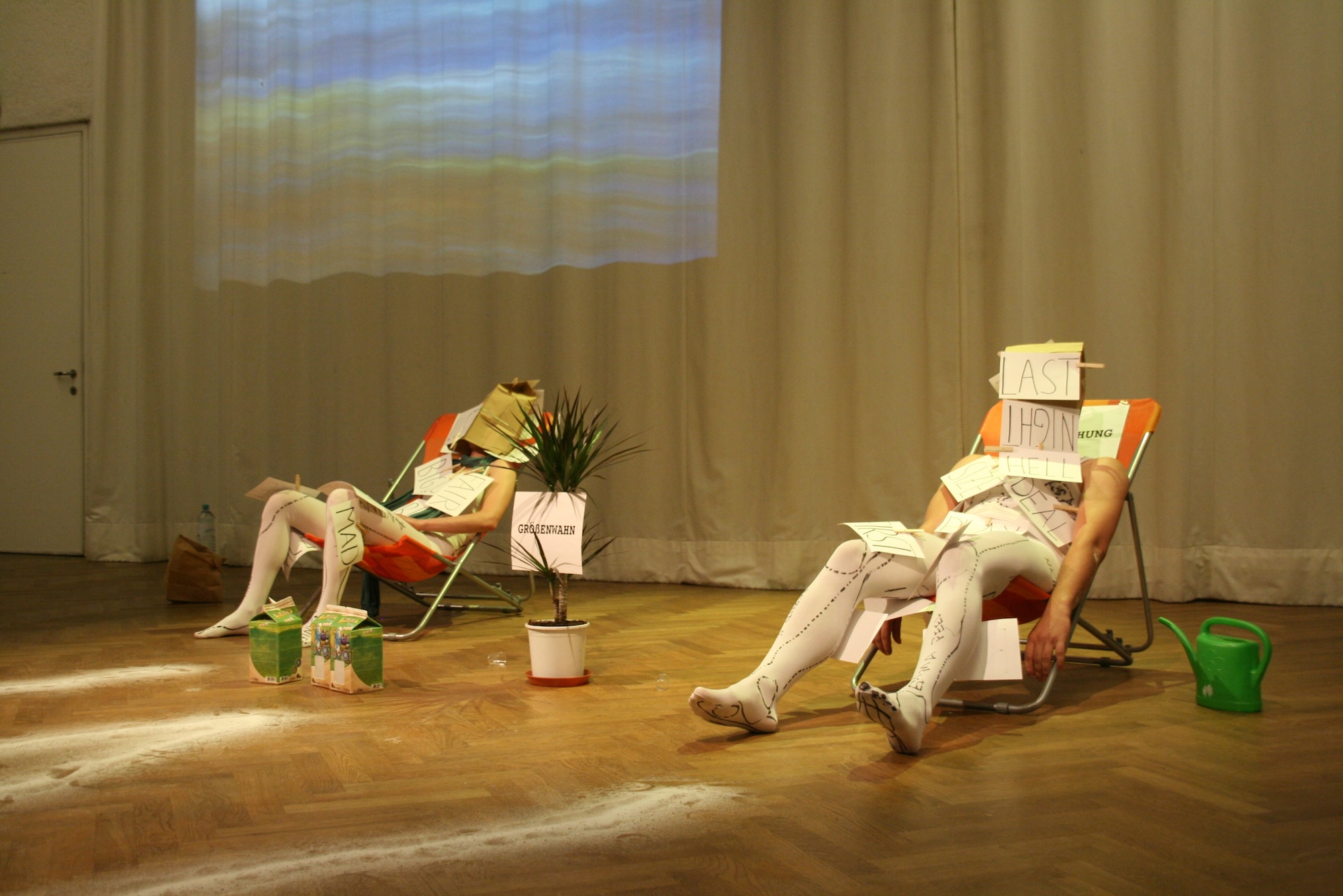
On stage, too, both wear the white tights. Not as a distinguishing mark; they appear in the picture too suddenly for that. They are knitted tights that evoke the earliest memories: a protective cocoon to slip into as a child, pulled tightly up against the body. And pulled up again, so that everything fits. “As a protection that envelops nakedness but conceals nothing about the body. A container, a kind of armor,” says Kattrin Deufert. For Thomas Plischke, the tights remind him of the boy “who still had to wear them at age 10, and was mocked and beaten for it. So, I and some friends asked our parents: ‘Can we wear tights again?’ Then he wouldn’t be the only one. But all our parents said, ‘Nope.’ That’s when we realized they were afraid of tights. Men don’t wear tights – only women and male dancers do, meaning gay dancers. Tights are such a homophobic symbol that they had to become a stumbling block in our work.” In “KonSequenzen” (“ConSequences”) (2008), people were allowed to write on these tights. Like empty skins, they hang on the wall in “Anarchiv#2: second hand” (2009), covered with people’s fears.
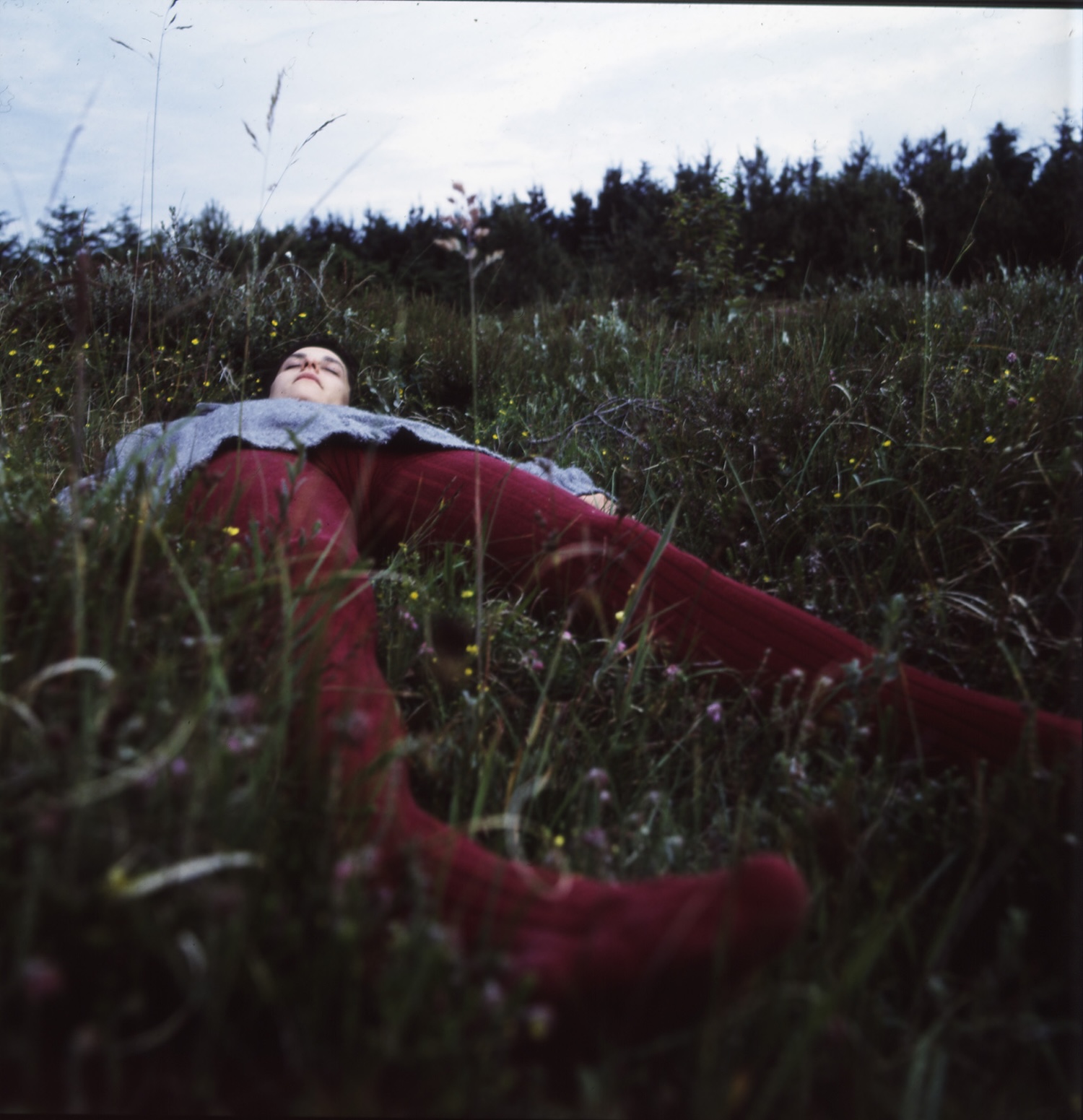


In “KonSequenzen” (“ConSequences”) (2008), people were allowed to write on these tights. Like empty skins, they hang on the wall in “Anarchiv#2: second hand” (2009), covered with people’s fears.
And the camera? It is a reflection of the body – or rather, a reflection of the image of the body. Kattrin Deufert sees this clearly in the works of New York photographer Diane Arbus: “how the images stage the body, put it on display, reveal something that otherwise refuses to be seen: all the little quirks and almost invisible obsessions.” The photograph is like a frozen gaze. Not the moving gaze, as in dance, but the precise gaze: That is why dance and photography are a pair, a moment of truth extracted from movement. This discovery goes back to one of the two artists’ earliest collaborative works, “P.I.P. (picture=performance=picture)” from 2002.
Seated back-to-back at two separate tables in Frankfurt am Main, they are filmed by two cameras. Through a mirror-image projection, the pair appear to be sitting together at one table in the picture. But this is deceptive, a pleasurable misperception created by the projection. The projection asserts something that isn’t quite true. It produces a second – that is, schizophrenic – reality: A couple sits together at separate tables. Isn’t it this schizophrenia arising from projection and reality that generates homophobia and misogyny in the first place?
top: “KonSequenzen”; right: “P.I.P.”

In 2005, the German Federal Cultural Foundation invites guests to the Polish village of Jagniątków at the foot of the Karkonosze Mountains, to the home of Janusz Subicz, a Polish dancer who worked with Pina Bausch.
Dance professionals have gathered along with their guests, including the French lighting designer Pipon, Paweł Gozlinski, the theater editor of the newspaper Gazeta Wyborcza. Veronika Blumstein from Warsaw, who worked with the artist Robert Rauschenberg in New York in the 1960s, is unable to attend due to a broken leg, but is sending packages to the village, one of which contains a pair of roller skates. Polish dancer Helena Gołàb and German dance curator Peter Pleyer argue over them, while Ryszard Kalinowski, a choreographer from Lublin, immediately sets to work reconstructing the Rauschenberg’s very first choreography, a 1963 piece called “Pelican.” The main quote from Rauschenberg that has been passed down is this: “Since I didn’t know much about how to choreograph a dance, I used roller skates as a means to free myself from any inhibitions I might have had.”

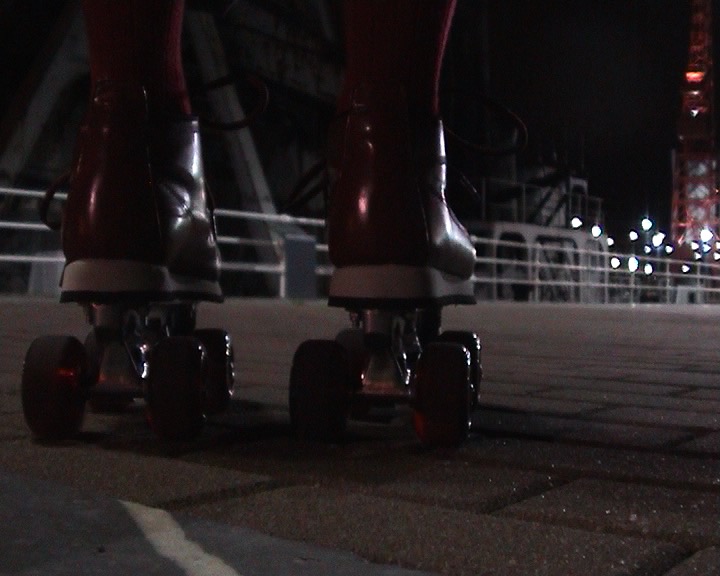
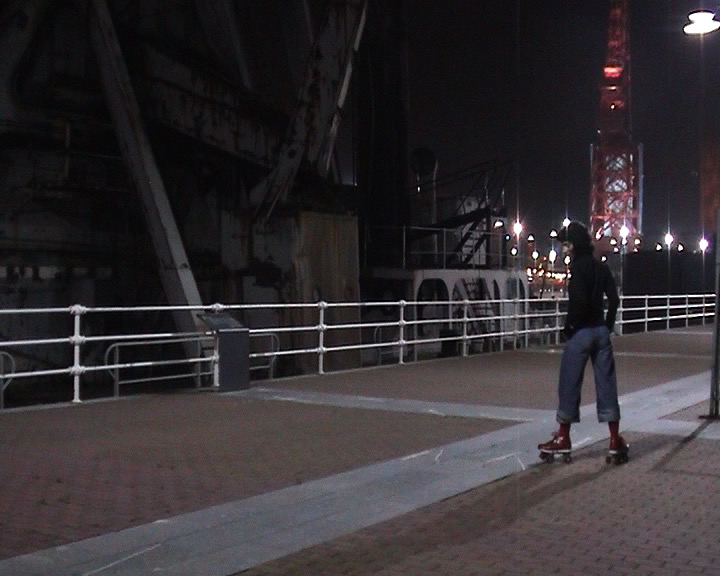
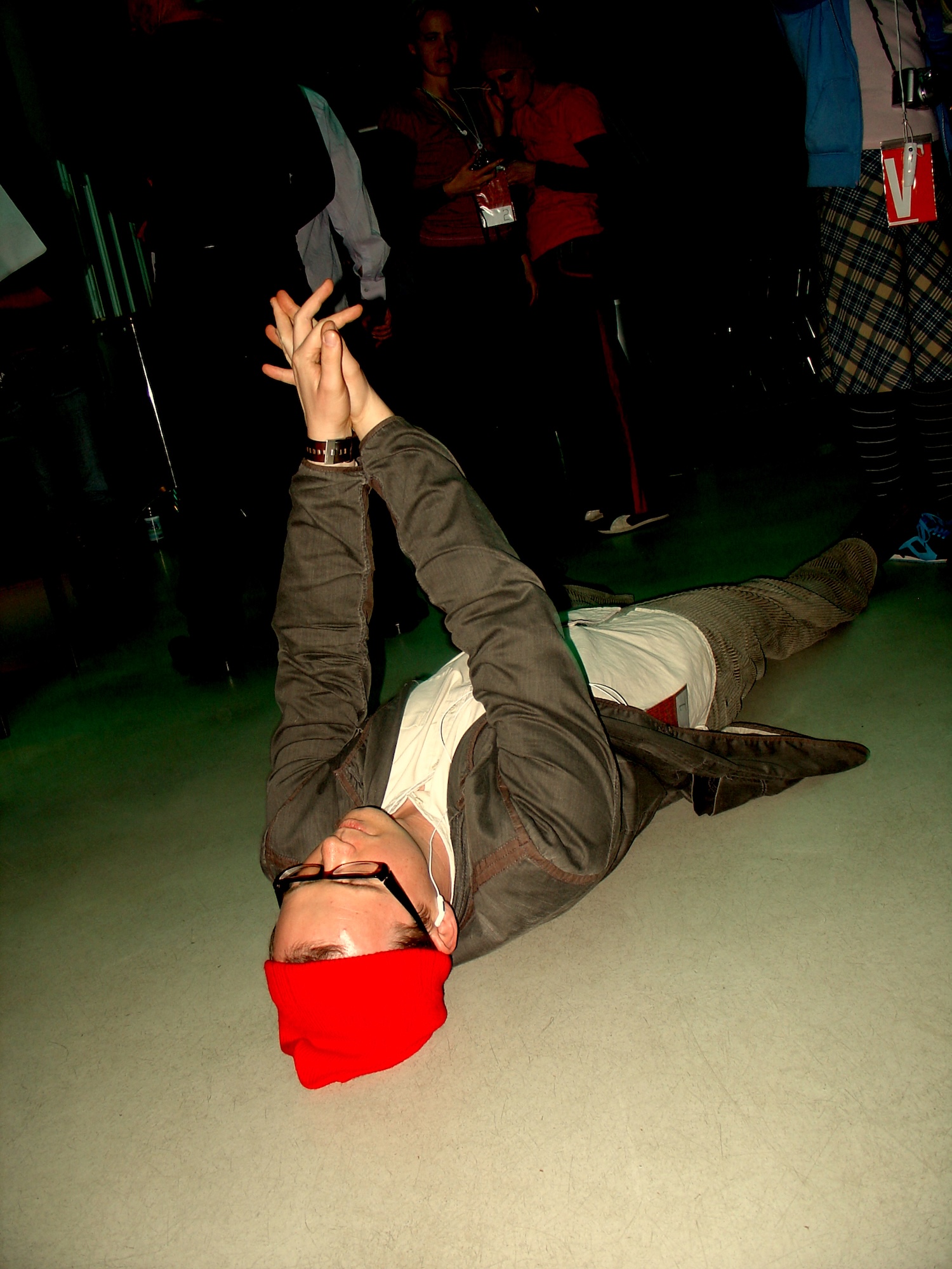
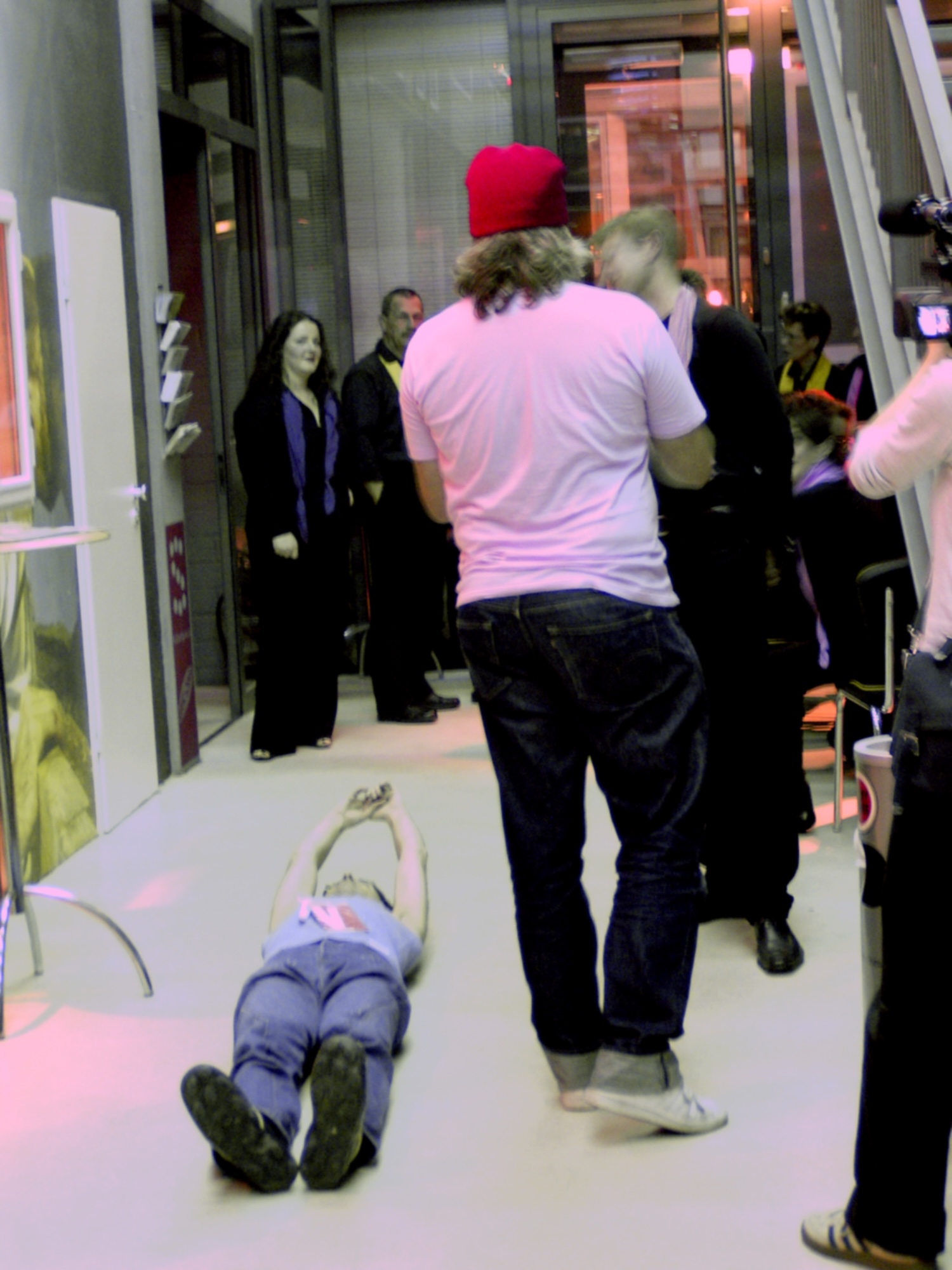


“Veronika Blumstein”: Isabel de Naverán on roller skates
Veronika Blumstein could have been truly helpful, as she was a contemporary witness. But she was missing. Because she never existed. She is a creation of deufert&plischke. Nevertheless, a whole festival is held in her name a year later in Bremen, featuring reconstructions of her nonexistent work along with performances, lectures, workshops, and an academic salon. Then in 2007, she gets the audience moving once again at the opening of the K3 – Center for Choreography/Tanzplan Hamburg. The Polish choreographer becomes a model, an authority figure whom – as with all historical figures from art history – any criticism must bounce off.
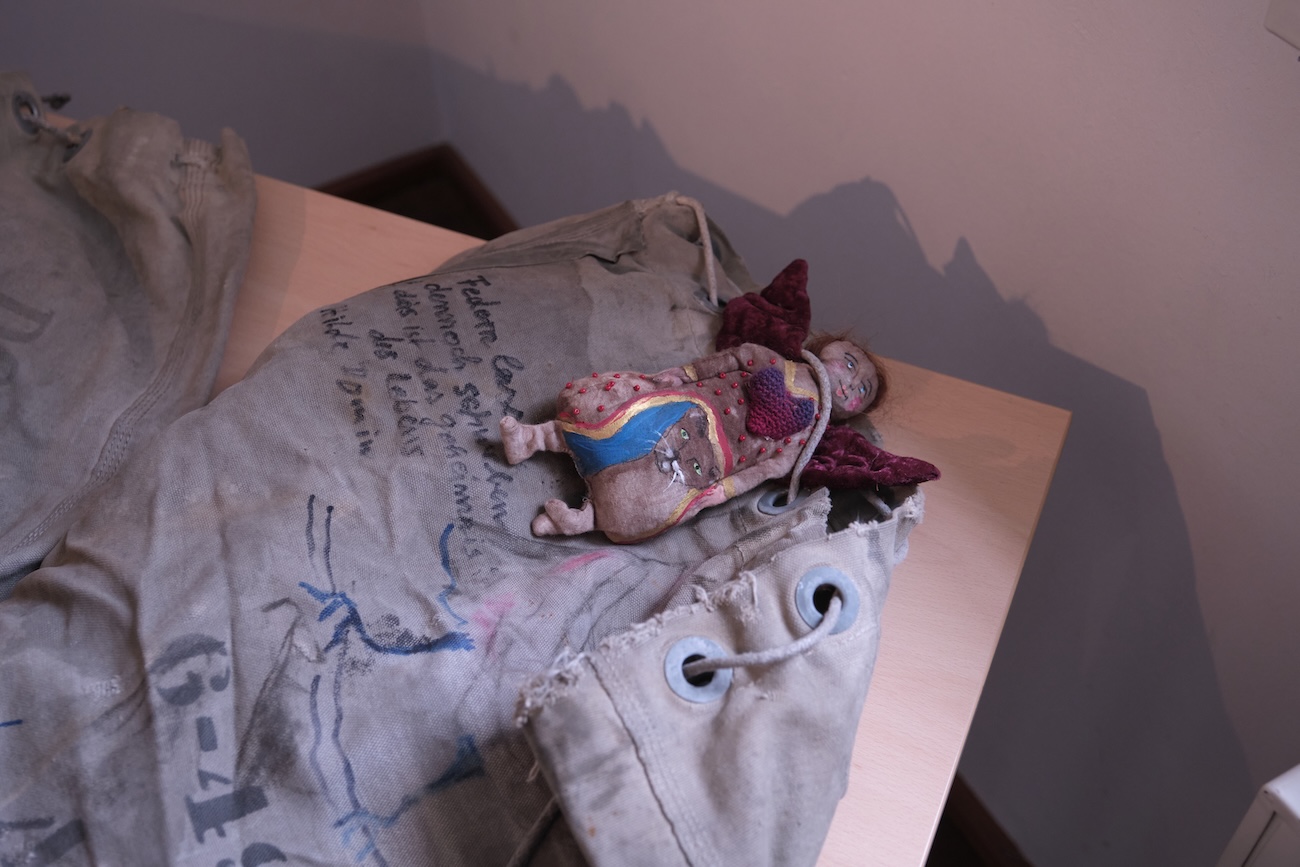


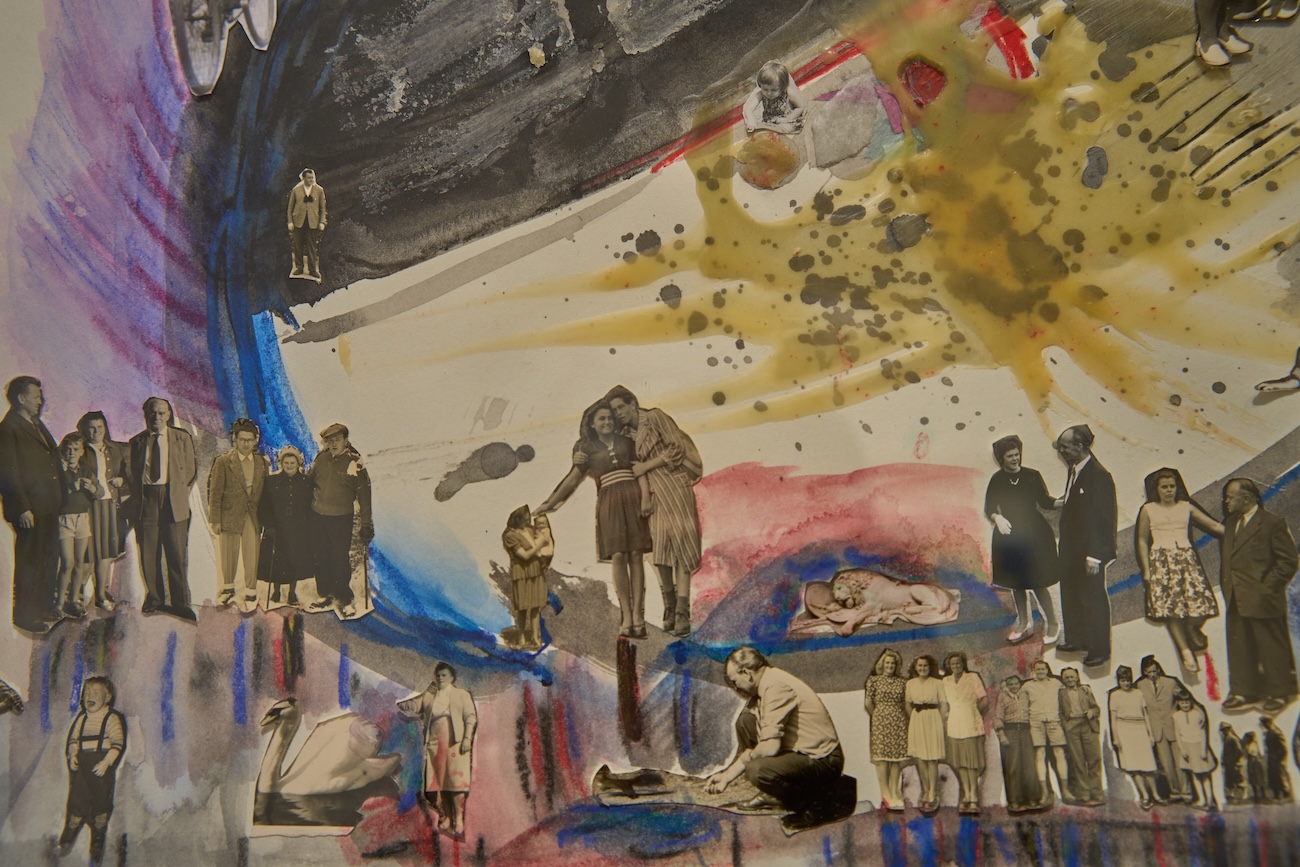
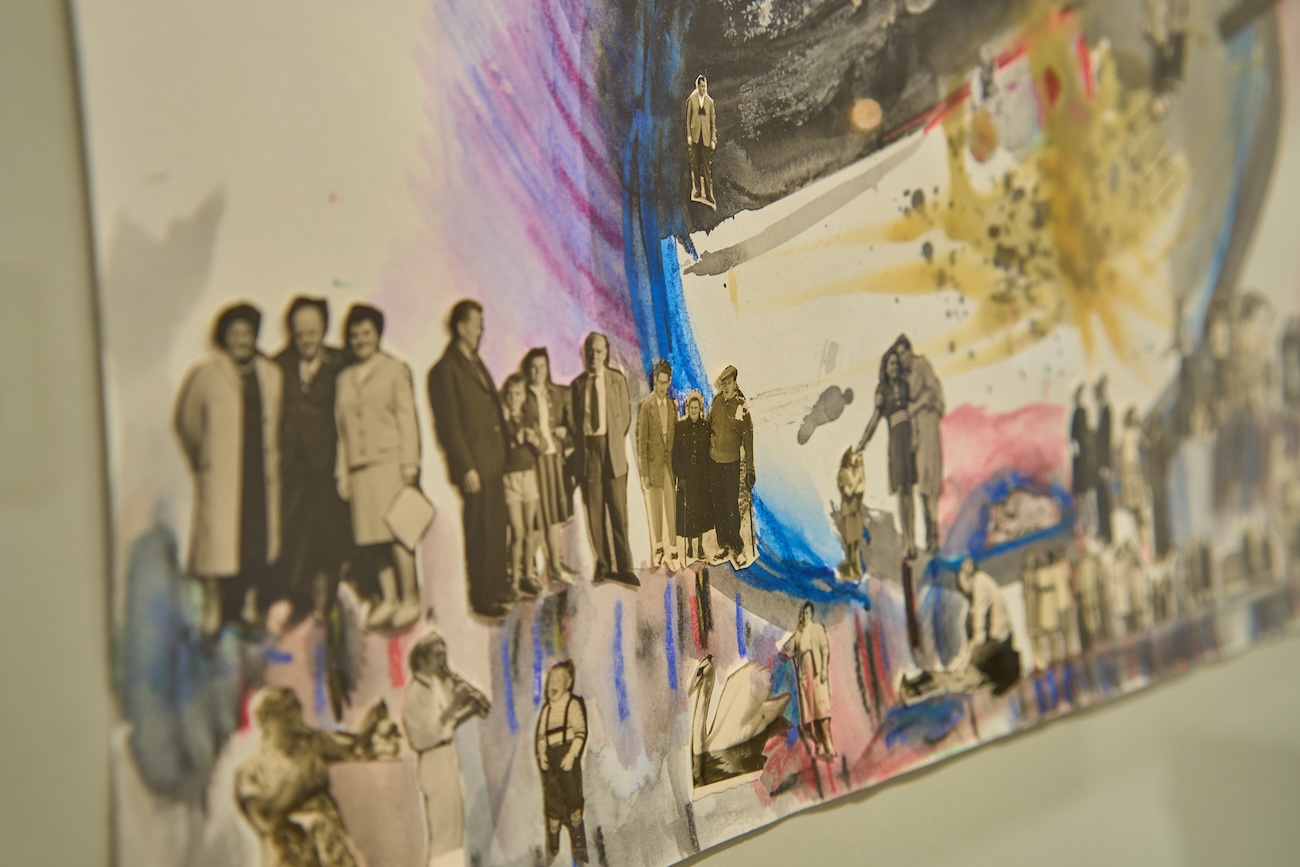
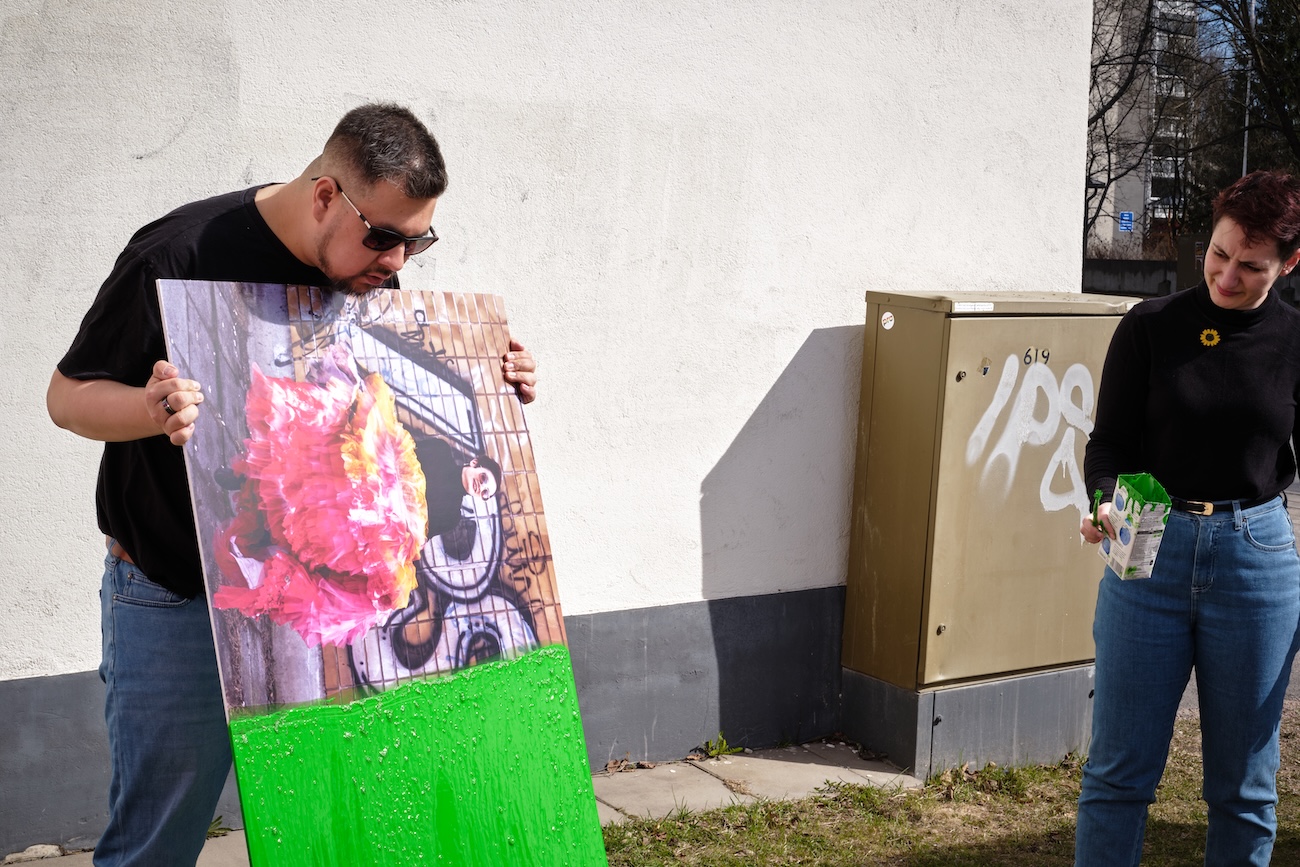

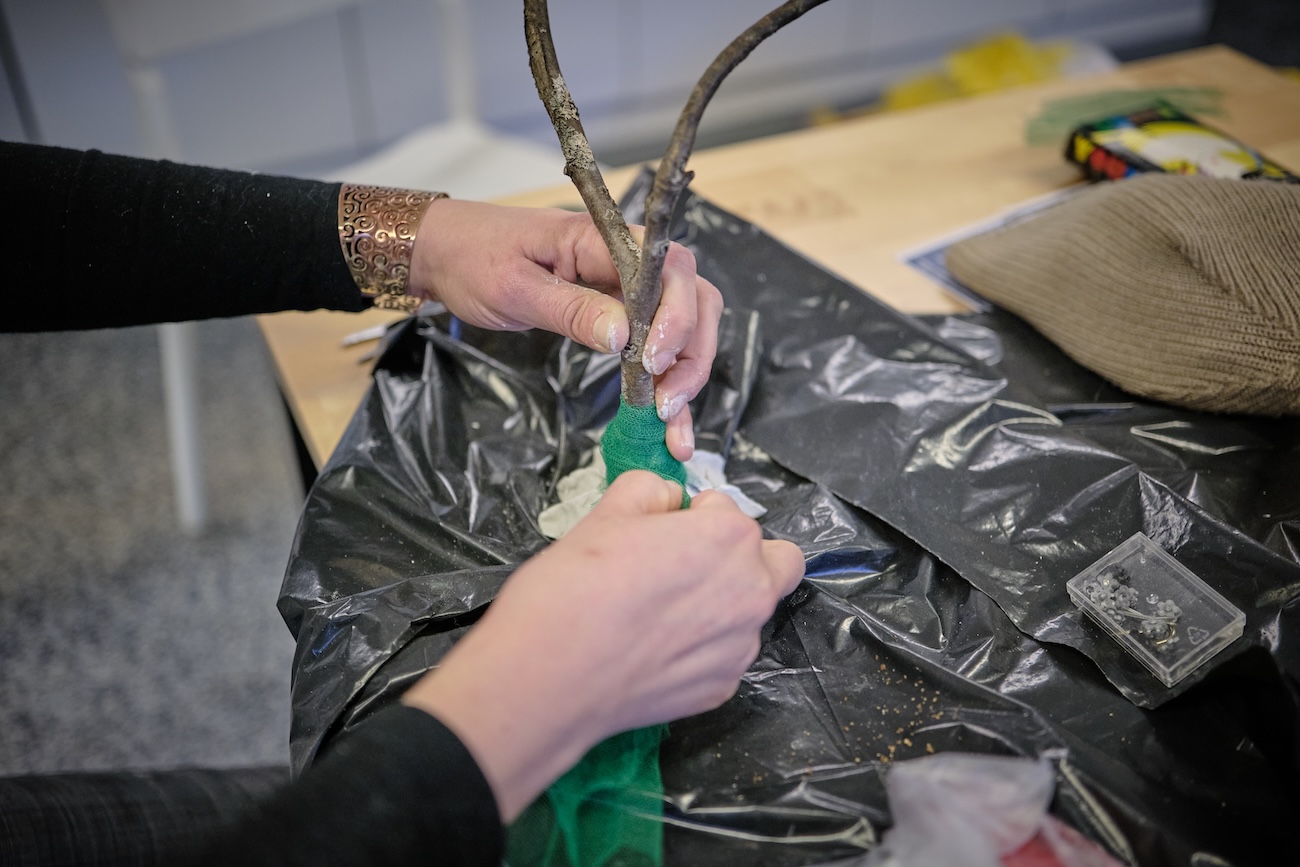
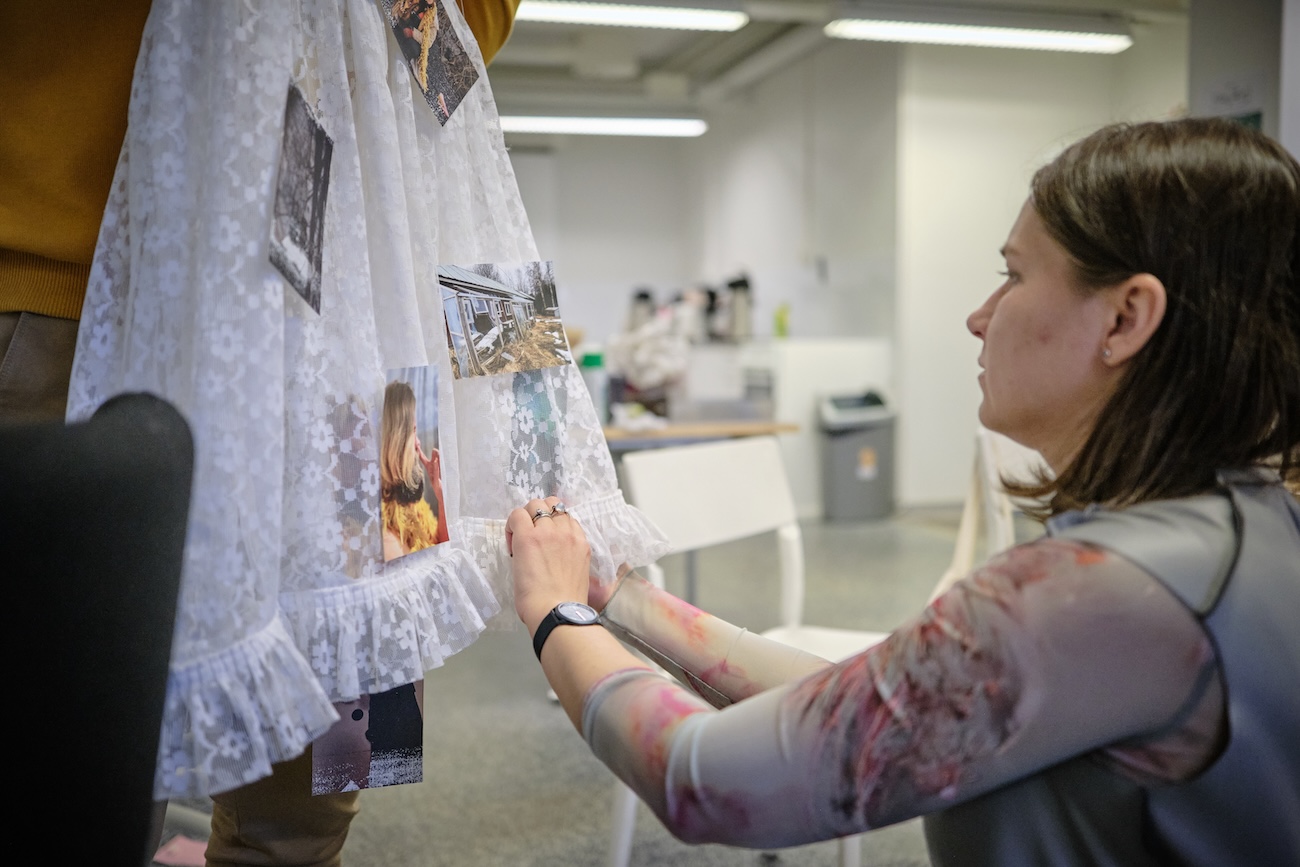
No one would think to pass judgment on a work by deufert&plischke here. On the contrary: with curiosity, one discovers an unknown person alongside the artistwin, delving into something seemingly handed down through the ages – a legacy – as would later be the case with other figures drawn from deufert&plischke’s repertoire, such as Toni Roth or the painter Felicitas P. Berg. The paintings she left behind were even purchased by the audience: works by a person who never existed.
Starting in 2011, the German Federal Cultural Foundation resolved to support large segments of the German dance scene for eight years by declaring today’s generation of dance artists to be the heirs of yesterday’s avant-garde. Their forebears are Robert Rauschenberg and John Cage. Now, living dance artists are becoming potential additions to the six German dance archives, where they are to be preserved.
Can the work of a Veronika Blumstein also be preserved there? Can a work be preserved if it was not performed by two artists, but solely by their audience? An early experimental piece by deufert&plischke is titled “KonSequenzen – Rhythm is it.” In 2008, the audience is given playful instructions. During the process, deufert&plischke remain almost entirely unaware of how they fare as they try on unfamiliar rules and attempt to practice steps they’ve never rehearsed before. The two watch the performance with their eyes closed in order to deny themselves any personal judgment, any intervention, any commentary. They are like deceased testators: Their presence does command a certain respect, but their inability to intervene corresponds exactly to the situation of all artists at the end of their lives.

The questions posed to the archive – the misguided faith in dealing with artifacts, old program booklets, handwritten notes, and tattered costumes – now flow into their “Anarchiv” (“living archive.” To achieve this, one can falsify one’s own biography while still alive, falsify one’s life, even falsify one’s own art, as long as one is still alive. One can copy oneself and cheerfully keep copying that copy, carrying on and on. Because that is what an archive is all about: above all, the act of passing things on.

„Anarchiv#2: second hand“
In their 2010 piece, “Anarchiv#2: second hand,” deufert&plischke perform a duet. This is followed by a nearly identical second duet by the choreographers DD Dorvilier and Cecilie Ullerup Schmidt. This duet, in turn, invites the audience to create a copy of the copy using their own bodies. “What wonderful fun,” says Thomas Plischke, because it suddenly became clear that in dance there can be no copy, only real bodies, only genuine individuality: “The four of us danced the Schuhplattler [a traditional folk dance in Bavaria and Austria], and of course: When 60 or 70 people respond with their own Schuhplattler, it’s not the same thing… but much, much better!”
It is the audience’s response that is essential to creating an event. In other words, the audience members are the creators. They are the prerequisite for an event.
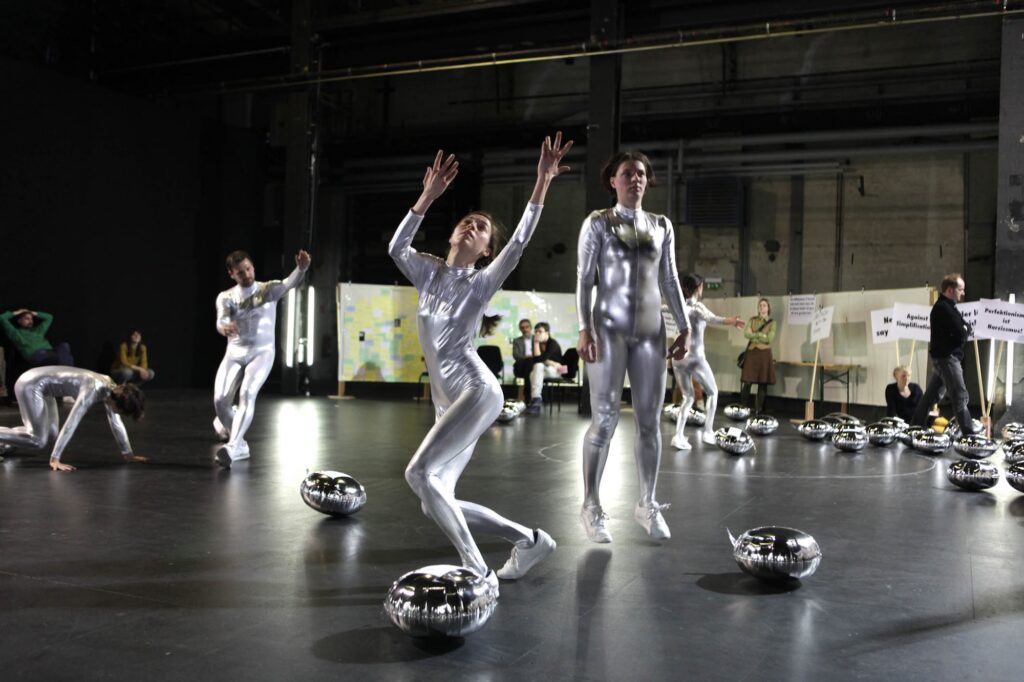
And what exactly is an event? In music, for example, says Alain Franco, the music dramaturg for many deufert&plischke projects, Richard Wagner’s festival concept was such an event. Wagner drew on archetypes from the German epic poem, the “Nibelungenlied” that made his “Der Ring des Nibelungen” (“The Ring of the Nibelung” appear as something entirely new. Such archetypes in dance include lantern parades, masquerades, and processions. People go for a walk, listen to the music, and listen to one another. People play and dance in “Anarchiv#3 Songs of Love and War” (2011) and also in “The Entropic Institute” a year later. In their engagement with art, they playfully open and close all sorts of back doors to explore the meaning of dance. The meaning of dance is: the festival.
Hamburg Kampnagel 2013
Uferstudios Berlin 2012
“Entropisches Institut”, Sofia 2012
Tmuna Theater Tel Aviv 2014
Sofia 2012
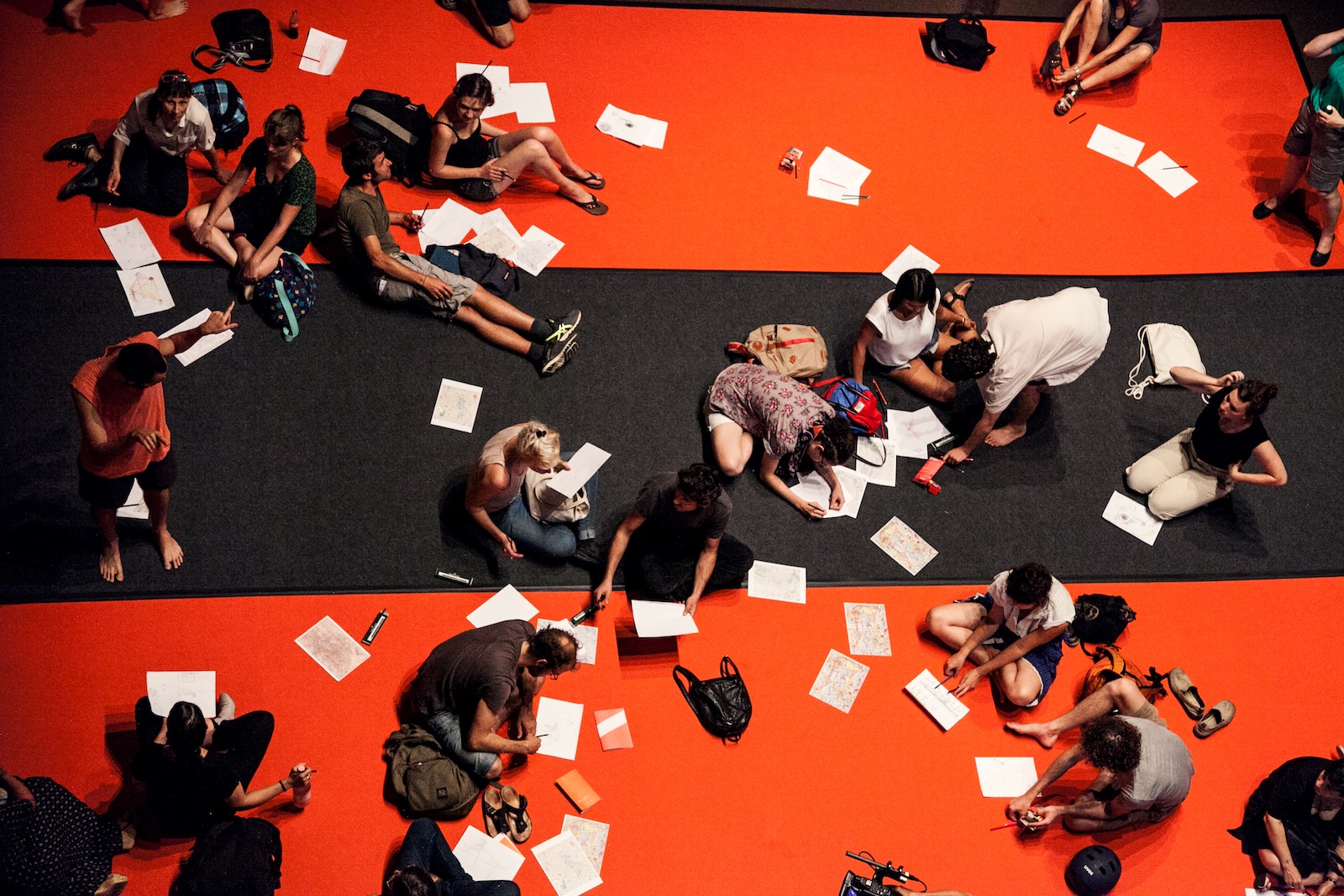

“The festival is very characteristic of dance. It has nothing to do with participatory theater; it has absolutely nothing to do with theater. If, even for just the moment of a festival, people manage to forget where they are and who they are, then dance has reached everyone on equal footing. That is the function of dance. Theater, on the other hand, requires and creates a distance. In theater, even dance is forced to maintain this distance. But the wall between the audience and art isn’t cast in concrete. The event of a festival lies precisely in those moments when the audience completely takes over what’s happening.”
“Durcheinander”


Yes, says their largest project to date: “Just in Time.” Since 2016, deufert&plischke have been collecting thousands of “favorite movements” from participants across four continents in over eighty workshops held in 21 cities so far and asking them to write a personal letter to dance. “Dear Dance” contains wonderful declarations of love from strangers as well as figures such as Cunningham dancer Valda Setterfield or the renowned dance educator Janet Panetta.
But it also includes messages from people “who want to be part of the dancing community but feel excluded from participating in dance due to illness, pain, or their own physical limitations,” according to Kattrin Deufert.
Since 2021, a sound and film installation called “The Flying Archive anarchiv TANZ.digital” has also been touring the world in collaboration with the German Dance Archive in Cologne as a declaration of love for dance, for life, and for the immediate experience that simply cannot be collected, because lives touch and collide with one another, forming an event.


“Just in Time”
“‘Just in Time’ is our response to the archive,” says Thomas Plischke: “An archive that preserves dances so they can be imitated is one thing. But the bodies you see in the old recordings are different bodies that had different fears. What do they have to do with the fear that prevails right now and has such a huge influence on today’s bodies? It’s about today, not about imitating yesterday. It’s about – even for an archive – the present of our own children, not about preserving or recapturing our past childhoods. It’s not about upholding a tradition, but about making tomorrow possible.”


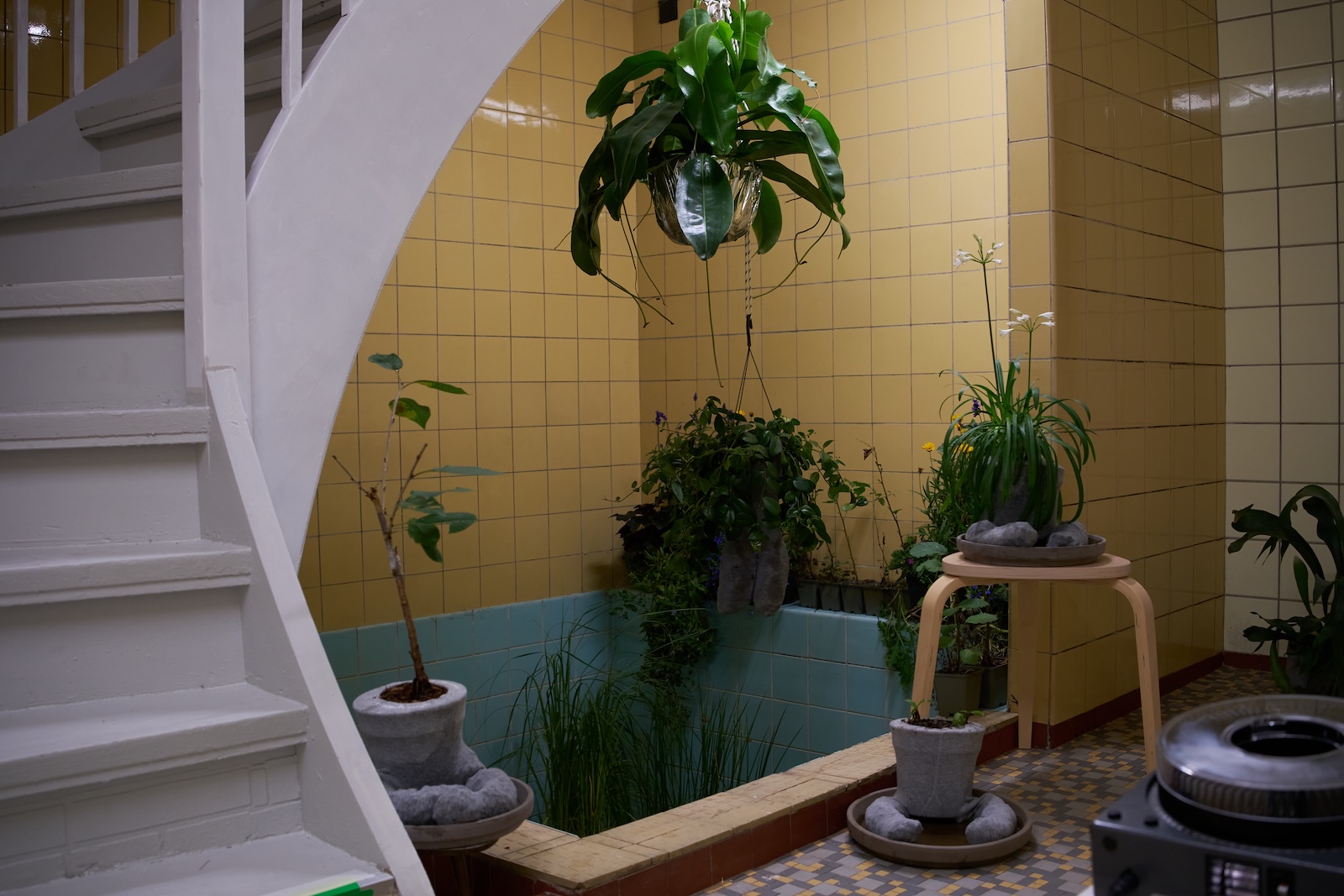
For a moment, this ‘tomorrow’ found a home in the pedestrian zone of a small German town near Wuppertal. In 2020, in the midst of the lockdown, the family of four move to Schwelm in the Bergisches Land region, where they open an artist-run space called spinnereischwelm in a storefront. “Here, people spend time without the pressure to consume. People come together to bring ideas to life creatively. Here, they work, write, sew, knit, laugh, tell stories, move things around, go a little crazy, dream, breathe, and think together.” A space for what is commonly referred to as culture, a place for human connection. Five years later, the community loses this space due to a lack of funding. Schwelm remains home, however.

In 2024, the performance “Fountains” is created in a vacant outdoor swimming pool with the help of locals and artists. The body is viewed as a fountain full of fluid. The moisture of a helpless, defiant, ashamed, desiring body. This moves us, just as art moves us when it touches on taboos, lays bare longings, addresses fears, and triggers utterly uncontrollable reactions: crying, laughter, disgust. Tears, pain, emotion.
This happens when you create something with your whole being, in a process where you “engage in an intense exchange and confront each other powerfully,” because you’re not dancing for others, but rather dancing with others and through others – people you react to, argue with, are insulted by, and with whom you repeatedly dig your way through a long tunnel of misunderstandings. “Only at the very end does something excessive and ecstatic emerge with tears of joy and tears of exhaustion – like during a harvest, when you bring in the hay and are finally allowed to celebrate.”
Anyone who has worked this way for 25 years hasn’t just celebrated for 25 years, but has also, above all, experienced 25 years of confrontations and goodbyes. From Sub-Saharan Africa to northern Finland, they’ve gone through situations with their guests that aren’t easily forgotten. The next morning, though, you still say, “Bye, we’ll definitely see each other again – here’s to the next project.” But that will never happen, because while the word “sustainability” exists in the dance world, the necessary continuity does not, “since project funding apparently always ends just when things are getting exciting. So we’ve started sending the people we had to leave behind a visual letter – an artistic video documentation.”
The Rona Collective